Author: Joe Wilson

  • Exclusive: ‘Kapaemahu’ Filmmakers Debut LGBTQ Romantic Adventure ‘Aikāne’

    Exclusive: ‘Kapaemahu’ Filmmakers Debut LGBTQ Romantic Adventure ‘Aikāne’

    Exclusive: ‘Kapaemahu’ Filmmakers Debut LGBTQ Romantic Adventure ‘Aikāne’

    by Mercedes Milligan – Animation Magazine – May 2, 2023:

    The team behind the acclaimed animated short Kapaemahu is debuting a new film inspired by Hawaiian culture, titled Aikāne — an ancient term for intimate same-sex friends that has taken on new relevance with the worldwide resurgence of anti-LGBTQ hostility. The film will premiere at the Animayo and Seattle International Film Festivals in May, followed by a series of screenings during Pride Month in June.

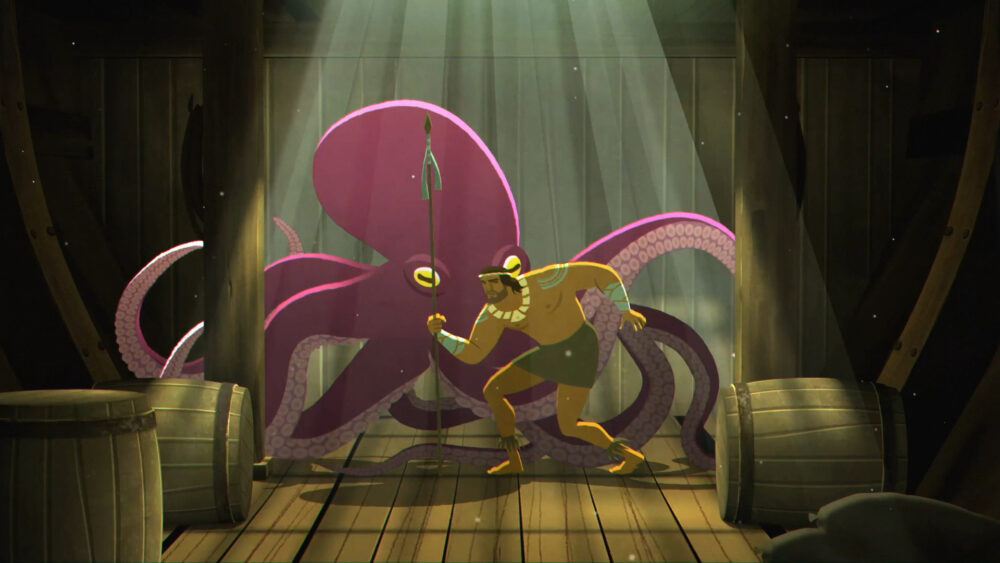
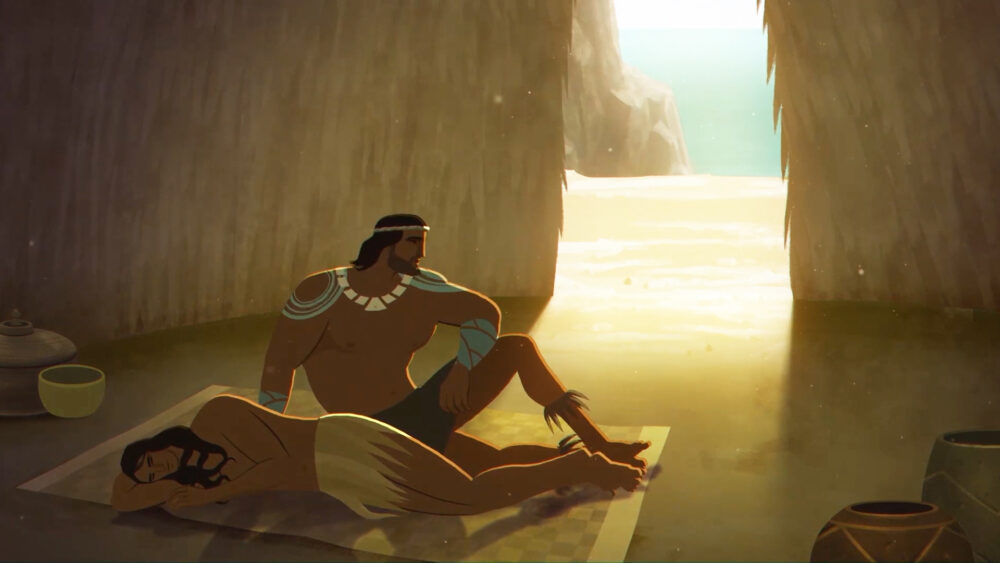
    Aikāne tells the story of an island warrior who falls into a strange underwater world after being wounded in battle. When the octopus who rescues him shapeshifts into a handsome young man, sparks fly and an epic adventure begins. Love, trust and courage are the glue that bind the unlikely couple together in their fierce battle against foreign invaders.

    Advocacy for LGBTQ rights was a key motivation for co-directors Dean Hamer and Joe Wilson, a married couple whose film careers began with a documentary about the uproar that their own marriage announcement caused in Wilson’s rural hometown. “At a time like this, when kids are being told that they can’t even say the word ‘gay’ in school, we think that telling a queer love story with a happy ending is a beautiful and necessary form of resistance,” said Wilson.

    Hamer added, “I wish I could have seen a film like Aikāne when I was young. It would have meant so much to me. Now I want to be sure that a kid in Florida or Texas has that chance, and that they’ll watch it with their parents.”

    Aikāne

    For producer Hinaleimoana Wong-Kalu, a mahu (transgender) Native Hawaiian culture bearer who has been collaborating with Hamer and Wilson for a decade, there was also a personal aspect. “As a Kanaka, a native person in an island occupied by a foreign power and ideas, I want our young people of all genders and sexualities to understand that being their authentic selves, and loving who they love, is a reason to rejoice not to fear.”

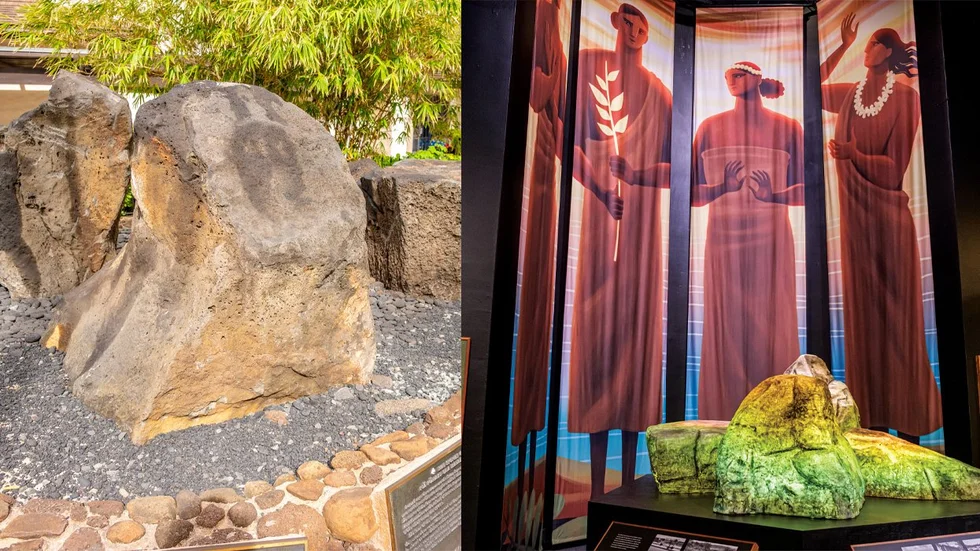
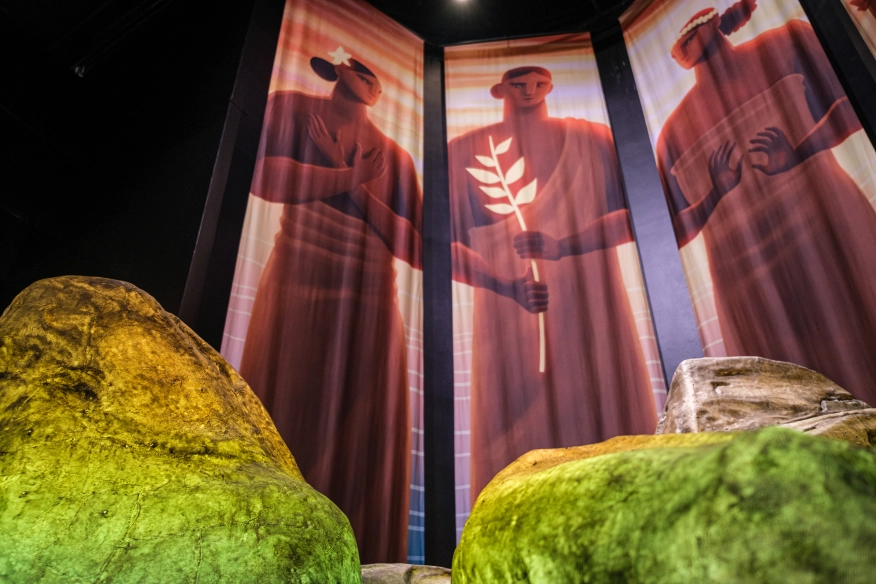
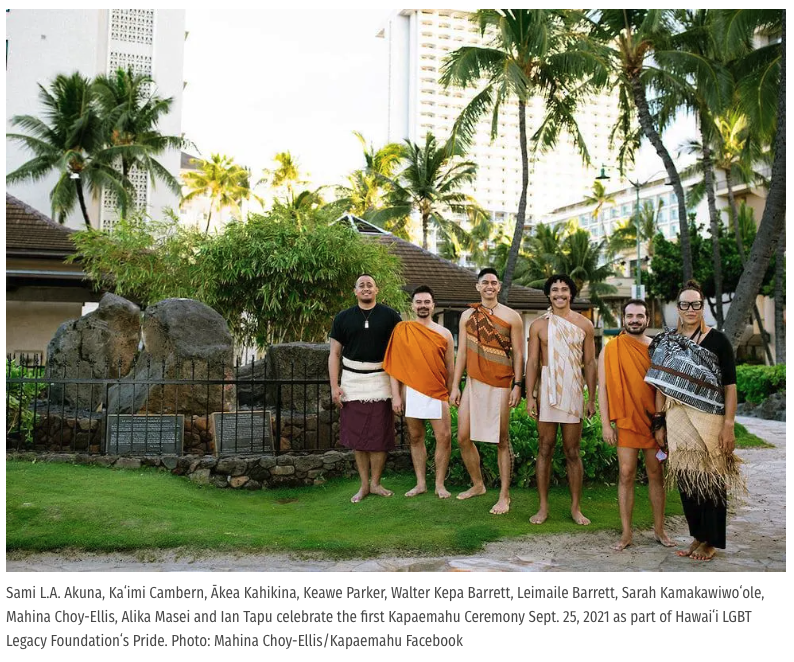
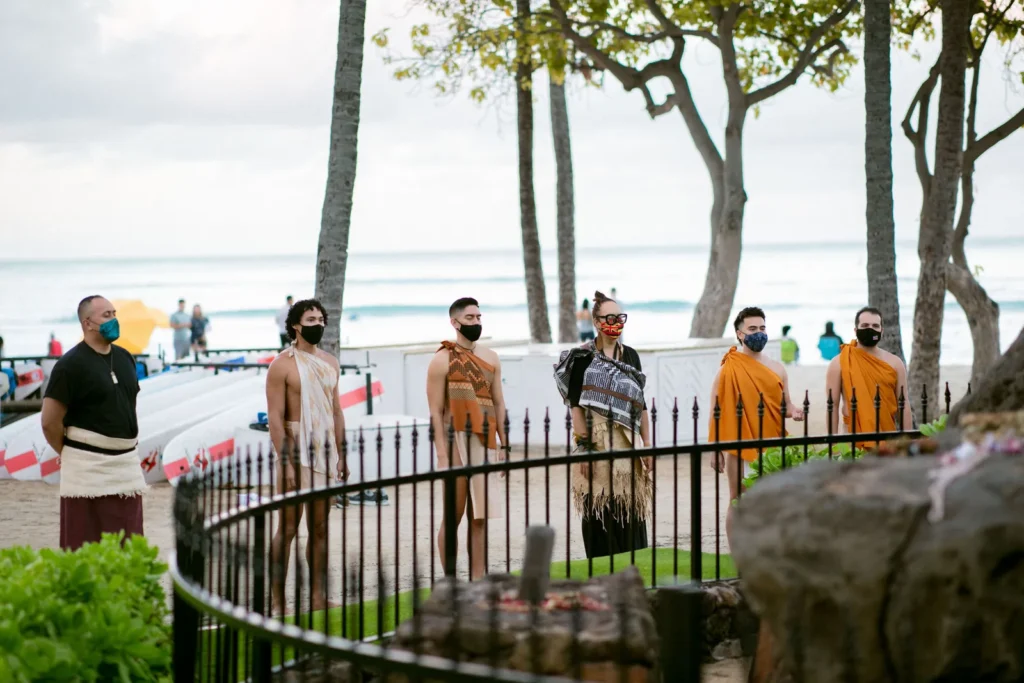
    The team’s previous animation Kapaemahu (which you can watch at kapaemahufilm.com) won five Oscar-qualifying awards and was shortlisted at the 93rd Academy Awards, and was expanded into a children’s book, public broadcast documentary, immersive museum exhibition and permanent exhibition of the painted film characters at the Hawaii Convention Center. That work inspired a movement to restore knowledge and understanding of mahu as a term of cultural respect, including a change to the signage at a monument originally intended to honor them in Waikiki beach.

    Aikāne

    Hoping to build a similar movement behind Aikāne, the team invited Emmy-winning actor and trailblazing LGBTQ advocate Judith Light to come on as executive producer. “I am honored to be a part of this transcendent film that brings an inspirational message that love is love is love when it is so profoundly needed,” said Light, who was one of the first celebrities to advocate for the queer community and those with HIV/AIDS, and played pivotal roles in The Ryan White Story, Transparent, and other projects bringing LGBTQ visibility to the fore. “It is a tale of the spirit, transformational and mystical in nature that resonates with love, courage, compassion and community.”

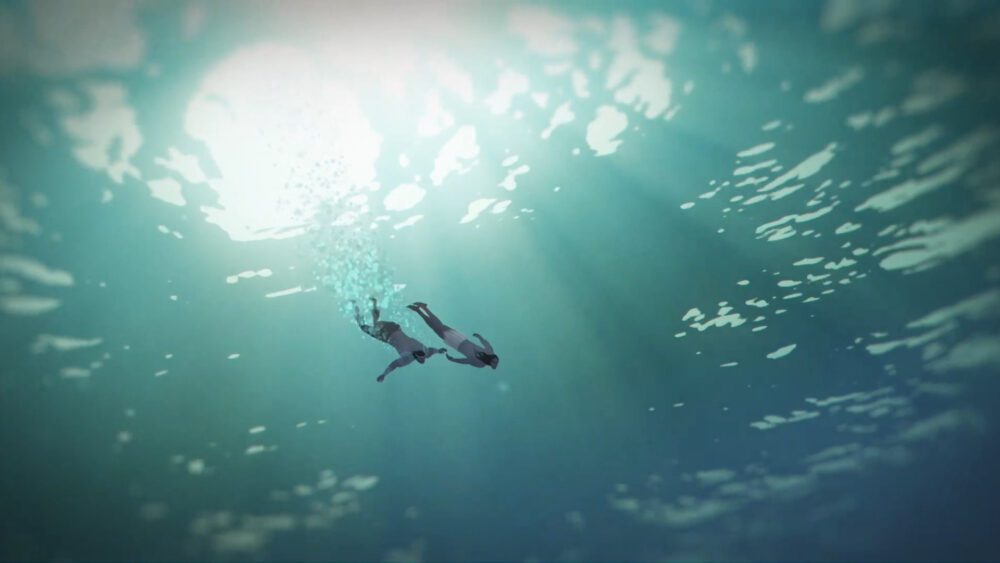
    The visual world of Aikāne contrasts the stark landscapes and dizzying cliffs of the land above the surface, the site of conflict, with the rich colors and soothing motion of the sea below, where the heroes fall in love. Academy Award-nominated animator, designer and co-director Daniel Sousa brings the characters to life with a smooth, flowing style, portraying their emotions through subtle gestures and closeups. Dan Golden provided the music and sound design for the non-dialog film, incorporating underwater sounds captured by Hamer and Wilson in their free-diving expeditions. Sousa and Golden were also artistic collaborators on Kapaemahu.

    Aikāne

    Aikāne was produced by Hamer and Wilson’s Qwaves in association with Kanaka Pakipika, the production company the couple formed for their trans-Pacific collaborations with Wong-Kalu.

    Upcoming screenings include Animayo (May 3-6), Seattle International Film Festival (May 11-21), with more in June, July, and August to be announced soon.

    qwaves.com/aikane

    Trailer: https://vimeo.com/811638707

  • Hawai’i Congresswoman Jill Tokuda Shares Legend of Kapaemahu on House Floor

    Hawai’i Congresswoman Jill Tokuda Shares Legend of Kapaemahu on House Floor

    by Brooke Migdon – The Hill – April 27, 2023:

    Rep. Jill Tokuda (D-Hawaii) on the House floor on Wednesday celebrated the recent victory of Hawaii native Sasha Kekauoha, best known by the stage name Sasha Colby, who placed first this month in the 15th season of the MTV drag competition show “RuPaul’s Drag Race.”

    “From the very beginning of the competition, Sasha, a seasoned drag legend, drew upon her ethnic heritage and childhood trauma as sources of inspiration for her performances,” Tokuda said Wednesday.

    Colby, 37, this month became the first openly transgender woman of color to be crowned “America’s Next Drag Superstar” on the season finale of “RuPaul’s Drag Race,” the long-running reality and drag competition series.

    “Throughout ‘Drag Race,’ she authentically represented her Hawaiian culture, talking about the legacy she’s building for our home state and about being Mahu,” Tokuda said Wednesday, referring to a third gender recognized in Polynesian culture.

    “In ancient Hawaiian days, Mahu were considered extraordinary individuals of male and female spirit who brought their healing powers to O’ahu from Tahiti,” Tokuda said. “Today, trans people are among the most revered members in the Hawaiian community.”

    “Amidst ongoing attacks on our LGBTQ+ rights that particularly target trans people and drag queens, her win is not only well deserved, it gives us all hope,” she added.

    More than 460 state bills introduced in state legislatures this year target the rights of LGBTQ people, according to the American Civil Liberties Union, including a record-shattering number of bills that explicitly target transgender people.

    A dozen states are also considering passing legislation that would heavily restrict drag performances. In March, Tennessee became the first state in the nation to ban certain drag shows from taking place in public or where they may be viewed by minors. A federal judge this month temporarily blocked the law from taking effect.

    Colby, in an interview with People, this week said “it’s a really scary time” to be transgender in the U.S. She hopes her appearance and ensuing win on this season of “Drag Race” will help usher positive changes for the community.

    “I think it’s important for someone like me and for the show to be on such a big platform because if you’re so scared at home — which I remember being as a kid — and you turn on the TV and see something that resonates with you or someone that speaks your language and understands your energy, it can be a lifesaver,” she said.

    See video of her comments HERE.

  • Waikiki’s Healing Stones Celebrate Native Trans History

    Waikiki’s Healing Stones Celebrate Native Trans History

    Waikiki’s Healing Stones Celebrate Native Trans History

    A beautiful exhibit gives context and profundity to O‘ahu’s joyful Pride celebration

    by Neal Broverman – Out Traveler – March 31, 2023:

    Experiencing Honolulu Pride is sublime: the sweeping Pacific views and myriad food options at the Prince Waikiki Hotel, the comforting humid air, the perfectly temperate ocean water, and the welcoming faces at the Pride festival and local gay bar Bacchus Waikiki. But the pinnacle experience of the queer aloha spirit last October wasn’t found on the parade route, at after-parties, or even on Queen’s Beach. Instead it was found at the 134-year-old Bishop Museum, where I was lucky enough to catch the incredible exhibit, “The Healer Stones of Kapaemahu,” on its closing day, which coincided with Pride’s start.

    A thoughtful exploration and appreciation for the islands’ long history of gender diversity, the “Healer Stones” shared the story of how a centuries-old simulacrum devoted to the queer spirit was buried (literally and figuratively) and only recently uncovered. Centuries ago, four large stones were placed on Waikīkī Beach to honor four māhū, “extraordinary individuals of male and female spirit,” who brought their healing powers to O‘ahu from Tahiti.

    Legend has it that these four healers, who lived between what was traditionally expected of males and females, transferred their curative energy to the stones before departing. Development of 20th-century Honolulu left the stones buried under, of all things, a bowling alley. Finally, when the stones were restored and memorialized in the 1960s, their queer history was excised. “The Healer Stones of Kapemahu” righted that wrong with artifacts, animation, and digital depictions of figures once lost to time.

    In addition, the exhibit displayed vibrant reminders of Honolulu’s long history as a queer haven in the vast Pacific. Pictures and artifacts told the stories of drag and trans artists who captivated audiences until Honolulu’s Westernized government of the 1960s criminalized these performers, insisting they wear “I Am a Boy” pins while walking through the Waikīkī district.

    “It made us feel so degraded,” says Brandy Lee, a well-known entertainer from that era who performed at the Glade nightclub. “The word māhū was like a curse. It was the worst thing you could call somebody.”

    The Bishop’s curators and researchers opened my eyes, and those of many others, to the rich history of LGBTQ+ O‘ahu, Hawai‘i, and Polynesia, and how it was perverted by Western powers.

    After seeing every nook and cranny of the exhibit, I met up with two friends, and we explored the rest of the Bishop’s expansive campus on the north side of Honolulu, learning more about the history of Hawai‘i — from its grand royal lineage to the horrors of colonization to its current iteration as a modern American paradise.

    The next day, I marched in the Pride parade as a guest of Hawaiian Airlines. After being locked out of live events for the better part of three years, the parade — winding through Waikīkī’s lively tourist district — and festival, held at the end of the parade’s route at sprawling Kapi’olani Regional Park, was a communal catharsis. Personally, being part of Honolulu Pride held special resonance after understanding how past queer generations struggled for acceptance and respect.

    Mahalo, queer O‘ahu, for letting me celebrate with you.

    Full article here.

  • New Cultural Exhibit at Hawaii Convention Center

    New Cultural Exhibit at Hawaii Convention Center

    New Cultural Exhibit at Hawaii Convention Center

    by Kaile Hunt – KHON2 – February 21, 2023:

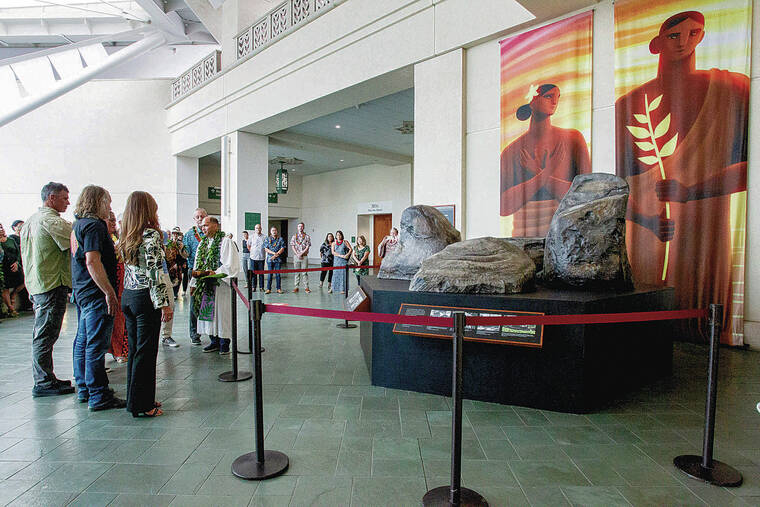
    HONOLULU (KHON2) – The Hawaii Convention Center is displaying the Healer Stones of Kapaemahu on its third floor for people to view. 

    The Healer Stones of Kapaemahu was formally showcased at Bishop Museum as part of their everchanging exhibits located in their Castle Building.

    The exhibit ran from June 18 through Oct. 16, 2022 and told the story of four mahu healers coming to Waikiki to treat the people of their diseases.

    If you missed Bishop Museum’s exhibit on the Healer Stones of Kapaemahu you can head to The Hawaii Convention Center to view replicas of The Healer Stones of Kapaemahu outside Theater 320.

    “For nearly 25 years the Center has served our communities and visitors not only as a world-class meetings destination, but also as a place to learn about Hawai‘i’s rich culture and history through permanent and rotating art installations,” said Teri Orton, General Manager of the Hawaii Convention Center. “We are delighted to work with renowned artist Rick San Nicolas on one of the largest public displays of his feather work, and to become the permanent home of the Healer Stones of Kapaemahu exhibit.”

    According to the Hawaiian Tourism Authority, the original stones are a public monument located on Kalakaua Avenue near the Duke Kahanamoku statue.

    The stones honor the four legendary māhū, individuals who embody both male and female spirit, and brought healing arts from Tahiti to Hawaii many centuries ago.

    The stones were then moved from Kaimuki to Waikiki as a reminder of the services the four māhū provided to the people of Hawaii.

    Those interested in seeing the display can view historic photographs, large artistic painted representations of the healers, and an 8-minute animated film that tells their story.

    “This exhibit shines a light on the deep history of these stones and furthers the Center’s sense of place by showcasing this important Waikiki landmark, which is just minutes away,” said Dean Hamer, a film director and curator of The Healer Stones of Kapaemahu exhibit.

    The Hawaii Convention Center is home to this permanent art collection thanks to their partnership with the Hawaii State Foundation on Culture and the Arts and its Art in Public Places program.

    Full article here.

  • Convention Center Unveils Hawaiian Cultural Exhibits

    Convention Center Unveils Hawaiian Cultural Exhibits

    Convention Center Unveils Hawaiian Cultural Exhibits

    by Linsey Dower – Honolulu Star-Advertiser – February 17, 2023:

    The Hawai‘i Convention Center unveiled two new Hawaiian cultural exhibits Thursday, one featuring a collection of traditionally crafted Hawaiian featherwork pieces, and an exhibit featuring a replica of the Healer Stones of Kapaemahu.

    The featherwork exhibit, called the “Puali‘ahu Feather Cape Exhibit,” will be displayed at the center for the next two years, while the “Healer Stones” exhibit will remain at the center on permanent display.

    “The work of these renowned artists brings to life the stories of Hawai‘i’s rich culture and history, enhancing each guest’s experience and appreciation for our islands,” Hawai‘i Convention Center General Manager Teri Orton said in a statement. “As a gathering place for our communities and thousands of visitors from around the world each year, we are pleased to make these exhibits accessible for everyone to enjoy.”

    Since its opening 25 years ago, Orton said, the Hawai‘i Convention Center has hosted a rotation of art collections as well as a permanent art collection due to its partnership with the Hawaii State Foundation on Culture and Arts’ “Art in Public Places” program.

    The “Puli‘ahu Feather Cape Exhibit” features several feather capes, a feathered helmet and lei papale, according to the center’s news release. The display was designed by Rick San Nicolas and Kauila Kawelu Barber. San Nicolas is also the self-taught master featherworker who created the handmade feathered pieces.

    “The backing of what the feathers are tied into is a real fine mesh that is cut into pieces and put into the shape of whichever cloak or feather cape that I’m making,” said San Nicolas, explaining how he creates each piece. “The feather bundles are all hand-tied and bound onto the netting, which would be the traditional method of what was done in ancient times.”

    The largest cloak that San Nicolas has made, which will be on display in the center’s exhibit, is a replica of that worn by Pi‘ilani, an ancient high chief of the kingdom of Maui. At 9 feet wide, San Nicolas said it is believed to be the largest cloak to exist; it took him about 3,200 hours to make.

    The exhibit also will feature a cape that San Nicolas designed from peacock feathers that Princess Ka‘iulani might have enjoyed. He also designed a series of battle cloaks, which are rarely seen in exhibits, according to the news release.

    The “Healer Stones of Kapaemahu” exhibit, which was previously featured in a five-month exhibition at the Bishop Museum, includes a replica of an existing stone monument in Waikiki, adjacent to the district’s Honolulu Police Department.

    The stones date back more than 500 years, and aside from what is mentioned on the Waikiki monument’s plaque, its full story has been largely passed down by word of mouth, the film director and researcher for the Kapaemahu project, Dean Hamer, previously told the Honolulu Star-Advertiser.

    “The stones honor four legendary mahu — individuals who embody both male and female spirit — who brought healing arts from Tahiti to Hawaii many centuries ago,” according to the Hawai‘i Convention Center’s news release.

    The Waikiki plaque displaying the story of the Kapaemahu Stones monument was last updated in 1997 and excludes the part of its history that recognizes the healers as mahu. However, Hamer said that there are plans underway to install an additional plaque that acknowledges the healers as people who embodied both female and male energies.

    The “Puli‘ahu Feather Cape Exhibit” can be found at the Hawai‘i Convention Center on the mauka side of the center’s third floor, between rooms 302 and 306. The “Healer Stones of Kapaemahu” exhibit is also on the third floor, outside theater 320.

    Related Photo Gallery: Hawai‘i Convention Center unveils Hawaiian cultural exhibits

  • Kapaemahu Wins Stonewall Book Award

    Kapaemahu Wins Stonewall Book Award

    Kapaemahu Wins Stonewall Book Award

    by John Veneri –KHON Living808 – February 3, 2023:

    Hinaleimoana Wong-Kalu, or Kumu Hina for many, is known for work in the art of Hula. She is a filmmaker, an artist, and an activist and now an author after the release of her book “Kapaemāhū”. The book tells the traditional story of four legendary mahu or individuals with dual male and female spirit,  who long ago brought healing arts from Tahiti to Hawaiʻi and imbued their healing powers into four large stones in Waikiki today. The book is written in both English and in ʻōlelo Niʻihau.

    “Because it is important to perpetuate Hawaiian language and the Niʻihau form is the one I am most comfortable with and has never been interpreted. I hope that other Hawaiians will be inspired to tell our stories and history with respect and honor.  And I hope all readers will better understand the great accomplishments of these healers, and that everybody has a role to play.  We worked with Kanaoeokana and Kamehameha Schools to develop educational materials for schools that want to use the book.“

    If you’d like to learn more about the book, visit: http://kapaemahu.com

  • Judith Light to Executive Produce Animated Short ‘Falling’ (EXCLUSIVE)

    Judith Light to Executive Produce Animated Short ‘Falling’ (EXCLUSIVE)

    Judith Light to Executive Produce Animated Short ‘Falling’ (EXCLUSIVE)

    by Angelique Jackson – Variety – November, 2022:

    Emmy and Tony winner Judith Light has signed on as an executive producer for “Falling,” an animated short film from the filmmakers behind “Kapaemahu” — Daniel Sousa, Dean Hamer, Joe Wilson and Hinaleimoana Wong-Kalu — which was shortlisted for the best animated short Oscar in 2021.

    While “Kapaemahu” focused on Hawaii’s legendary gender-fluid healers (and expanded into a children’s book, feature documentary and immersive museum exhibition), “Falling” follows the romantic adventures of a valiant island warrior, a handsome young man and an octopus brought together by a twist of fate. The story is described as “an epic romantic adventure that instills hope in a time of rising prejudice and hate.”

    Directed by Oscar-nominated animator Sousa (who also designed the film), Hamer and Wilson, Light is joined as an executive producer by Daniel Karslake, whose work “addresses the intersection of spirituality and social justice,” and Hawaiian teacher cultural leader Wong-Kalu, who has collaborated on six previous projects with married producing partners Hamer and Wilson.

    “This is a tale of the spirit, transformational and mystical in nature that resonates with love, courage, compassion, and community,” Light said in a statement announcing she’d boarded the project. “I am honored to be a part of this transcendent film that brings an inspirational message that love is love when it is so profoundly needed.”

    Set in an imaginary world where “courage has no limit and love has no bounds,” the film’s synopsis details the story: “An island warrior fighting off invaders of his idyllic home is wounded in battle and falls deep into a mysterious underwater world. When the octopus who rescues him transforms into a captivating young man, sparks fly, and the adventure begins.”

    “The beauty and artistry of the animation and magnificence and majesty of the music gives the film a radiant quality,” Light added. “’Falling’ is profoundly universal and hopeful, a testament to bravery and the power of following one’s heart.”

    A multiple Tony and Emmy-winning star of television film and the stage, Light can be currently seen in HBO Max’s “Julia,” Starz’s “Shining Vale” and the Searchlight Pictures movie “The Menu.” As an actor, producer and advocate, her body of work is also known for helping to advance LGBTQ visibility and acceptance with roles in such projects as “The Ryan White Story,” “Save Me,” “The Politician” and “Transparent,” Amazon’s groundbreaking series which helped bring mainstream attention to the transgender community. For her performance, Light was earned Golden Globe, Critics’ Choice and two Emmy nominations.

    “We are so thrilled to have Judith’s support behind this story,” stated Hamer. “The paths she has forged in her career and the passion and unending dedication she has always shown to uplifting the queer community create a unique opportunity for us to do something very special with this film.”

    Of collaborating again with Sousa and Wong-Kalu, Wilson noted, that it was “the perfect way to bring to light a positive story of the power of love — especially a love like ours.”

    “Falling” was produced by Hamer and Wilson’s Qwaves Media in association with Kanaka Pakipika, the production company the couple formed for their pan-Pacific collaborations with Wong-Kalu. The short will be released in 2023. The first trailer, which spotlights Sousa’s focus on mythological and legendary themes in his world-building, can be seen above.

    Full article here.

  • Trans-Pacific Māhū Ancestors: Reclaiming Hawaiian Trans Identities/Spirits

    Trans-Pacific Māhū Ancestors: Reclaiming Hawaiian Trans Identities/Spirits

    Trans-Pacific Māhū Ancestors: Reclaiming Hawaiian Trans Identities/Spirits

    by Michael Yamashita | The Bay Area Reporter & News Is Out | November 24, 2022

    In a world full of anger, hurt and worry, a Hawaiian legend of dual male/female identities has been resurrected to reclaim an ancient tradition and bring healing to our modern lives. Such a story is necessary today as transgender people are openly attacked as easy targets of hatred and discrimination, scapegoats for all that is wrong with “The Left” and “Wokeness.” Contemporary Hawaiians are reclaiming ancient cultural understandings of gender to provide us with expansive ways of being and the freedom of possibilities beyond the narrow gender binary of Western civilization.

    On the island of O’ahu, a short walk from the historic gay bar Hula’s Bar & Lei Stand and touristy gay Kuhio Beach Park, a locus of healing and pilgrimage has been re-remembered on Waikīkī Beach through a reclaimed legend of transgender healing spirits. A formation of four stone boulders has been hiding in plain sight for most of the 20th century, now located between the Duke Kahanamoku statue and a police substation, oblivious to the many locals and tourists as they pass by along the world-famous beach, although they have long been considered sacred by Native Hawaiians. Their transgender history, meaning and importance had been purposefully erased in the last century through a process of American colonialism, imported Christian attitudes, and the increasing commercialization of Waikīkī. 

    The transgender identities of these sacred healing stones have been restored in a retelling of their legend in the award-winning, short animated film “Kapaemāhū,” a collaboration between Native Hawaiian educator, cultural practitioner, and transgender activist Hinaleimoana Wong-Kalu, Emmy and GLAAD award-winning filmmaker activists and married couple Dean Hamer and Joe Wilson and Oscar-nominated animator Daniel Sousa. Notably, the film, released in 2020, is narrated by Wong-Kalu in the Ni’ihau dialect of Hawaiian, and a bilingual, illustrated children’s book version was published in June 2022.

    In about 1500 CE, four extraordinary individuals with a mixture of male and female spirit, or māhū, sailed from Tahiti to Hawai’i to share their gifts of knowledge and healing cures to the ailing people of Waikīkī. According to a written account about the māhū healers in the early 20th century to preserve the history of the stones: “Their ways and great physique were overshadowed by their low, soft speech, and they became as one with those they came in contact with. They were unsexed, by nature, and their habits coincided with their womanly seeming, although manly in stature and general bearing.” In gratitude to these mysterious beings named Kapaemāhū, Kinohi, Kahaloa and Kapuni, a monument of four boulders was erected on the beach in their honor, which the māhū imbued with healing powers before disappearing. 

    Over time, Western foreigners arrived on the islands and the once-sacred stones were forgotten until the 1960s. Even then, the transgender identity of the stones was consciously obscured or omitted. Although the true story of these stones was not fully recovered until attempted by the filmmakers of “Kapaemāhū,” the power of the māhū healers still calls out to those who pass by them on Waikīkī Beach today.

    Wong-Kalu, 50, said māhū was a common, derogatory slur directed at LGBTQ+ people when she was growing up in Hawai’i. She remembers being among the beachgoers who would sit on the stones and drape towels over them after swimming, unconscious of their significance. Wong-Kalu added that there are physical, emotional, mental and spiritual elements to being māhū. “In Hawai’i, one could really exist in the middle,” she said. “Such stories are rarely told, and when they are, it’s usually by outsiders who impose their lens of the world, their language and culture to synthesize and process the narrative through their own experience. I wanted to tell the story from my perspective as a native māhū wahine [woman] and tell it in the language that my ancestors might have used to pass it on.” She wanted to show children in Hawai’i that “proper Hawaiian culture” doesn’t pass judgment against those “who have elements of duality. … They were respected and honored because people knew that their male and female duality made them even more powerful a healer.”

    An exhibition, “The Healer Stones of Kapaemāhū,” was mounted in the summer by the Bernice Pauahi Bishop Museum, Hawai’i’s premier natural and cultural history museum, to cultivate a deeper understanding of gender diversity, Native Hawaiian health and the power of monuments. Historian, Native Hawaiian and lead curator Desoto Brown, 60, said that people of dual identities were accepted in traditional Hawaiian culture and valued for their unique talents and contributions. “People who were sexually different, who identify differently, who looked different were not objects of scorn. They weren’t pushed aside. They weren’t hated. They were accepted as part of the normal array of different types of human beings. And that’s true for the four healers,” he said. “With the introduction of Christianity, with the introduction of Western morality and Western perceptions starting in the late 1700s, people like the Kapaemāhū healers, people who are different, became not accepted, but disliked. Actively hated. Suppressed.”

    Brown hopes people will come to understand that being māhū is a powerful cultural identity that can inform and undermine Western prejudice and discrimination. “There are people that are māhū, and there always have been, and there always will be,” he said. “Yeah, there are these people – don’t hate them, don’t destroy them, just respect them as part of everything that we are as humans.”

    LGBTQ+ residents and visitors to Hawai’i now have an ancient point of reference in Waikīkī, and a powerful reminder that queer people occupy a unique historical and spiritual dimension by dint of their existence. The stone monument is physical evidence of the deep roots of gender fluidity in Polynesia. By reclaiming the true history of Kapaemāhū, the spiritual power of ancient Hawai’i is transmitted across time to bring healing to our modern world. Tatiana Kalaniopua Young, 40, a Native Hawaiian anthropologist, māhū, and a director of the Hawai’i LGBT Legacy Foundation, said the story of the stones and healers helped her family understand that she was not “this weird creature that’s outside of the norm.” And that in a Hawaiian sense, she was part of the norm. She said, “It gave me a sense of place and purpose as a māhū and it really made me proud to be Kanaka Maoli, or Native Hawaiian.”

  • Native Hawaiian Māhū Are Reclaiming Their History

    Native Hawaiian Māhū Are Reclaiming Their History

    Native Hawaiian Māhū Are Reclaiming Their History

    by Matthew Dekneef – Them Magazine – November 21, 2022:

    In the middle of Waikīkī, Hawai‘i’s most crowded, most photographed, most highly trafficked neighborhood, there is a monument to Native Hawaiian culture that is also, perhaps, one of our most overlooked. In plain view, between the ever popular Duke Kahanamoku statue and elegant Moana Surfrider hotel, are four large, but otherwise unassuming stones that hold a powerful and misunderstood history.

    Known as Ka Pōhaku Kahuna Kapaemāhū (“the healer stones of Kapaemāhū”), these ancient stones, which have been sanctified in a fenced enclosure since 1997, represent four respected healers who were māhū, the Hawaiian word for a person of dual male and female spirit. Any ascription to their māhū association, however, is glaringly absent from the monument’s signage. The omission isn’t surprising: More than two centuries after Christian missionaries first arrived in the archipelago, many Native Hawaiian histories and traditions continue to be erased and obscured, deemed too unpalatable for Western mores.

    The mo’olelo (story) of Ka Pōhaku Kahuna Kapaemāhū, passed down over 700 years, retells the visit of four beloved Tahitians to O‘ahu’s shores. Statuesque, courteous, and kind, the androgyny of their appearance and demeanor—poised physiques with feminine and masculine manners—was positively received, and they were openly embraced by the island’s native people. The quartet proved to be exceptional in the healing arts and their fame spread among the community with every bodily ailment they cured. Preceding their departure back to Tahiti, four human-sized boulders were quarried and transported to the beachfront premises on which they first set foot to mark and honor their generosity. The story concludes on a moonless night, when the four māhū healers transfer their names — Kapuni, Kinohi, Kahaloa, and Kapaemāhū — and their mana (powers) to the stones, then vanish forever.

    This sacred history is the focus of Kapaemāhū, an animated short film released in 2020 and narrated by Hinaleimoana Wong-Kalu, herself a prominent kumu (teacher), activist, filmmaker, and māhū in Hawai‘i. Since transitioning in her early twenties, Wong-Kalu has emerged as a leader within the ongoing, intergenerational movement to reclaim the revered role of māhū people in Hawaiian culture; a movement that has manifested on screen, in academia and museums, through ceremonies, and on the dance floor. What was once a term used locally as either a playground slur or a punchline, māhū has increasingly become a source of power and pride for many in adulthood, in part due to advocates like Wong-Kalu and the restoration of the complete story of the healer stones of Kapaemāhū.

    “Hawai‘i is still a largely non-Hawaiian place to me,” Wong-Kalu says, and part of rectifying this is returning māhū to the broad and inclusive meaning that the term held in precontact Hawai‘i. “To be māhū is a blessing,” reminds Wong-Kalu. “To be māhū is greater than the gender binary—male, female, those are the ordinary people. I can see the world from two different sides, I can do things from two different sides. And so can a lot of other māhū.”

    When Wong-Kalu was growing up in the ’80s, the word “māhū” was largely used as a transphobic and homophobic slur — the healing associations of māhū people not just forgotten, but replaced by nasty Western stigmas against gender variance. But artists and advocates like Wong-Kalu have made it their mission to change that.

    Following more than a decade straddling nonprofit community organizing and the public education system — in the 2000s, she co-founded Kūlia Na Mamo, a Native Hawaiian- and transgender-led health organization, and served as the cultural director of Hālau Lōkahi, a charter school with a Native curriculum — Wong-Kalu was the eponymous subject of the 2014 feature documentary Kumu Hina. The film, directed by filmmakers Dean Hamer and Joe Wilson, was celebrated for introducing māhū as an Indigenous paradigm to mainstream audiences across the U.S. and globe. Hamer, Wilson, and Wong-Kalu struck up a creative collaboration. The three went on to direct 2017’s Leitis in Waiting and 2019’s Lady Eva, two documentaries about the struggles of the fakaleitī transgender community in Tonga, before creating the Oscar short-listed Kapaemāhū together in 2020.

    This past summer, Wong-Kalu’s lapidary voiceover also echoed through Honolulu’s Bishop Museum. There, Kapaemāhū screened for thousands of visitors in a four-month-long exhibition, The Healer Stones of Kapaemāhū, which the trio also curated. In concert with the film, the exhibition itself reoriented the stones at the center of an exploration around the past and present interpretations of māhū in Hawai‘i, and similar gender expressions found across Pasifika cultures. Visitors were greeted by a 3D-printed replica of the Waikīkī stone site and museum artifacts that drew attention to Native Hawaiian healing practices in which the four māhū were skilled, such as lomilomi (massage) and lāʻau lapaʻau (plant-based medicine). Although the exhibition is now closed, anyone online can now view it via a virtual tour. 

    Now that māhū isn’t as readily weaponized or experienced from a place of shame, a major part of its reclamation today requires detangling its definition from Western notions of gender identity, and LGBTQ+ Native Hawaiian artists are doing much of that work.

    “The slippery slope is simply saying that māhū equals queer,” says Ākea Kahikina, a Kanaka Maoli (Native Hawaiian) playwright who centers māhū characters in his work. That there isn’t a word with a clear equivalent to “identity” in the Hawaiian language, Kahikina says, is a fundamental illustration of how Hawaiians see the world. “It’s not about us, we [humans] are not the center of the universe. Whereas in a Western society, it’s not unusual to hear the likes of ‘Hi, I I.D. as this, my pronouns are that, I, I, I,’ all the neon signs pointing to ‘me, me, me.’ There’s really a big disconnect between queer and māhū.”

    Kahikina contends Hawaiians are more interested in the ʻāina (land) one comes from and the kūpuna (ancestors) a person is a product of as a means of building relation. “We can identify with letters in the colonial queer umbrella,” he says, “but māhū is separate from that because it has a different genealogy of thought. To be māhū is to know what māhū meant before you, or to know the māhū before you.”

    That sentiment resonates with Tiare Ribeaux, a Kanaka Maoli filmmaker, who explores the settler-colonial impacts on Hawai‘i’s people and lands in her work. Of all the genderqueer terms, nonbinary felt the most available to Ribeaux, but “it never seemed to fit either,” Ribeaux admits. “A tactic of colonization is to diminish our spirituality.” 

    While Ribeaux has identified with gender fluidity all her life, her engagement with the term māhū came about more cautiously, mainly because of its narrow misuse as a concept reserved exclusively for transgender Native Hawaiian women. Ribeaux cites a lineage of cultural practitioners — Kumu Hina, hula teacher Auliʻi Mitchell, chanter Kaumakaiwa Kanakaʻole — for not just reaffirming the term’s gender expansiveness, but for prioritizing its duty to “be a bridge between male and female in society with a desire to balance energies.” That requirement, she says, unlocked the Indigenous element that has helped lead her into her māhū-ness. “Gender on its face has always felt performative to me, but māhū is beyond gender,” Ribeaux says, feeling the term grants her an ability to focus on how her art practice translates in actions toward the lāhui (Hawaiian nation) instead of being preoccupied with gender identification. “Māhū is a way of being. There’s a freedom in that.”

    On a July night, beneath a waxing crescent moon, a younger generation in Honolulu put the role of māhū into contemporary use. Instagram flyers with the word “māhū” in super-bold type and neon Pantone declared a hotly anticipated dance party welcoming Hawai‘i’s gender diverse community to “show up as their full selves.” For the attending māhū that the event aimed to center, it was a chance to fully embody what the label meant to them.

    For the party’s co-organizer Kaliko Aiu, a trans and Kanaka Maoli choreographer, their understanding of māhū first emerged out of dialogues with Indigenous elders. “It’s something that’s shifted as I listen to more people,” they say. Aiu recalled an eye-opening discussion where Kumu Hina framed Western constructs of gender as centered on the individual, whereas in a Hawaiian worldview “being māhū is about your kuleana (responsibility) to the people around you.” While Aiu understood that māhū can occupy a space that is neither wahine (woman) nor kane (man) and specific to being a “third gender,” the lightbulb moment of aligning with māhū from a Native perspective was in adopting the term not as a singular identity but a community role, where one is recognized by their actions rather than a label. “Culturally, the people who held this third space were healers, artists, practitioners, teachers.”

    Aiu, then, views their role as someone who fosters conversations and creates opportunities for community engagement — “organizing space and bodies in space,” as they put it — for the next generation of queer Pasifika in Hawai‘i. In 2021, they co-founded Ka Hoʻokino Hālāwai, a multidisciplinary arts collective for projects related to gender. This past summer, the group hosted their first in a series of inclusive dance parties on O‘ahu called Māhū Mix. Inspired by BIPOC nightlife collectives on the American continent like Bubble_T and Papi Juice, the parties were born out of yearning for “a nightlife space for Pasifika, Black, and brown folks that are put on by people who have their care and interest in mind,” they say. At these events, māhū, two-spirit, and transgender people always attend for free, and their safety is prioritized.

    Activating an arena where Hawai‘i’s queer folk can “let loose and have fun, too is so necessary,” Aiu says, “and that has a healing quality.” In doing this type of work, they have started to embrace the term “māhū” for themself, adding, “I’ve finally found and resonated with a term where I feel at home.”

    While the islands’ māhū continue to reclaim these ancestral roles, finding community remains something of a timeless practice. At the Bishop Museum exhibit, there was another film featuring Hinaleimoana Wong-Kalu titled Country Māhū — also co-directed by Dean Hamer and Joe Wilson — of a quieter, more vérité variety. Playing on a small video loop, across the hall from where Kapaemāhū was being screened, the clip documents a visit by Wong-Kalu to friends Paʻula Chandler and the late Dana Kauaʻi ʻIki, two māhū living a backcountry lifestyle on Kaua‘i. They hug each other in a yard where boars graze beneath the shade of a kukui tree. 

    Then, outfitted in pareos, with hair twisted into loose buns, Chandler dances a hula as Wong-Kalu chants and Kauaʻi ʻIki drums an age-old beat. It’s a hula for Hiʻiaka, a female kupua, or shapeshifter. “These are my friends who helped to ground me and center me and remind me of how to just be happy existing in my life as I am,” Wong-Kalu says in the clip,  her voice sliding into a restive note. “It’s part of the magic around traditional māhū.”

  • Kamehameha Schools Kumu Create Dual-Language Curriculum for Kapaemahu

    Kamehameha Schools Kumu Create Dual-Language Curriculum for Kapaemahu

    Kamehameha Schools Kumu Create Dual-Language Curriculum for Kapaemahu

    Kapalama Newsroom – November 2, 2022:

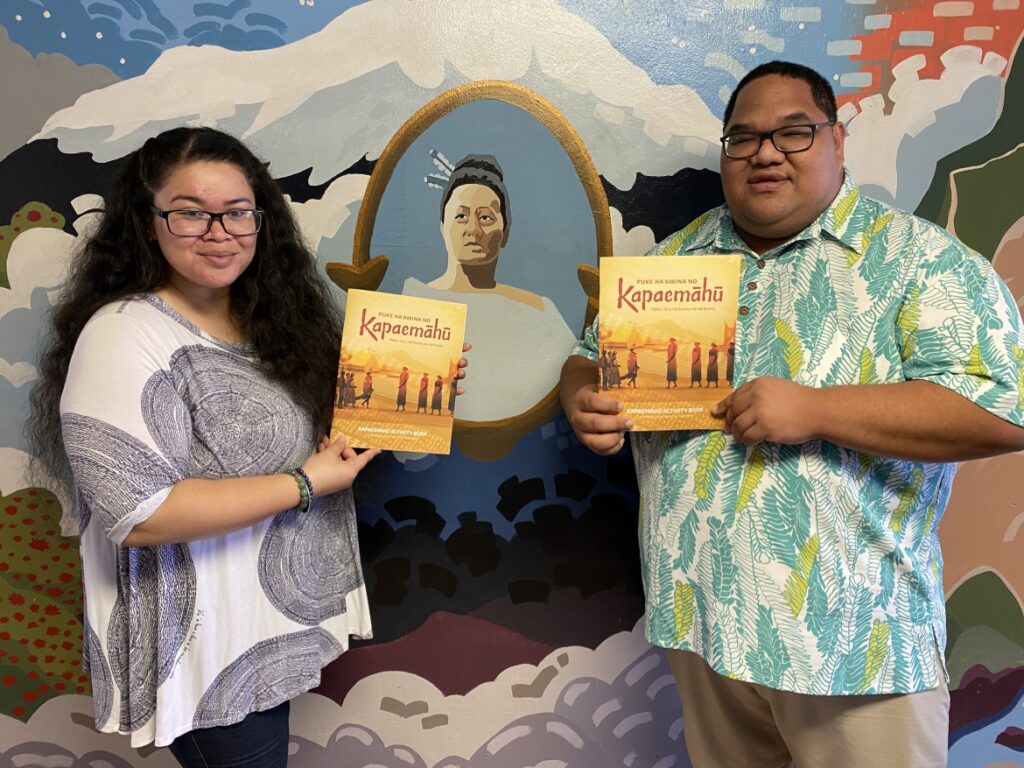
    Kumu Kalehua Kawa‘a and Kumu Kahanuola Solatorio

    By kumu, for kumu. That is the guiding framework two Kamehameha Schools Kapālama kumu used to create a teaching curriculum about the mo‘olelo of Kapaemāhū, in partnership with Kanaeokana and Kanaka Pakipika.

    The mo‘olelo, which Kanaka Pakipika brought to life in an award-winning animated short film, tells the story of four kahuna of dual male and female mind, heart and spirit (māhū) who brought the healing arts from Tahiti to Hawai‘i. When Kanaka Pakipika proposed creating a curriculum for students inspired by the film, KS’ Kealaiwikuamo‘o senior project manager Manuwai Peters, Kumu Kahanuola Solatorio KSK’10 and Kumu Kalehua Kawa‘a KSK’07 answered the call.

    “There are so many things we can use as Hawaiians to create curriculum. Going out to kilo or watching a film and looking at it from an educational perspective, that’s Hawaiian culture-based education,” says Kumu Solatorio. “Our kūpuna were able to use the resources they had, whether a little bit or a lot and create amazing things with it.”

    With input from a small focus group of K-12 kumu from schools across the state, Solatorio and Kawa‘a took the lead in producing a series of 11 ha‘awina to supplement the film. Kumu can customize the lessons for haumāna of all ages. Each one addresses a different theme from the Kapaemāhū film, including gender fluidity as told through Native Hawaiian understanding of māhū, wahi pana, ho‘olauna, mo‘olelo, ‘ōlelo Hawai‘i, Hawai‘i’s history and more. The curriculum, offered in ‘ōlelo Hawai‘i, English and dual-language, is available as printed workbooks and as digital and interactive PDFs.

    “We know that Hawaiian culture-based education, which this [curriculum] represents, is something for all students,” says Peters. “It does have a special place for Native Hawaiian learners because HCBE is a decolonizing methodology that can rebuild and reawaken Native Hawaiian students into their rich past. We have a foundation of knowledge and history that has largely been pushed aside because of settler colonialism. This activity book provides educators with an opportunity to tap into this knowledge system and as such, to employ a decolonizing framework.”

    In early October, Solatorio and Kawa‘a conducted workshops – both in ‘ōlelo Hawai‘i and English – with more than 30 kumu from public, charter and independent schools as well as  parents and volunteers at Bishop Museum. Attendees received printed copies of Puke Ha‘awina no Kapaemāhū or the Kapaemāhū Activity Book.

    “We love to provide and build things for students, for kumu to use to better the future of Hawai‘i for Hawai‘i,” says Kumu Kawa‘a. “It was beautiful to see the lessons [kumu] were thinking about as a result of the foundation we created.”[1] 

    Additional workshops for kumu to connect with this curriculum are currently being planned in communities throughout the islands, including on Kaua‘i on November 9. For more information about upcoming workshops or about the activity book, please e-mail kumu@kanaeokana.net.

    Kumu can access and download the curriculum via Waihona here:  https://waihona.net/#/resources/xhUkhFNPpQOAwZUi1wFg

    Interested in learning more? Watch the award-winning Kapaemāhū animated film that inspired the curriculum here:  https://vimeo.com/360633624/7929768d87

    Full article here.