Author: Joe Wilson

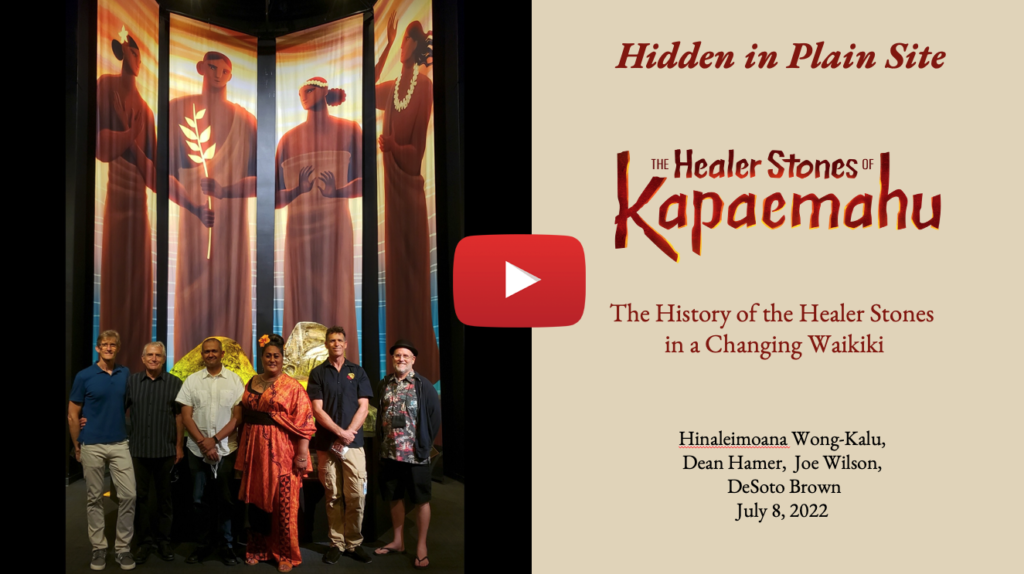
  • Hidden in Plain Sight: The History of The Healer Stones of Kapaemahu in a Changing Waikīkī

    Hidden in Plain Sight: The History of The Healer Stones of Kapaemahu in a Changing Waikīkī

    Hidden in Plain Sight: The History of The Healer Stones of Kapaemahu in a Changing Waikīkī

    The first program in the speaker series of the Bishop Museum’s exhibition on “The Healer Stones of Kapaemahu” delves into the historical findings and artistic choices of the curators, including details about the first written version of the moʻolelo, its loss, its rediscovery deep in a library archive, and its restoration — all in the context of the rise of tourism, militarization, and the erosion of Hawaiian cultural identity throughout the 20th century.

    This program also begins to address the question that many people are asking: “Now that this hidden history is becoming known, will the plaque at the site of the monument intended to honor the healers be updated to include that fact that being mahu was and is intrinsic to their healing abilities?”

    Speakers include:

    — Hinaleimoana Wong-Kalu, exhibition co-curator, Kanaka Maoli teacher, cultural practitioner, and community leader

    — Dean Hamer, exhibition co-curator and Emmy and GLAAD media award-winning filmmaker

    — Joe Wilson, exhibition co-curator, Emmy award-winning filmmaker, community advocate

    — DeSoto Brown, exhibition lead curator and Bishop Museum Historian and Curator of the Archives

  • Hawaii Museum Revisits History of Gender-Fluid Healers

    Hawaii Museum Revisits History of Gender-Fluid Healers

    Hawaii Museum Revisits History of Gender-Fluid Healers

    By AUDREY McAVOY – Associated Press – July 8, 2022

    HONOLULU (AP) — More than 500 years ago, Hawaiians placed four boulders on a Waikiki beach to honor visitors from the court of Tahiti’s king who had healed the sick. They were “mahu,” which in Hawaiian language and culture refers to someone with dual male and female spirit and a mixture of gender traits.

    The stones were neglected for many years, as Christian missionaries and other colonizing Westerners suppressed the role of mahu in Hawaiian society. At one point a bowling alley was built over the boulders.

    Officials restored the stones multiple times since the 1960s but informational plaques installed next to them omitted references to mahu.

    The stones and the history of the four healers now are featured in an exhibit at Bishop Museum in Honolulu. The display highlights the deep roots of gender fluidity in Polynesia.

    Hinaleimoana Wong-Kalu is mahu and one of the exhibit’s curators. She said the healers were revered for their skill and hopes their story will show children in Hawaii that “proper Hawaiian culture” doesn’t pass judgment against those “who have elements of duality.”

    “They were respected and honored because the people knew that their male and female duality made them even more powerful a healer,” Wong-Kalu said.

    Kapaemahu was the leader of the four healers, and the exhibit is named The Healer Stones of Kapaemahu. Their story was passed down orally, like all Hawaiian stories, until a written language was developed in the 1800s.

    But Hawaiians were discouraged from talking about mahu. DeSoto Brown, a Bishop Museum historian and the exhibit’s lead curator, said Christian missionaries who arrived in 1820 forbade anything that deviated from “clearly defined roles and presentation” of male and female genders.

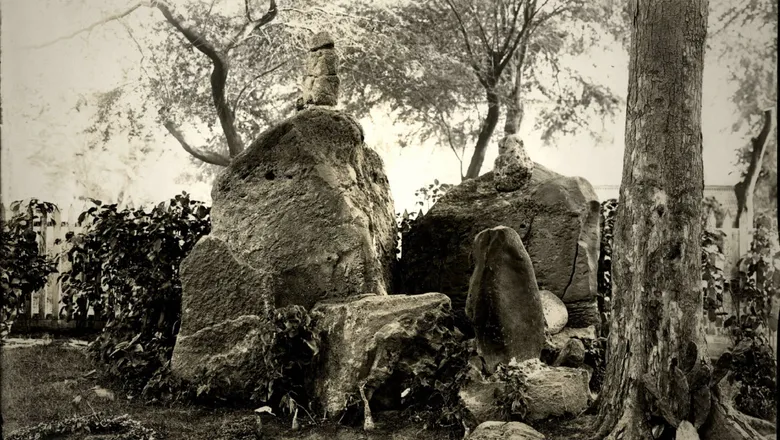
    The earliest known written account of the mahu healers is a 1906 manuscript by James Alapuna Harbottle Boyd, the son-in-law of Archibald Cleghorn, who owned the Waikiki property where the stones were at the time. Cleghorn’s wife, Princess Likelike, and daughter, Princess Kaiulani, were known to place seaweed and offer prayers at the stones when they swam.

    Boyd’s manuscript “Tradition of the Wizard Stones of Ka-Pae-Mahu” said the Hawaiian people loved the healers for their “tall stature, courteous ways and kindly manners” and their cures became famous across Oahu.

    “Their ways and great physique were overshadowed by their low, soft speech, and they became as one with those they came in contact with,” Boyd wrote. “They were unsexed, by nature, and their habits coincided with their womanly seeming, although manly in stature and general bearing.”

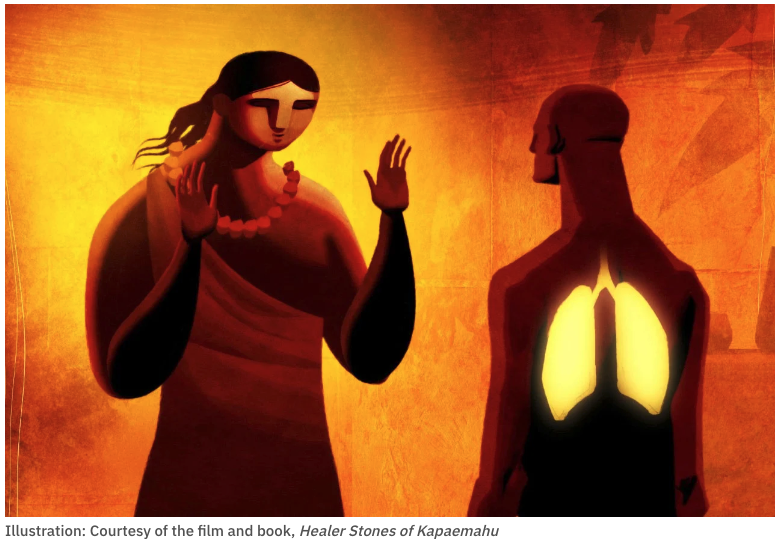
    When it was time for the healers to leave, four boulders were brought down from Oahu’s Kaimuki area. Two were placed at the site of the healers’ hut and the others where they bathed in the ocean. Idols indicating the dual spirit of the healers were placed under each stone.

    Many Hawaiians grew up not knowing about Hawaiian concepts of mahu or the stones because the American businessmen who overthrew the Hawaiian monarchy in 1893 banned Hawaiian language instruction in schools and discouraged speaking it in homes. Generations of Hawaiians lost connections to cultural traditions.

    Wong-Kalu, 50, said as a child she was made to believe mahu was a derogatory word. She remembers being among those who would sit on the stones and drape towels over them after swimming, oblivious to their significance.

    Mahu are akin to “two-spirit” common in many Native American cultures, Wong-Kalu said, adding there are physical, emotional, mental and spiritual elements to being mahu. The representation of male and female depends on the person, she said.

    “In Hawaii, one could exist really in the middle,” she said.

    The stones nearly were lost just before the 1941 Japanese attack on Pearl Harbor. At the time, the Honolulu Star-Bulletin reported the boulders would be blasted or removed after a developer leased Cleghorn’s property to build a bowling alley.

    Following an outcry, plans emerged for a concrete walkway between the stones. But the developer instead built over them.

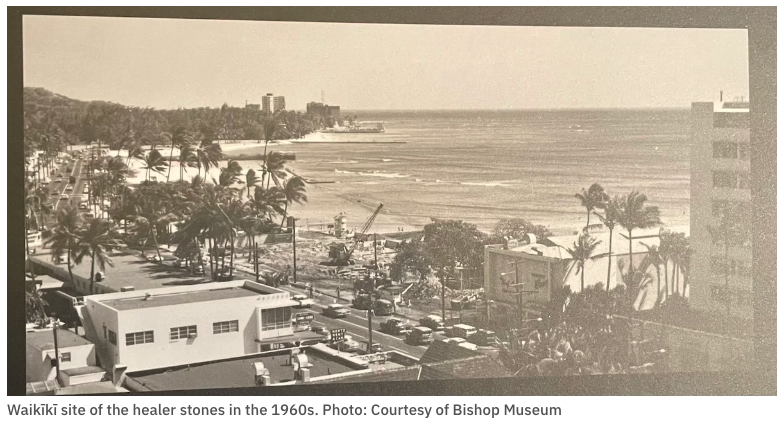
    The stones were uncovered two decades later when the city tore down buildings to build a public beach park. Elders recalled the story of the stones and urged they remain. The city agreed and created a plaque that mentioned the Tahitian healers but didn’t say anything about them being mahu.

    In 1997, the city fenced off the stones and dedicated a new plaque. It also didn’t reference mahu.

    During both periods, waves of homophobia and transphobia washed over Honolulu. In the 1960s, a new state law prohibited cross-dressing and police forced drag performers to wear a button saying: “I Am A Boy.” Three decades later, there was backlash in Hawaii and nationally when the Hawaii Supreme Court sided with same-sex couples seeking the right to marry.

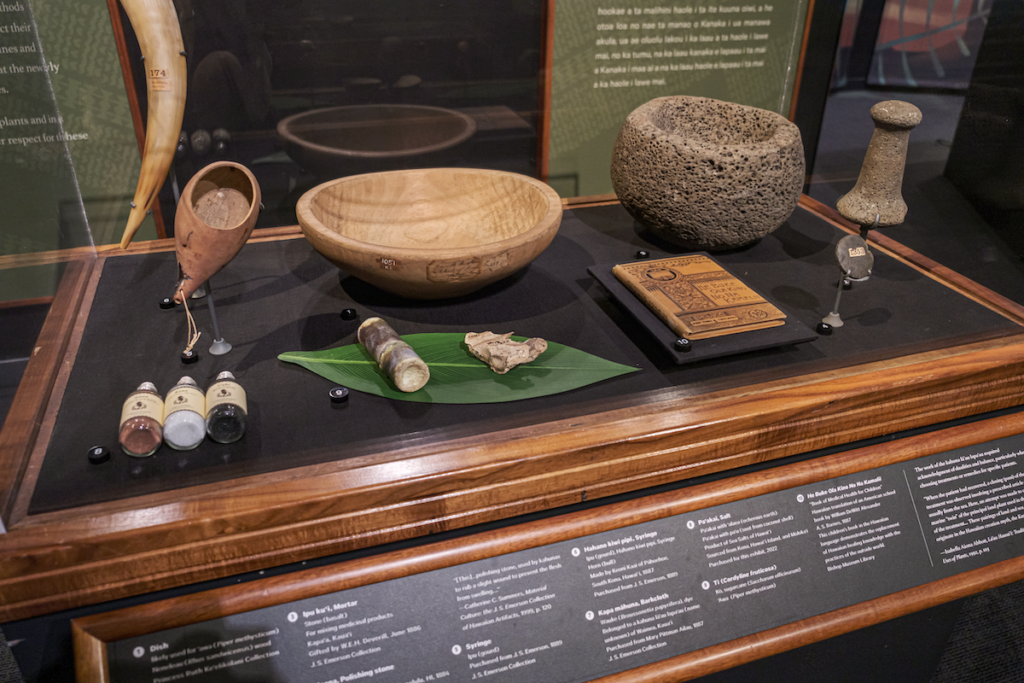
    The Bishop Museum exhibit, on display through Oct. 16, recounts this history and displays artifacts like massage sticks and a medicine pounder that healers would have used centuries ago. Islander concepts of gender fluidity are explored through stories like that of King Kamehameha III and his male lover.

    A map shows terms used in Polynesia for those who don’t identify as male or female, including “fa’afafine” in Samoa and “leiti” in Tonga.

    Dean Hamer and Joe Wilson helped curate the exhibit and hope it will spur the city to tell the full story of the mahu at the site of the stones.

    Ian Scheuring, spokesperson for Honolulu Mayor Rick Blangiardi, said the city is researching the issue and local leaders plan to meet with members of the LGBTQ and Native Hawaiian communities to learn how they can help tell the “true and complete” story of the healers, he said.

    Tatiana Kalaniopua Young, a Native Hawaiian anthropologist, mahu and a director of the Hawaii LGBT Legacy Foundation, said the story the stones and healers helped her family understand that she was not “this weird creature that’s outside of the norm.” And that in a Hawaiian sense, she was part of the norm.

    “It gave me a sense of place and purpose as a mahu and it really made me proud to be Kanaka Maoli, or Native Hawaiian,” she said.

    See article on the Associated Press site here.

  • Hawaii Museum Highlights Story Of Spiritual Waikiki Beach Stones Millions See Every Year

    Hawaii Museum Highlights Story Of Spiritual Waikiki Beach Stones Millions See Every Year

    Hawaii Museum Highlights Story Of Spiritual Waikiki Beach Stones Millions See Every Year

    by Allison Godlove – Travel Awaits – July 4, 2022:

    A new exhibit at The Bishop Museum reveals a long-hidden history of the mysterious stones on Waikīkī Beach, a storied site that few of the millions who pass it by know anything about. The Healer Stones of Kapaemahu explores the past and contemporary means of the four large stones and the legendary male and female healing spirits within them.

    The Healer Stones of Kapaemahu were placed long ago on Waikīkī Beach to honor four māhū, extraordinary individuals of dual male and female spirit, who brought healing arts from Tahiti to Hawaiʻi. Although the stones have survived for centuries, the story behind them has been suppressed and the respected role of māhū erased.

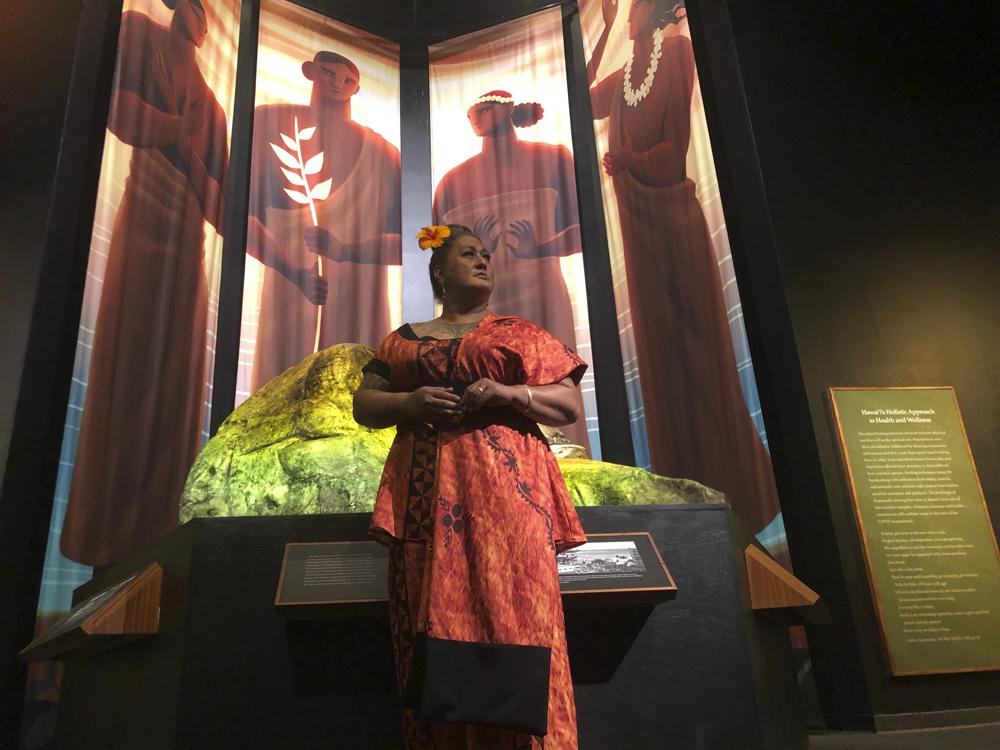
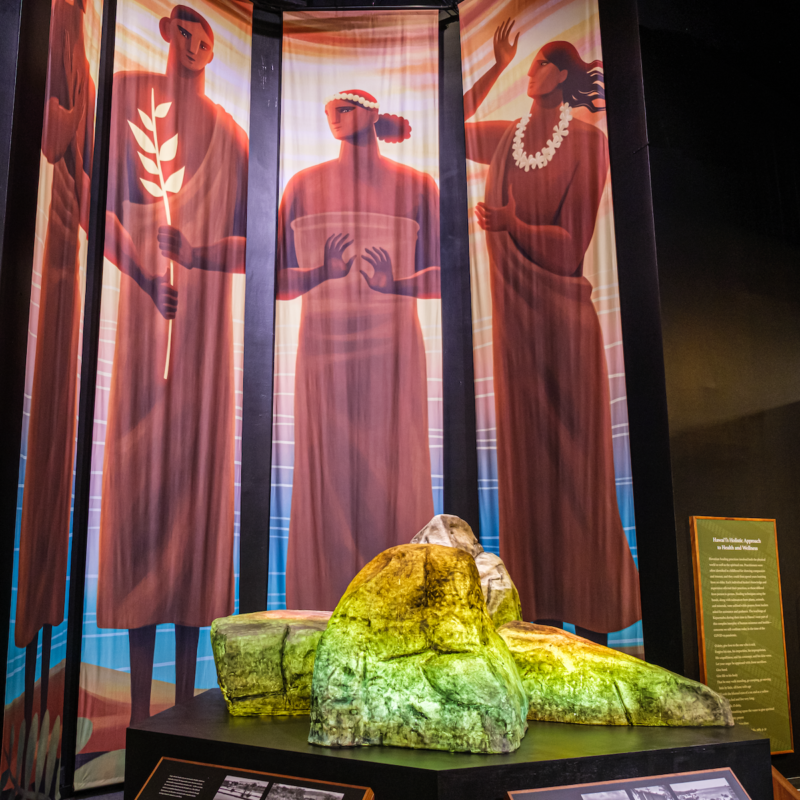
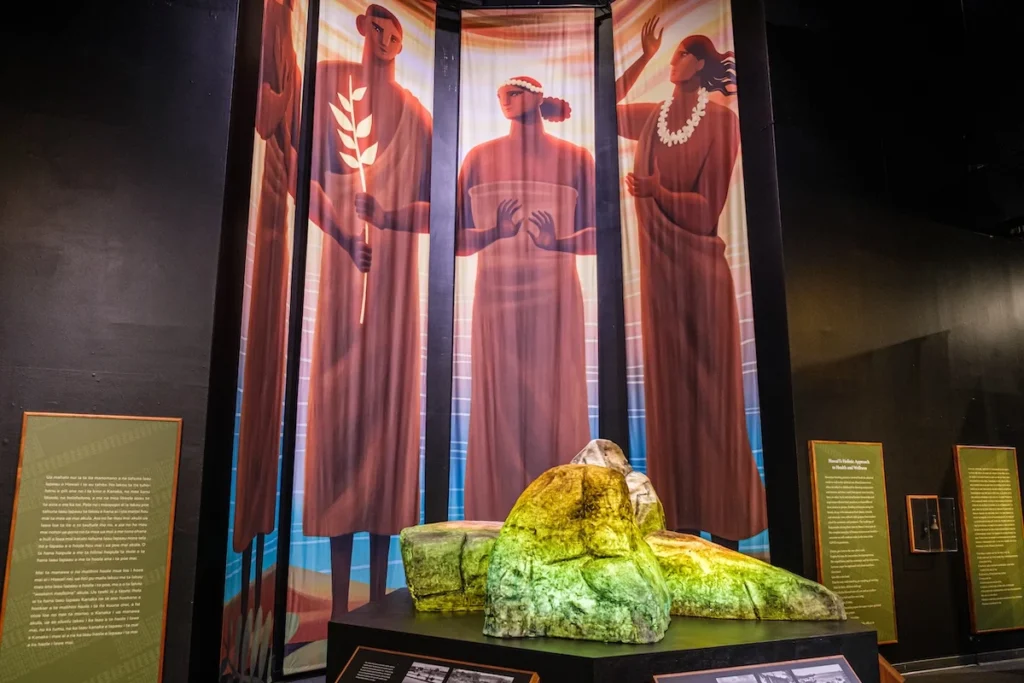
    Guests begin in the Castle Memorial Building with the life-size rendering of the stones and  spirits in the main gallery, then watch their story unfold in a captivating animated film. Guests then continue from the theater to an enormous room lined with projection screens and are immersed in the long history of the site and its story.

    “Our source for the definition of the term ‘Kapaemahu’ is Mary Kawena Pukui, the leading Hawaiian scholar of the 20th century who worked at Bishop Museum for much of her life. She gives this definition in the book she co-wrote, ‘Hawaiian Place Names,’” said DeSoto Brown, Bishop Museum historian, curator of archives, and exhibition lead curator. “In presenting the original moʻolelo from 500 or more years ago, and examining the ways in which it, and the monument erected to honor its heroes, were altered in the 20th century, The Healer Stones of Kapaemahu challenges visitors to ponder how other aspects of Hawaiian history and culture might have been suppressed, changed, or lost. More importantly, visitors will understand that these aspects of Hawaiian culture now have the opportunity to be restored and elevated.”

    Highlights of The Healer Stones of Kapaemahu Exhibit

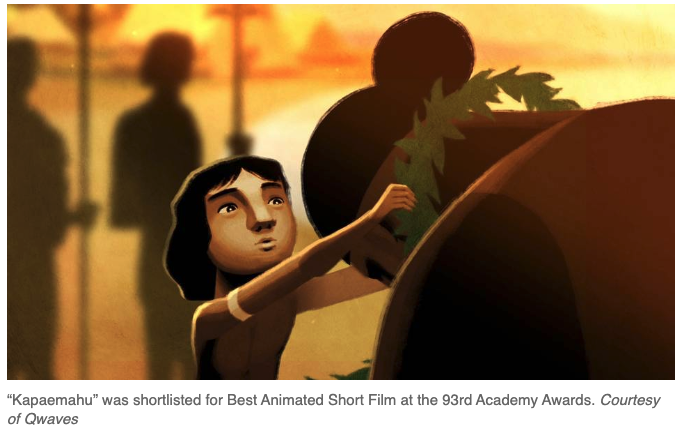
    • Guests will experience an immersive theatrical experience of the 8-minute animated film, “Kapaemahu,” produced and directed by exhibition co-curators Dean Hamer, Joe Wilson, and Hinaleimoana Wong-Kalu.
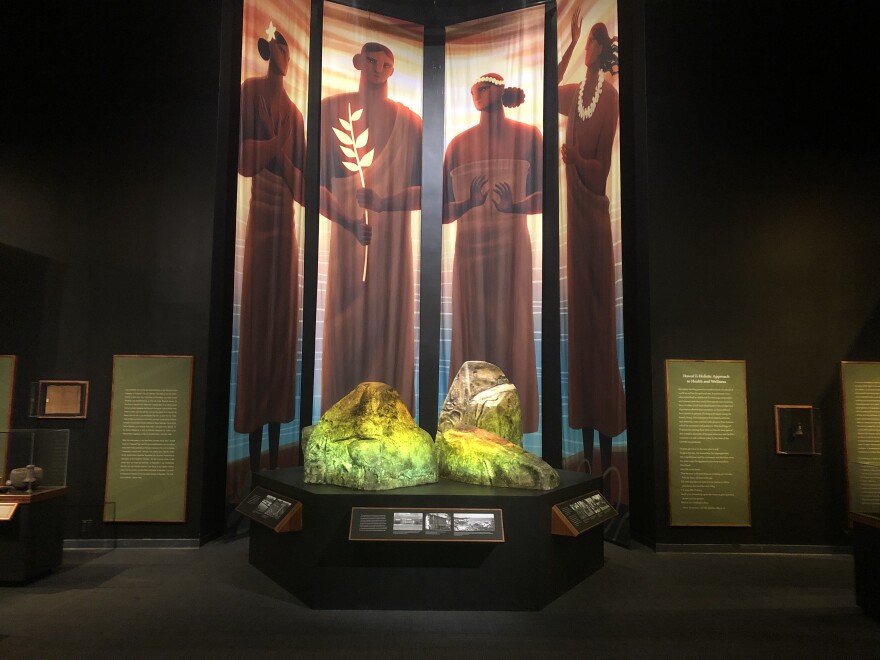
    • Large-scale, three-dimensional artistic renderings of the four pōhaku that constitute the cultural site of Kapaemahu. 
    • An Experiential Timeline gives an extensive multimedia presentation incorporating historical texts and audiovisual materials, spanning the time from the stones’ geological creation to the present day.
    • Collection items selected for this exhibition speak to the integral role healing practices originally played at all levels of Kānaka Maoli life and how these became less prevalent through time due to foreign influences. Several key historical figures who contributed to the transmission of the Kapaemahu story over time will be shown in addition to an extensive array of photographs and historic film clips illustrating the dramatic changes to the Waikīkī district where the stones themselves are still seen today.
    • A photo and video collage of Pacific Islanders self-representing their gender identities and other cultural heritages. This social media-driven component is collected and organized by Qwaves, LLC.
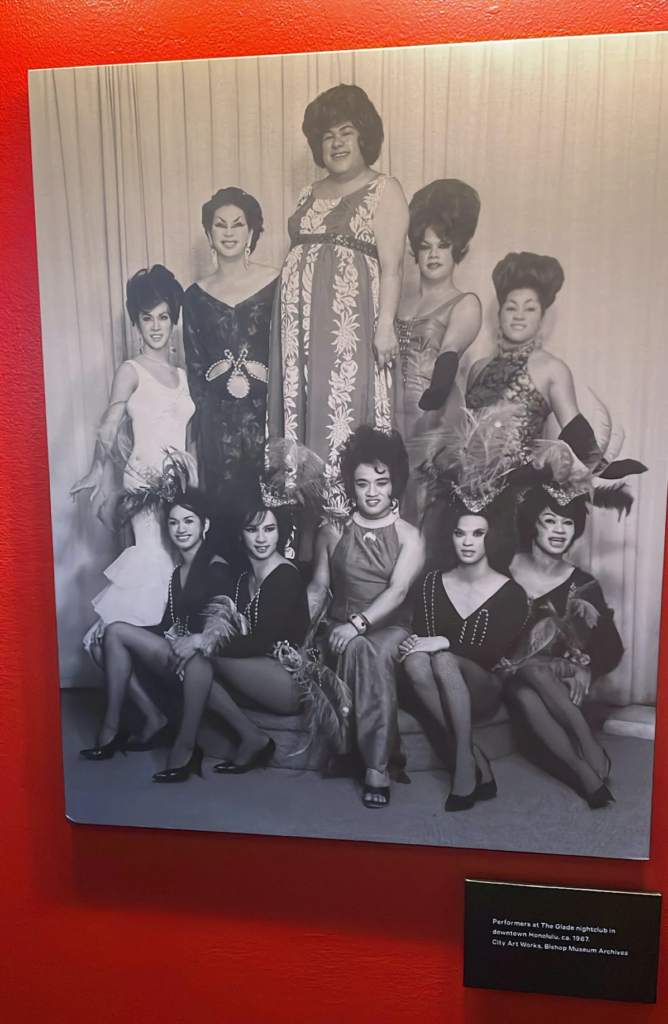
    • One room of the exhibition is a salute to a famed Honolulu gathering place and nightspot of the 1960s and ’70s, where māhū performers could openly be themselves as well as earn a paycheck. The Glade show club functioned as a safe space in the face of hostility and legal prosecution from the rest of the world.

    The mission of The Bernice Pauahi Bishop Museum is to inspire the community and visitors through the exploration, celebration, and perpetuation of the extraordinary history, culture, and environment of Hawai’i and the Pacific. It was founded in 1889 by Charles Reed Bishop in memory of his wife, Bernice Pauahi Bishop, a royal descendent of King Kamehameha I. Today, the museum is an educational center for the community and is widely regarded as the world’s premier institution for Hawaiian and Pacific content.

    More than 200,000 people visit the museum each year, including 20,000 children on school visits. The museum is home to more than 25 million objects and specimens representing nine disciplines and includes more than 22 million biological specimens, over 2 million cultural objects, 115,000 historical publications, and 1 million photographs, films, works of art, audio recordings, and manuscripts.

    The exhibit runs through October 16, 2022. Admission is free for members, $24.95 for adults, $21.95 for seniors, and $16.95 for those aged 4-17. To learn more about the Bishop Museum and the exhibit visit the museum’s website.

  • Experience the Story Behind Waikīkī’s Healer Stones of Kapaemahu

    Experience the Story Behind Waikīkī’s Healer Stones of Kapaemahu

    Experience the Story Behind Waikīkī’s Healer Stones of Kapaemahu

    The new Bishop Museum exhibit explains why the history of the stones remained suppressed for decades.

    by Robbie Dingeman – Honolulu Magazine – June 30, 2022

    The fascinating and complicated story of the Healer Stones of Kapaemahu can be experienced now through October in a sprawling bilingual exhibit at the Bishop Museum that explores themes of culture, healing and inclusion.

    Hidden in plain sight, the Healer Stones of Kapaemahu—four large volcanic pōhaku—rest in one of the busiest parts of touristy Waikīkī—near the police substation and the statue of Duke Kahanamoku—yet if you read the plaque that marks the spot, you’ll find some of the history has been repressed for decades.

    According to Hawaiian mo‘olelo, four healers arrived from afar, perhaps Tahiti, and settled in Waikīkī, where they used their healing arts to help others. The legend says that the four were māhū. Exhibition Curator Hinaleimoana Wong-Kalu explains: “Māhū is understood as that space between kāne and wāhine, between male or female.” She adds: “What makes us unique is that we have elements of male and female perspective, emotion, and spirituality as well as our spirit, our heart, our mind.”

    The exhibit depicts the gentle legendary healers who settled in Waikīkī sharing miraculous cures with the people. After a time, the story says that the healers transferred their names and spiritual powers to the stones, then vanished. And the monumental stones remained on the beach for centuries, memorializing their good work, the exhibit notes in both English and Ni‘ihau Hawaiian.

    Wong-Kalu, who is fluent in Olelo Niihau—which doesn’t use diacritics while our magazine style does—says the exhibit that opened in June grapples with crucial themes. “Hawaiian culture had a place for māhū. And māhū was a term that was weaponized against me and people like me. I grew up thinking it was a bad word. I grew up thinking it was something to avoid and I resented that and I grew to hate that,” she says.

    As years went by and attitudes changed, Wong-Kalu found that being māhū was a source of great empowerment: “People who are māhū are ones who have been great caretakers, great healers, great repositories of knowledge and history, language, culture, here in Hawai‘i and throughout the Pacific.”

    By the early 1900s the stones were on the beachfront property of Archibald Cleghorn who preserved them. After he died, modernization and militarization brought many changes, and in 1941, the stones were buried under a bowling alley built on the property, says DeSoto Brown, Bishop Museum Historian and Curator of the Archives. He says the City and County condemned the shorefront stretch for public use in 1958 and the bowling alley was demolished in 1963. Then Hawaiian elders, including scholar Mary Kawena Pukui, called for restoration of the once-revered stones.

    Yet when the stones’ plaque was updated, in 1963 and 1997, it left out the māhū identification of the healers, of their acceptance and inclusion, to avoid controversy.

    Brown says this exhibit recognizes the treatment of transgender people globally, in cases where they were shunned, accepted and, in some cases, they had special or superior status. He says these themes remain relevant in a world where gender issues can still be fraught. “One of the reasons we want to talk about this and put it forth is to say this is the reality of what was happening,” Brown says.

    The Healer Stones of Kapaemahu exhibit runs through Oct. 16.

    In addition to a three-dimensional model of the stones and dramatic artwork gleaned from the Kapaemahu film, the exhibit includes a powerful timeline of Hawaiian history, when the legend was first published in 1907, and more recent accounts of suppression of gender differences in discrimination against those in the LGBTQ community as well as the emotional battle to legalize same-sex marriage. One room of the exhibit reflects on The Glade Nightclub, a well-known nightspot of the ’60s and ’70s in Chinatown where māhū performers won fame, a paycheck and a community.

    The legend also is told in an eight-minute version of Kapaemahu on continuous display, directed by exhibition co-curators Dean Hamer, Joe Wilson and Wong-Kalu. The team also just released a new kids’ book of the same title in both Niihau Hawaiian and English.

    Even how the stones got to their beachfront home remains shrouded in mystery, says Brown. “Waikīkī geologically doesn’t have big basalt stones because of the way it formed.” And that meant they had to be transported from Kaimukī by people 500 or more years ago. “And that itself is a huge task, and this is ancient Hawaiians, they have no carts, they have no wheels, they have no animals,” he says. And another piece to the enigmatic history.

    1525 Bernice St., (808) 847-3511, open daily, 9 a.m. to 5 p.m., closed Thanksgiving and Christmas days, bishopmuseum.org

    General Admission adults: $24.95; Hawai‘i residents, Hawai‘i college students & military with ID adults: $14.95; seniors (65-plus): $21.95; resident and military seniors (65-plus): $12.95; youth (4–17): $16.95; resident and military youth (4–17): $10.95; children (3 and under): free; children age 16 and younger must be accompanied by an adult.

  • New Exhibit Explores Gender Duality of Waikiki’s Kapaemahu Stones

    New Exhibit Explores Gender Duality of Waikiki’s Kapaemahu Stones

    by Christine Hitt | Travel Weekly | June 25, 2022:

    Every year, millions of people pass by the four large stones fronting Waikiki Beach without understanding their importance. Placed there 500 or more years ago by four mahu (people of dual male and female identity) who were healers from Tahiti, the stones are traditionally said to possess a spiritual power.

    The new Bishop Museum exhibition, “The Healer Stones of Kapaemahu,” is meant to spread awareness and respect the role of mahu in the traditional story, which had been suppressed and erased.

    “These healers were mahu, described as men but with female characteristics,” said DeSoto Brown, Bishop Museum historian and curator of archives. “In many non-Western cultures, people who differ from the male-female presentations are accepted and even sometimes seen as special or having particular, rare talents. But in today’s world, this is obviously not universally true, and in fact such people are again facing increased disapproval, legal discrimination and even violence and death for being different.

    “The message of the Kapaemahu story and the stones that embody it, therefore, is valuable and very relevant,” Brown continued. “Presenting a view of acceptance in a venue such as Bishop Museum can perhaps alleviate some of the negativity.”

    Occupying two large exhibit spaces in the Castle Building, the exhibit combines film, art and historical documents. It includes a large, three-dimensional rendering of the four stones; a presentation of the “Kapaemahu” animated short film; a multimedia timeline of the stones; film clips of changes to Waikiki; and portraits of gender diversity in the Pacific.

    “We were able to make one of the spaces into a large viewing gallery with one large wall being a series of screens showing a timeline of the stones being in Waikiki, and not only how their surroundings have changed but how their story has been suppressed, and why,” Brown said.

    If visitors want to see the healer stones in person, they can be found fronting Kuhio Beach Park in Waikiki, near the Duke Kahanamoku statue.

  • Hawai’i Governor Signs Three Trans Protection Bills Into Law

    Hawai’i Governor Signs Three Trans Protection Bills Into Law

    by Johnny Levanier | INTO | June 24, 2022:

    Governor David Ige of Hawaii has signed into law three bills that solidify protections for transgender citizens, The Hill reports. The new laws come at time when several states across the US are seeking to limit trans and nonbinary freedoms, particularly in regards to healthcare.

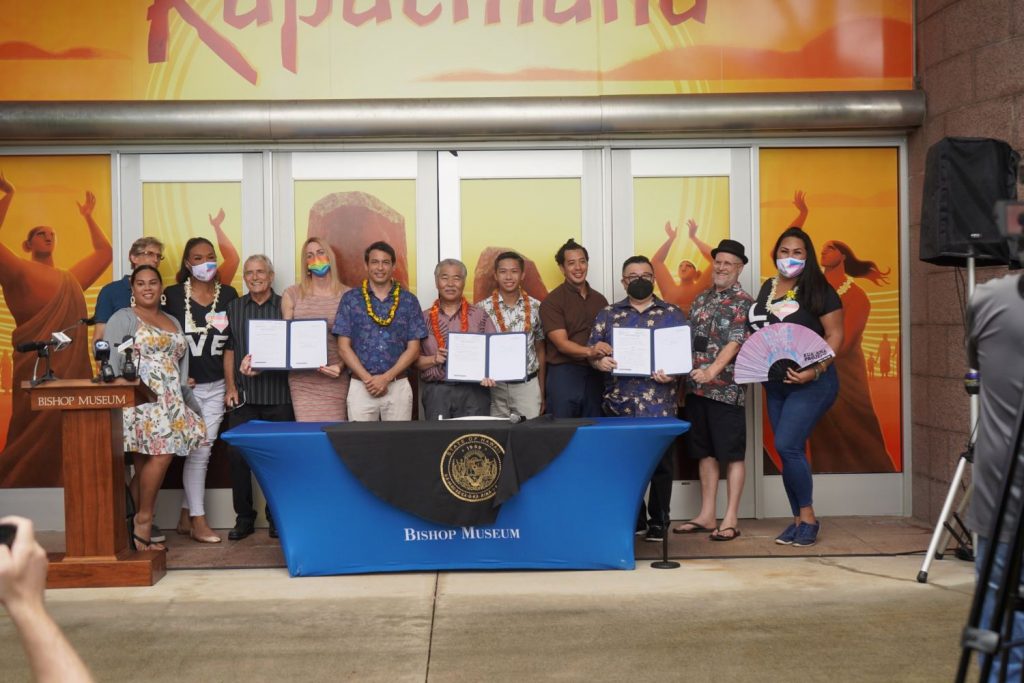
    “‘The Healer Stones of Kapaemahu’ exhibited behind me explores our past and highlights the fact that native Hawaiians had a special, respected place for citizens of dual identity,”  Ige said during the signing ceremony. “We are here today not only to acknowledge that rich history but also to signify that moving forward, we are redoubling our efforts to be a more inclusive community in total.”

    The first bill, titled the Gender Affirming Treatment Act, establishes gender-affirming healthcare as medically necessary under the law, requiring insurance companies to cover it. This includes hormone therapy, surgeries, hair removal, and voice training. At the same time, The Hill notes “insurance companies may only be required to cover gender-affirming medical care when treatments, like hormone therapy, are also covered for patients that use them for ‘purposes other than gender transition.’”

    The second bill prohibits jury exclusion based on gender identity or expression. “Our Constitution requires a jury of peers, and we believe that everyone in our community should be a participant in our system,” Ige said.

    The third bill creates an ongoing commission dedicated to improving the lives of queer Hawaiians. The commission’s members will be made up of county representatives appointed by the governor. Per the bill text, the purpose is to “establish a body to improve the State’s interface with members of the [LGBTQ+] community; identify the short- and long-range needs of its members; and ensure that there is an effective means of researching, planning, and advocating for the equity of this population in all aspects of state government.”

    Ige added, “The commission will play a critical role in coordinating programs, creating public awareness and establishing long-range goals and cooperation on behalf of the LGBTQ+ community. Collectively, these three bills are critical in supporting the LGBTQ+ members in our community.”

    Senator Chris Lee, co-sponsor of the third bill, spoke on the importance of these laws in meeting the moment, when trans healthcare has become a particular obsession of the right wing. “These bills, while important each on their own merits, mean so much more,” he said. “This isn’t just about a commission or jury service – this is about fundamentally rejecting the politics of division and discrimination now permeating throughout the rest of the country.”

  • Hawai’i Governor Signs Bills Furthering LGBTQ+ Equality, Inclusion at Museum Exhibition

    Hawai’i Governor Signs Bills Furthering LGBTQ+ Equality, Inclusion at Museum Exhibition

    Hawai’i Governor Signs Bills Furthering LGBTQ+ Equality, Inclusion at Museum Exhibition

    by Nathan Chritophel | Kaua’i Now |  June 21, 2022:

    State lawmakers showed their support for Hawai‘i’s lesbian, gay, bisexual, transgender, queer, plus community during the 2022 legislative session, passing several measures that further equality and inclusion of the LGBTQ+ community, and Gov. David Ige signed them into law last week — in the middle of Pride Month.

    The measures Ige signed during a ceremony Thursday, June 16, at the Bishop Museum in Honolulu were:

    • House Bill 2405 is called the Gender Affirming Treatment Act. The measure prohibits insurance providers from excluding gender-affirming treatments when medically necessary and requires health plans to provide information about gender transition services.
    • Senate Bill 2136 ensures gender identity or expression cannot be a reason for excluding a Hawai‘i resident from jury service.
    • SB2670 establishes a permanent state LGBTQ+ commission that Ige said will play a critical role in coordinating programs, creating public awareness and establishing long-range goals and cooperation on behalf of the LGBTQ+ community.

    Ige said during the signing ceremony that the COVID-19 pandemic caused people in Hawai‘i to take an honest look at the ways that which they care for each other and their communities.

    “I do believe these bills are an important step to ensuring that the LGBTQ+ community is included in the circle of care that we provide to all of our residents,” he said.

    The ceremony was conducted in front of the Bishop Museum’s Castle Memorial Building, which is hosting “The Healer Stones of Kapaemahu” exhibit this month. Ige said the exhibit highlights that Native Hawaiians had a special and respected place for residents of dual identity.

    “‘The Healer Stones of Kapaemahu’ exhibition explores the past and contemporary meanings of four large stones that were long ago placed on Waikīkī Beach to honor four māhū, extraordinary individuals of dual male and female spirit, who brought healing arts from Tahiti to Hawaiʻi,” according to the Bishop Museum website.

    “We are here today to not only to acknowledge that rich history, but also to signify that moving forward, we are redoubling our efforts to be a more inclusive community in total,” Ige said during the bill signing ceremony.

    He said collectively, the three bills are critical in supporting LGBTQ+ members of the Hawai‘i community.

    “They will help us identify and address social and community issues more effectively and ensure that we can work to prevent discrimination in many areas of our society,” the governor said.

    He thanked the advocates and legislators involved in passing the three measures, saying they make Hawai’i a more inclusive and accepting place.

    “We are committed to ensuring everyone in our community has access to be active participants in our community,” Ige said. The governor also later Thursday in a Facebook post again thanked everyone who made the three bills happen, ensuring “Hawai‘i strives to be an inclusive community for all.”

    State Sen. Chris Lee and state Rep. Adrian Tam, who established the Equality Caucus in the state Legislature earlier this year, also spoke during the bill signing ceremony. The caucus is aimed at identifying and addressing key issues facing Hawai‘i’s LGBTQ+ community.

    “These bills, while important each on their own merits, mean so much more because this isn’t just about a commission or jury service or anything else,” Lee said. “This is fundamentally about rejecting the politics of division and discrimination now permeating discussion throughout the rest of the country and reaffirming for Hawai‘i that everyone here deserves the same respect and aloha.”

    While the issues of LGBTQ+ rights and inclusivity are divisive elsewhere in the United States, Lee said Hawai‘i comes together as a community and recognizes that there is much to learn from each other, no matter a person’s background, history or relationships.

    “That’s such a wonderful thing, and we have such a rich history here in Hawai‘i of coming together in this way … ,” he said.

    Tam, the state Legislature’s only openly gay member, said Thursday’s bill signing ceremony was a momentous occasion.

    “It wasn’t that long ago that the bills that we are passing today or similar measures would have zero to no chance of becoming law, and if they were on the path of becoming law, they wouldn’t be deserving of a ceremony like this because of the negative stigmas that plagued our community,” Tam said. “But today, my hope is that we send a strong message to our youth that while they may still be struggling to accept themselves or they’re slowly coming to terms with who they are, we send a strong message that Hawai‘i stands with them and that we love them.”

    He said while legislatures and governors in other parts of the country are passing measures that harm the LGBTQ+ community, from bills prohibiting teachers from teaching LGBTQ+ topics in their classrooms to legislation that would require counselors and teachers to out students to their parents, he hopes Hawai‘i sends a strong message throughout the nation that it is continuing to move forward, offering an inclusive community for everyone.

    Tam added that Ige’s signing of the three bills not only benefits the LGBTQ+ community, it also furthers the quest of making Hawai‘i a more equitable society.

    He said HB2405 creates a positive trajectory for members of the LGBTQ+ community to receive gender-affirming health care.

    “Various advocate groups from the trans community have been advocating for a bill with this language for the last few years,” Saludares said. “Our hope is that having this bill signed into law will, in fact, make it easier for members of our community to receive these life-saving treatments. As the science proves, gender-affirming health care is suicide prevention.”

    He said that while discrimination of any kind is already prohibited by laws already on the books, Equality HI is grateful Ige signed SB2136, as it reaffirms the state’s commitment to equality for all members of the LGBTQ+ community.

    Saludares said SB2670 is a monumental bill. It makes Hawai‘i only the third state to create a permanent statewide commission that focuses on the needs of the LGBTQ+ community.

    “Creating the commission is a great first step in this process,” he said, adding, however, that the bill passed without an appropriation of funds. “We are hopeful that the appropriation will be forthcoming so that the commission can hire a staffer to take minutes from the meetings and perform other duties necessary. We also remain hopeful that the diversity of the LGBTQIA+ community will be reflected in the members that the governor appoints. As the saying goes, ‘nothing about us, without us.’”

    Phill Russell, president of Hawai‘i Island LGBTQ Pride, echoed Saludares’ comments.

    “I’m happy we are taking steps to address issues facing our trans ‘ohana,” Russell told Big Island Now. “More needs to be done regarding discrimination and gender-affirming care. I’m looking forward to what the newly formed commission reveals and hope they have representation and seek input from our outerisland communities.”

    To watch the bill signing ceremony on the governor’s Facebook page, click here.

    The University of Hawai‘i at Hilo, one of the most diverse universities in the nation, also announced Tuesday, June 21, that an anonymous donor has helped further equality and inclusion by gifting the UH-Hilo campus with $3 million for scholarships, including the first-ever endowed scholarship specifically supporting LGBTQ+ students.

    The Kruschel LGBTQ+ Endowed Scholarship for students who identify as LGBTQ+ is also a first for the UH system.
     
     
  • Gender Identity and Art: Celebrating What Colonialism Erased

    Gender Identity and Art: Celebrating What Colonialism Erased

    Students of travel are frequently exposed to the legacy of colonialism. As we explore the world, we come face to face with traditions and customs that have been either eliminated or commodified. In no area is this more potently true than when it comes to the erasure of gender diversity around the world. Before colonialism took hold, gender-expansive categories existed in many traditional cultures and were present on every continent. This year, a few artists are finally getting to bring their culture’s gender identity back to the light.

    In Samoan culture, a gender category called fa’afafine is occupied by those who were presumed male based on their anatomy but display feminine characteristics as they grow. At this year’s Venice Biennale, one of the world’s most distinguished arts events, fa’afafine artist Yuki Kihara will be showing curated selections from her photographic series Paradise Camp. The pieces all reflect influences from Gaugin, the tourism industry, environmental degradation, and what it means to be excluded from art, advertising, and aid.

    A famed legend in Hawaiian lore tells the story of the mahu, healers who encapsulate both male and female elements. In the story, four healers arrived from Tahiti and shared their spiritual gifts with residents of the islands, who were so grateful that they erected four large stones as monuments of tribute. On June 18, the Bishop Museum in Honolulu opened an exhibition that begins with an animated portrayal of the story and is comprised of various artifacts from the Hawaiian healing traditions. The animation will be shown in both English and ʻōlelo Niʻihau, the form of the Hawaiian language most untouched by foreign contact.

    In Oaxacan culture, the gender category muxe is one occupied by those with feminine presentation whose anatomy would have categorized them as male within a binary system. Muxe occupy a complicated space within their regional culture which is explored by performance artist Lukas Avendaño (she/he) in his show LEMNISKATA, which will be staged in early July. Her choreography incorporates sound, imagery, and Zapotec mythological traditions to give audiences a fully immersive perspective into muxe realities.

    Original article HERE.

  • ‘The Healer Stones of Kapaemahu’: an Exhibit on Gender and Erased History

    ‘The Healer Stones of Kapaemahu’: an Exhibit on Gender and Erased History

    by Zoe Dym – Hawai’i Public Radio – June 22, 2022:

    The Bishop Museum opened a bilingual exhibit in English and ʻŌlelo Niʻihau on the history of māhū over the weekend. Māhū means to have a dual male and female spirit.

    The exhibit is called “The Healer Stones of Kapaemahu.”

    According to a moʻolelo, four māhū healers from Tahiti came to Waikīkī and treated diseases. Kapaemahu was the leader of the group. The healers transferred their mana into four stones before leaving the island.

    Today there are four large stones between the Duke Kahanamoku statue and the public shower facility at Waikīkī Beach. These are the healer stones of Kapaemahu.

    The plaque in front of the stone provides a story about the healers, but omits any detail on their gender.

    “The Healer Stones of Kapaemahu” exhibit showcases the erased history of gender fluidity in Hawaiʻi.

    Dean Hamer, the co-curator of the exhibit, says the healers’ powers and skills are embedded in their māhū identity.

    The idea for an exhibit on the Kapaemahu stones began 10 years ago when Hamer and his partner Joe Wilson were filming their documentary, “Kumu Hina.” It focuses on Native Hawaiian māhū Hinaleimoana Wong-Kalu.

    The conversation to build an exhibit on Kapaemahu started when Wong-Kalu began chanting to the healer stones.

    Visitors are recommended to watch an animated short film before walking through the rest of the exhibit. The film explains the moʻolelo in ʻŌlelo Niʻihau with English subtitles.

    After watching the animation, guests can walk through the history of the Kapaemahu stones, healing arts, and sex and gender diversity.

    A section of the exhibit is dedicated to contemporary topics of gender diversity in Hawaiʻi.

    Hidden behind a curtain is a replica of the Glade Show Lounge — a now-closed nightclub in Chinatown with transgender performers.

    Performers from Glades were forced to wear a pin that read “I Am A Boy.” A state law passed in 1963 deemed the performers and other transgender residents were dressing as women with the intent to deceive.

    “The Healer Stones of Kapaemahu” features contemporary voices of people across the gender spectrum in the Pacific Islands.

    The exhibit is open until Oct. 16 in the Castle Building. Bishop Museum is open daily from 9 a.m. to 5 p.m. More information at bishopmuseum.org/kapaemahu

  • Gov. Ige’s Remarks at LGBTQ+ Bill Signing Ceremony

    Gov. Ige’s Remarks at LGBTQ+ Bill Signing Ceremony

    Governor David Ige’s Remarks at LGBTQ+ Bill Signing Ceremony

    Hawaii Governor David Ige chose The Healer Stones of Kapaemahu exhibition at the Bernice Pauahi Bishop Museum, which represents Hawaii’s long history of acceptance and inclusion, as the backdrop for the June 16, 2022 signing of three bills passed by the State Legislature to address needs and concerns of the Mahu / LGBTQ+ community.

    Here’s what will now become law in Hawaiʻi:

    1) Insurance providers will be prohibited from excluding gender affirming treatments when medically necessary and will require health plans to provide information on gender transition services. (HB2405)

    2) Measure signed to ensure gender identity or expression cannot be a reason for excluding a citizen from jury service (making sure discrimination plays no part in our legal system). (SB2136)

    3) The Hawaiʻi state Lesbian, Gay, Bisexual, Transgender, Queer, Plus commission will be established on a permanent basis. (SB2670)