THE HISTORY OF THE STONES – FROM RESPECT TO NEGLECT TO RECLAMATION
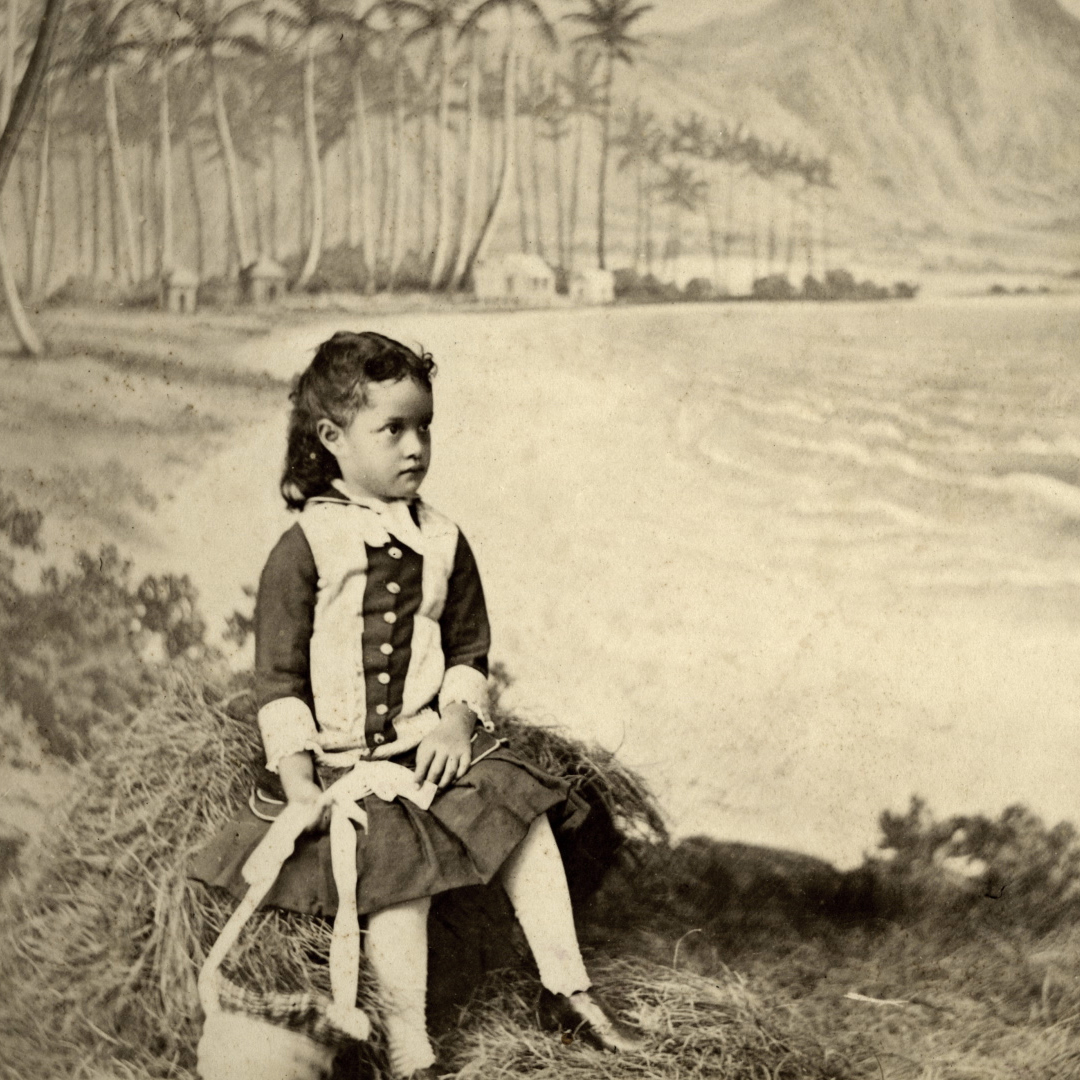
Princess Kaiulani
After the healers left Hawaii, the stones remained in Waikiki for centuries and were revered by Hawaiian nobility. One of the stones was partially exposed on the beachfront property of Princess Likelike and her daughter Kaiulani, the sister and niece of Queen Liliuokalani, who prayed and placed seaweed lei on them before bathing in the sea.
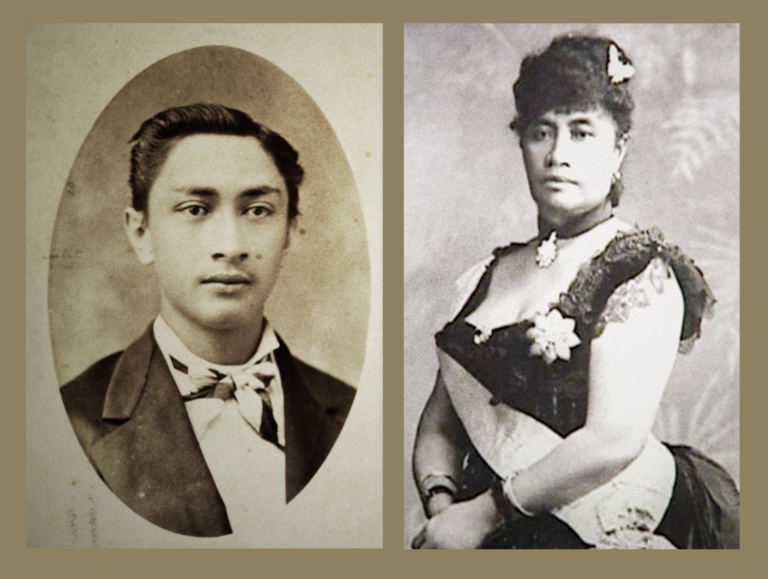
Aalapuna Boyd and Queen Liliuokalani
Their devotion led Likelike’s husband, Governor Archibald Scott Cleghorn, to excavate the four stones in 1905, and his son-in-law, James Aalapuna Harbottle Boyd, to convey their story to the publisher of the Hawaiian Almanac. The Hawaiian title for the story was Ka Pohaku Kahuna Kapaemahu, or The Healer Stones of Kapaemahu.
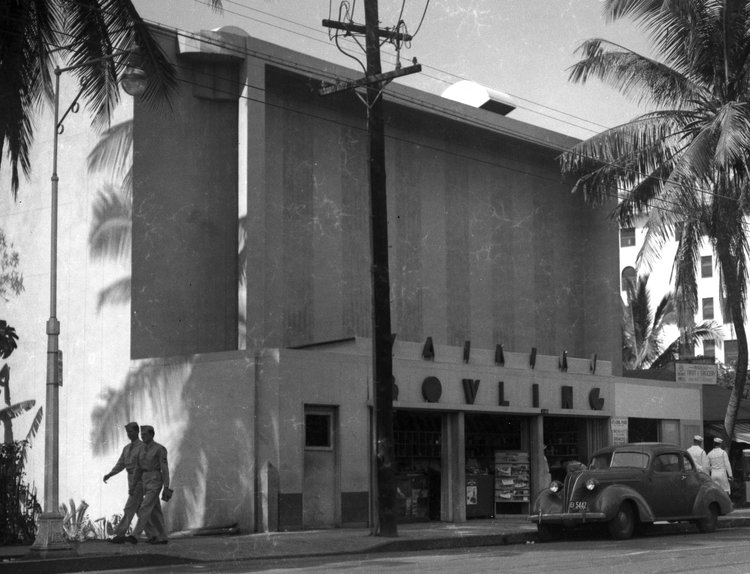
The stones were buried under this bowling alley for 22 years.
But colonization and the introduction of foreign religion led to neglect of the stones, and disrespect for mahu, and in 1941 the stones were buried under a bowling alley.
Mary Kawena Pukui and Mayor Blaisdell
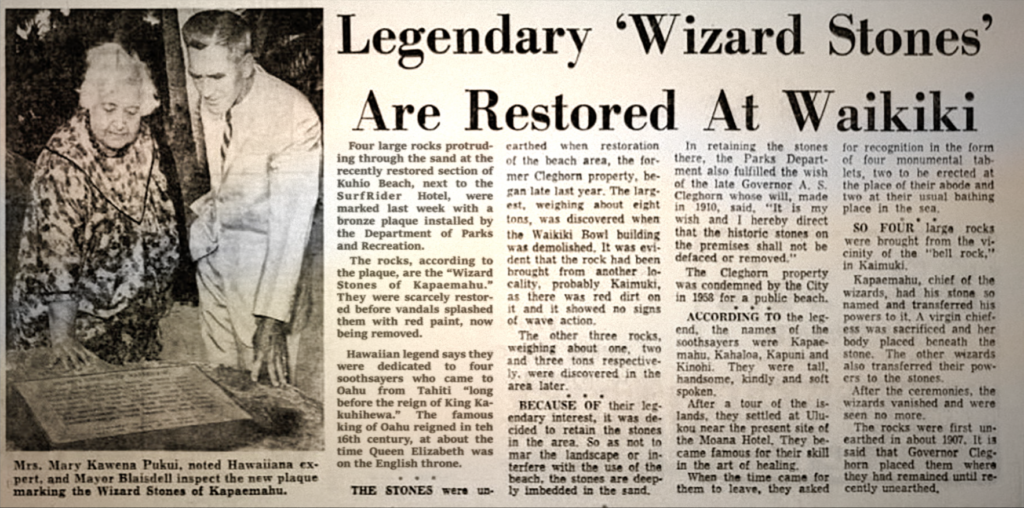
The stones were recovered in 1963. Fortunately, preeminent Hawaiian authority Mary Kawena Pukui knew the story of the stones, which she defined as “a row of mahu,” and insisted they be preserved.
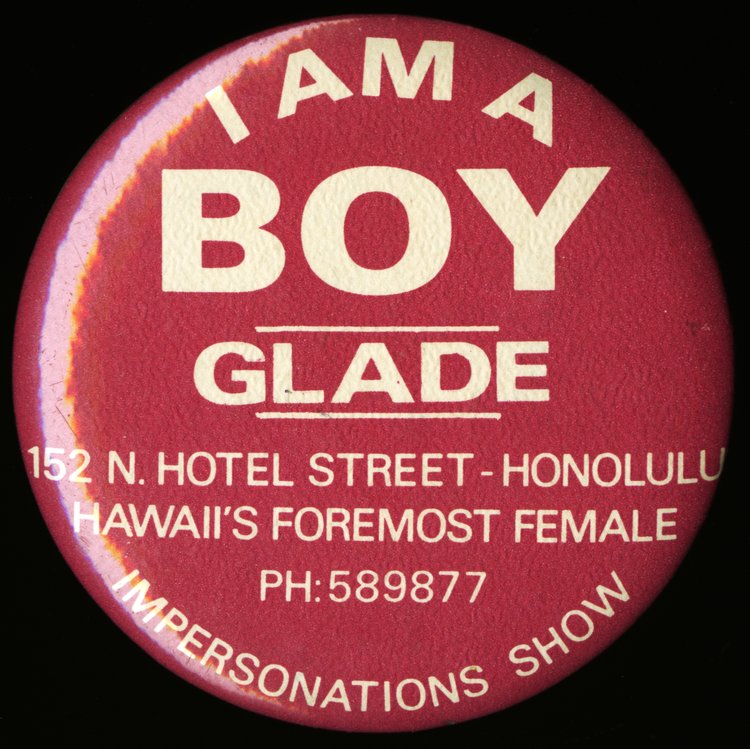
Button worn by Mahu entertainers
Unfortunately this was a period of great discrimination in which mahu nightclub performers had to wear a button proclaiming their biological sex to avoid arrest. Not surisingly, the connection of the stones to gender fluidity was suppressed, and the role of mahu hidden. One self-proclaimed clairvoyant known as the “Lady in Red” even claimed the healers were ordinary men and women, while a tourist promoter mistranslated Kapaemahu as “not homosexual.”
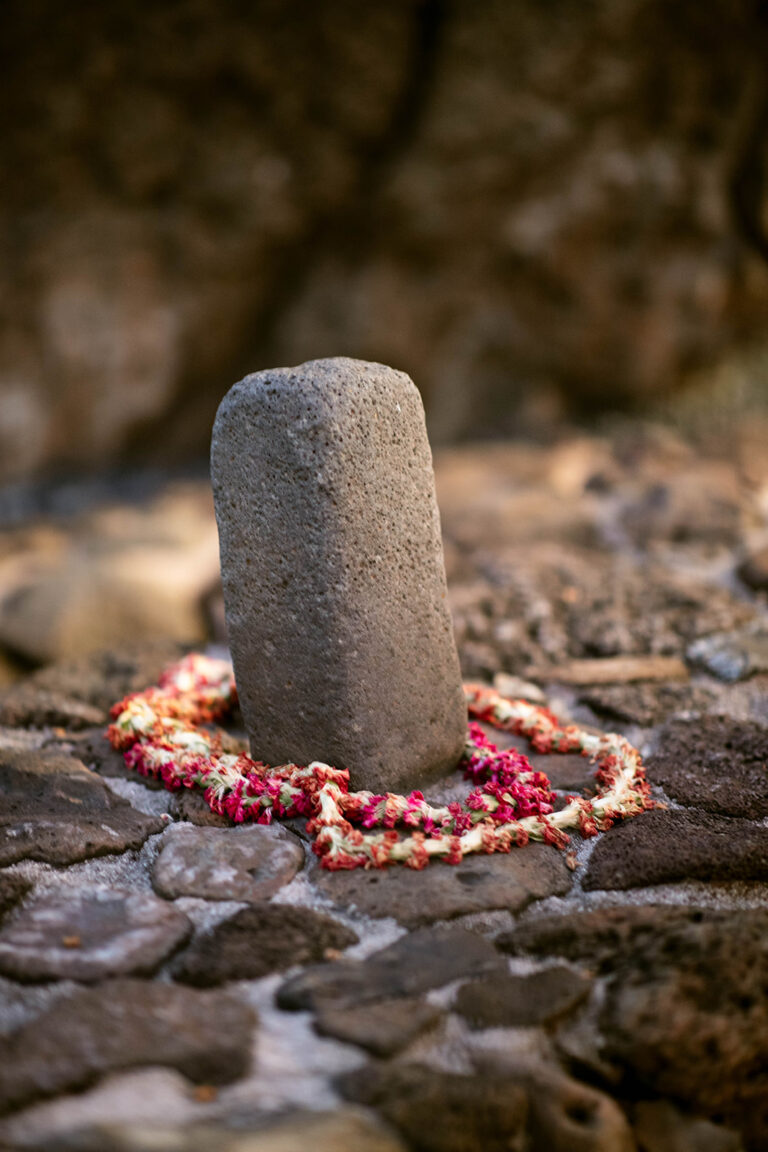
Tahitian stone at renovated site
In an an effort to restore Hawaiianness to Waikiki, a major renovation was undertaken in 1997. Led by traditional healer Papa Henry Auwae, the stones were placed on an elevated platform and surrounded by a fence. A stone from the healers’ home in Tahiti was also placed in the enclosure.
Despite this attention, the full story of the stones and their connection to gender diversity was omitted from the accompanying informational plaque. The stones were also called by a new name, “Nā Pōhaku Ola Kapaemāhū ā Kapuni,” that does not have an historic basis and lacks the kaona of the original Hawaiian title, “Ka Pohaku Kuhuna Kapaemahu.”
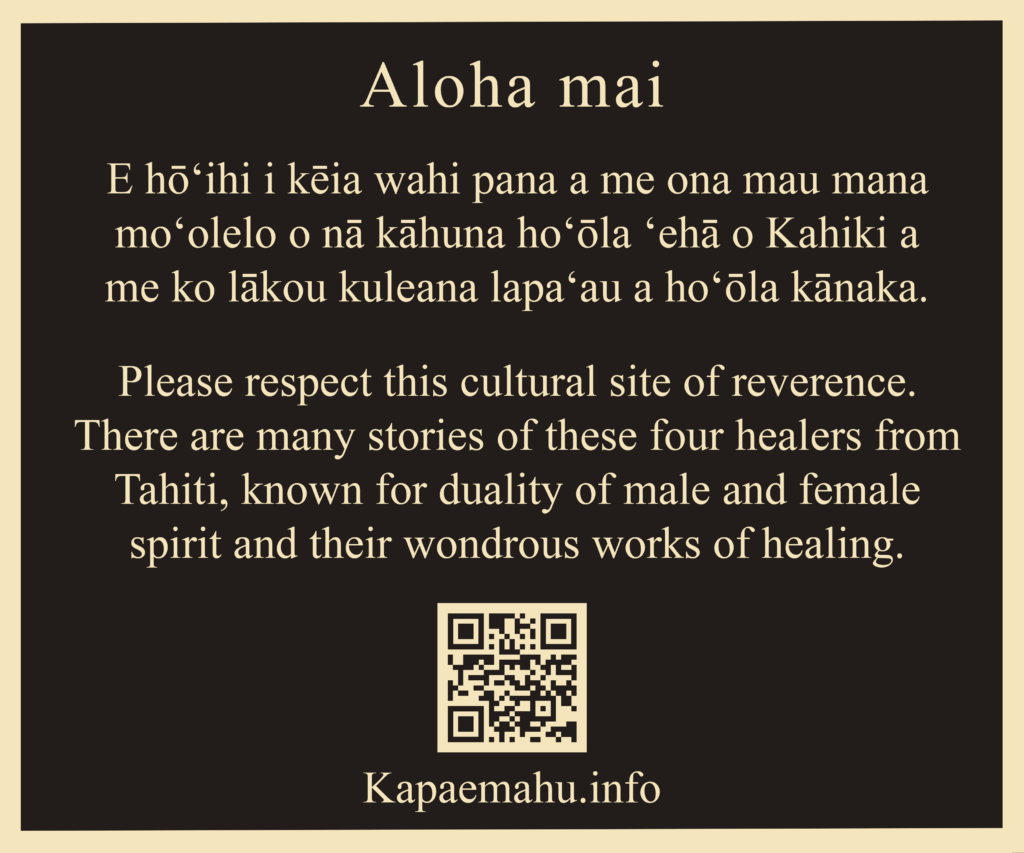
Restoration and new plaque
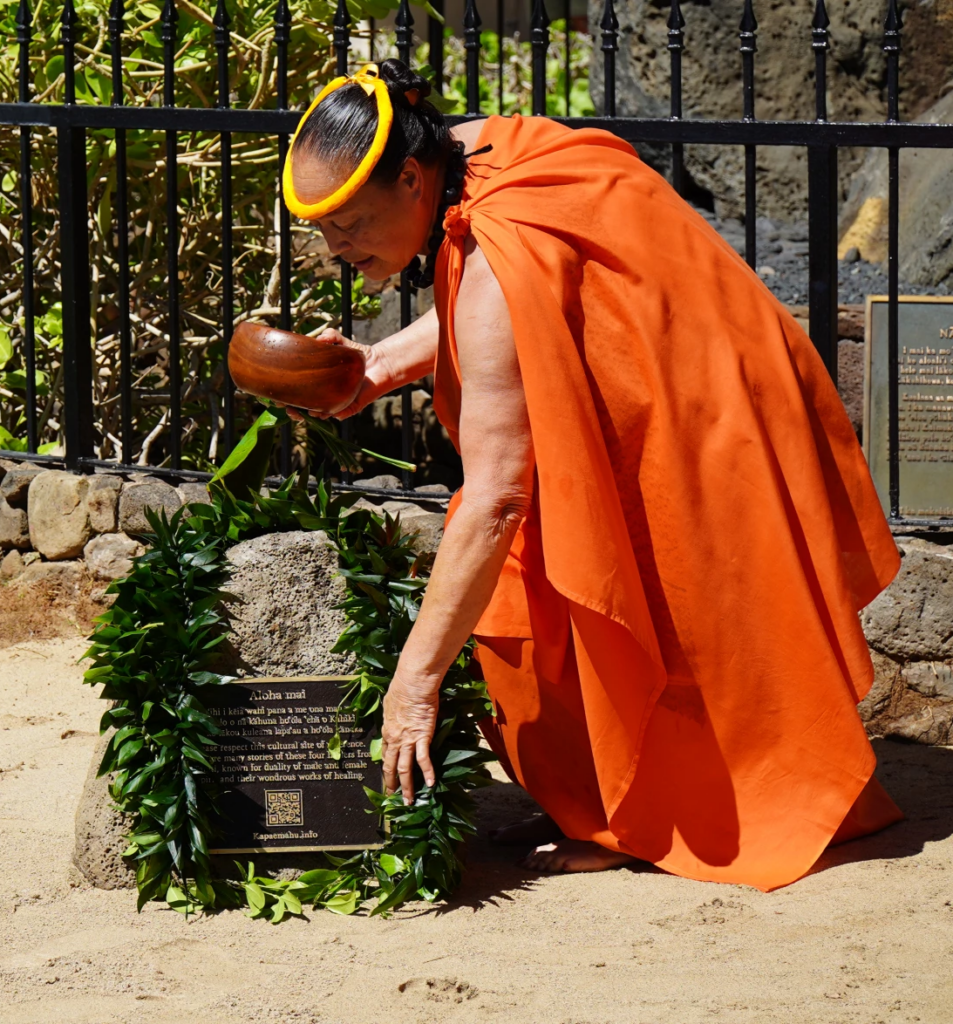
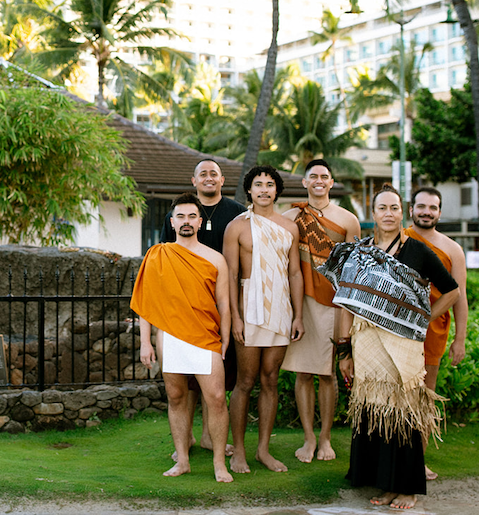
Beginning a decade ago, a movement grew to restore the once-honorable status of mahu as respected members of society with important responsibilities as caretakers, healers, and keepers of ancient traditions. As part of this effort, the multimedia education and engagement collective Qwaves Kanaka Pakipika uncovered and made known new information and understandings of Kapaemahu that stimulated a community-based effort to update the signage at the site. In 2023, a new bronze plaque was installed on a stone in front of the site to provide visitors and residents with information to help them better understand the history, stories, and current meanings of this ancident wahi pana. Now everyone who visits the Healer Stones of Kapaemahu can behold their remarkable power.
The stones today
Today the stones occupy a protected location in the heart of Waikiki beach. For those who know their history and understand their meaning, they are a permanent reminder of the skills and accomplishments of the four mahu healers. You can help preserve the honor and dignity of this storied site of the Hawaiian people by sharing their story.