Author: Nicholas Griffith

  • ‘Kapaemahu’ Revives Hidden Hawaiian History of Healing and Aloha

    ‘Kapaemahu’ Revives Hidden Hawaiian History of Healing and Aloha

    ‘Kapaemahu’ Revives Hidden Hawaiian History of Healing and Aloha

    by Victoria Davis – Animation World Network – 1/26/21:

    Beautifully animated, award-winning 2D short celebrates the long-suppressed, centuries-old story of Waikiki’s mysterious four-boulder monument to the gentle people, both male and female in mind and body, who brought science and healing to the island.

    Attracting over 4 million visitors every year prior to the COVID pandemic, Oahu’s Waikiki Beach is famous for its hotels, white sand beaches, and 9-foot-tall bronze statue of Hawaii’s surfing legend and famed Olympic swimmer, Duke Kahanamoku. But another, more mysterious monument, made up of four large boulders, also rests on Waikiki’s oceanfront, its significance long unknown to visitors and even locals. Titled “Nā Pōhaku Ola O Kapaemahu A Me Kapuni,” or “The Stones of Life,” the monument, though erected in 1997, has a history on Waikiki that spans six centuries, its story tarnished, changed, and suppressed over time.

    But the award-winning animated short film, Kapaemahu, is changing all that, revisiting, revitalizing, and celebrating the true magic and meaning behind the stones.

    “There was a lot of effort to peel away the layers to uncover what had been hidden for so long and intentionally suppressed,” says Joe Wilson, a writer, co-director, and producer on Kapaemahu along with partner Dean Hamer and lead director Hinaleimoana Wong-Kalu. “This film is a great metaphor for calling us all to try to see what’s in front of us and understand it more deeply than just what’s on the surface.”

    The eight-minute 2D animated short takes place in the 15th Century, as four tall, deep-voiced, gentle Mahu – individuals who are a mixture of both male and female in mind, body, and spirit -sail from Tahiti to Hawaii and introduce their gifts of science and healing to the inhabitants of Waikiki. The Mahu are in-turn gifted by the islanders with a monument of four boulders in their honor. After transferring their powers into the stones, the Mahu disappear. As time passes, foreigners inhabit the island and wars rage; the once sacred and revered stones, and their story, are forgotten and buried under a bowling alley in 1941. Though the stones are recovered in the 1960s and placed back as a monument on Waikiki 37 years later, their true story was not fully recovered. But the power of the Mahu still calls out to those who pass by and are willing to listen.

    Winner of the Atlanta Film Festival’s Best Animated Short Award, the Grand Jury Award at Animayo, the Audience Award at Outfest, the Special Jury Prize at Hiroshima International Animation Festival, and many others, Kapaemahu is now an Oscar contender. Wilson and Hamer are both award-winning documentary filmmakers, known for their films like Leitis in Waiting (2018) which highlights transgender stories in the Pacific. They first began thinking of an animated film surrounding the story of the stones 10 years ago while working on a documentary film, Kumu Hina, about their fellow Kapaemahu director Wong-Kalu, a native Hawaiian teacher, cultural practitioner, and Mahu who “grew up being taught that Mahu, the concept of it and the understanding of it, was not something to be proud about.”

    “I grew up learning that being Mahu was bad by direct and indirect comments, and inferences and looks and glances and being referred to negatively as ‘Mahu,’” remembers Wong-Kalu. “And the culmination of all those life moments that you’ll never forget – and I will never forget them – made me feel less than. I look back on this journey and there are still times where I feel that little tremble, that quiver, because I remember the hurt that was associated with the word. It was not until after I graduated high school that I began to learn the rightful history of the Mahu and the stones I grew up laying on at the beach as a child.”

    Mahu, and Mahu entertainers in particular, were demonized in the 1960s; when the historic stones resurfaced, the Mahu were completely erased from the story. That is, until Hamer, Wilson, and Wong-Kalu discovered a handwritten manuscript from 1906 – describing the story of the stones – at UH Mānoa’s Hamilton Library in 2015, conveyed by James Harbottle Boyd, a member of the Hawaiian nobility and close confidant of Queen Liliuokalani. It was written by Thomas Thrum, who later published the story in the Hawaiian Almanac.

    “We felt secure that we had found at least the most authentic story that had been passed down by the elders,” says Hamer. “But unlike our documentary work, our story is not about people we can go to for an interview. That’s what drove our move to animation; the film grew very organically from there.”

    Academy Award-nominated animation director Daniel Sousa, known for his earthy and mythical animation styles in shorts like Fable (2006) and Feral (2012), was brought onto the Kapaemahu team to bring new, sun-kissed animated life to an ancient story. From golden sands and a glistening green and orange ocean to the rust red tones of the islanders, Kapaemahu’s whole canvas represents the saturated sunsets of Hawaii; the film is accompanied by narration from Wong-Kalu in Olelo Niihau – the only form of Hawaiian that has been continuously spoken since before the arrival of foreigners – and chants by contemporary Hawaiian music composer and performer Kaumakaiwa Kanakaole, who also identifies as Mahu.

    “It was an amazing opportunity to create this very lush and beautiful world based on traditional Hawaiian and Polynesian art patterns, and to try to step inside the skin of people from that time period,” says Sousa, who drew inspiration for the animation’s rough textures from Hawaiian tapa cloth and even from the stones themselves. “Dean and Joe provided a wealth of photographic references, and we tried to create these characters that were very statuesque and infuse every part of the film’s landscape with that stone texture and richness as well.”

    “The biggest challenge was the joint effort of trying to create a story that connects with the audience on a human level,” he adds. “The original story, in a way, is pretty dry; there isn’t much there. And we’re trying to flesh out these characters so that we can relate to them and sympathize with them.”

    That is one of the reasons Wong-Kalu was used as a model for the Mahu characters Sousa created.

    “In doing a film that’s either going to be sensitive or contentious, you can’t just expect to call upon somebody else to be your poster child, or to be your model from which you derive your images and storylines,” explains Wong-Kalu. “You have to be willing to put yourself out there. Being the kind of storytellers that we native Kanaka are, we do best when the story is reflective. So, the fact that my image was used and having this story parallel my own life in 2020, that I, too, would have a healer come from the southern islands and heal my life in ways that I could never imagine, it was a really wonderful process.”

    Sousa says he also derived inspiration from Henry Moore sculptures for their portrayal of, as he says, “very large female figures, broad shoulders, with a kind of imposing presence with very small heads, that feel almost like superheroes.”

    It was a risky choice that Wong-Kalu says, in the end, elicited a powerful and positive image for the story and the characters. “From the perspective of male to female transgender, the very elements that make you more masculine or more manly, are the things that you try to either tone down or do something about, so that it’s not glaring in your face,” she notes. “When I first saw the larger-than-life superhero images of those people with larger framed bodies and smaller heads, I was thinking, it emphasizes all of the things that we in the Mahu community sometimes fear and run away from the most, or that make us think ‘Oh my goodness, here we go again.’”

    She continues, “But as we went on with the character design, I realized that the way they were being drawn is exactly the way they were meant to be, because these are larger than life people and the memory of their names exists in large stones. You can’t get any more honor than that, to have a great stone represent your story and represent your name.”

    Sousa believes animation also provided an avenue for the Mahu character traits to represent more than just their physicality. “Another thing that separates animation from live-action is that it’s a kind of a metaphoric space,” he shares. “So, when you create a character that looks larger than life, you’re saying something more about their interior being than what they look like physically. These characters look larger than life because their souls are larger than life. If you did this in live-action, it wouldn’t have come across that way. So, it’s very specific to this medium of storytelling.”

    Wong-Kalu also inspired Sousa’s suggestion to Wilson and Hamer that the story be told through the point of view of a child, speaking to both Wong-Kalu’s profession as a teacher as well as taking the opportunity to touch the hearts of younger generations.

    “I think that was really a great breakthrough,” says Hamer. “Hina is a teacher, so we thought this would be a great way to capture her passion for children, and it was in the back of our mind that the child in this film would be based on one of Hina’s own students.”

    Kapaemahu’s positive impact on young children has already been proven. Among its many awards, the film was nominated Best Children’s Film at the Ottawa International Animation Festival and won the Children’s Jury Award from The Chicago International Children’s Film Festival. “What better judges than young and innocent minds that have yet to become jaded by the ravages of aging and time,” says Wong-Kalu.

    But still, it’s not the awards by which Wong-Kalu and the team measure the film’s success. “What means more to me than winning any award is that the film is resonating with children,” explains Wong-Kalu. “I care about two primary things: that my work uplifts the name of my islands and my people, and that paramount to any award or being featured at any festival, that just one person finds some value, some merit, or sees themselves in the film and helps them to be closer to their truth.”

    In June of 2022, Kapaemahu will be the centerpiece of a major exhibition at the Bishop Museum in Honolulu, exploring the contemporary history of Nā Pōhaku Ola Kapaemahu and related themes. The team is also trying to make their animated short available in tourist centers, on TVs in hotel rooms, and on Hawaii airlines.

    “Many of us who grew up in marginalized communities rarely or never get to see ourselves reflected in our society,” says Wilson, he, and Hamer, both being gay men. “We’re erased from history and are told, day after day, that we don’t belong. The symbolism of this animated story is told in a grand and beautiful way. That’s because that history has been invisible for so long; it needs to be seen so that it has an impact, and so young people or families with young people who fit somewhere in this invisibilized gender spectrum can see themselves out there and see their future possibilities, because there is a culture that has a place for them.”

    Wong-Kalu adds, “Kapaemahu is about teaching, it’s about youth, and it’s about the next generations. This entire story is a mirror of my journey as well and when I reflect now, looking at the final product, if there’s anything that I want shown after I pass from this earth, at my funeral, it would be this animation.”

  • Learn The Spiritual Story of “Kapaemahu” – Vying for Annie and Oscar Consideration

    Learn The Spiritual Story of “Kapaemahu” – Vying for Annie and Oscar Consideration

    Learn The Spiritual Story of “Kapaemahu” – Vying for Annie and Oscar Consideration

    Interview by Jackson Murphy – Animation Scoop – January 14, 2021:

    Kapaemahu has been making waves across the festival circuit, picking up several major honors. Now this animated short from Hawaii, about four extraordinary mahu and the stones that have honored them for hundreds of years, is vying for Annie and Oscar consideration. Directors Hinaleimoana Wong-Kalu, Joe Wilson and Dean Hamer have poured themselves into the powerful story and beautiful visuals of Kapaemahu.

    Jackson Murphy: Why was this the right time for you all to share this story with the world?

    Dean Hamer: We actually started this project almost 10 years ago. We were filming a documentary with Hina about her life as a teacher and prominent cultural person in Hawaii. We were down in Waikiki filming and she pointed to these stones and said, “Do you know what these are about?” And then she started doing a chant towards them. Of course we had no idea about the stones but as we learned the story about what they represented and how they represented Hawaiian concepts of healing that are so useful now and diversity and gender, we thought that this is such a great story and that we should develop it into a film. It took 10 years to do the research and then another couple years to do the animation. We didn’t know that we would be launching the film at the beginning of an infectious disease pandemic that is really all about healing and healers. It turned out to be a very important time for this story to be better known.

    JM: And how has the incredible festival run made this difficult year feel special for you?

    Hinaleimoana Wong-Kalu: It’s made me feel even more thankful and far more blessed. So many are experiencing their hardship, whether it be a loss of their means of sustainability of loss of their family or loved one, myself included. To be able to see where this initial response has gone is absolutely heartwarming and uplifting because that’s exactly what we set out to do. One project at a time – one person at a time. If we can just help one more person, just by putting our story out there, then it’s all worth it.

    JM: I think this story is going to move a lot of people, not only visually but with its purposes. Dean, you mentioned 10 years of research. Joe, can you add to that about the discoveries you made?

    Joe Wilson: Once Hina revealed this hidden history to us about this prominent stone monument on Waikiki Beach, it set us off on a course of trying to learn more about this history – first of all what the story is and why it has been hidden. And one of the most amazing aspects of this research journey was finding the first recorded version of what had been oral history in written form in the archives at the University of Hawaii, where it had been conveyed by someone of Hawaiian nobility back in the early 1900s. Once we found this written manuscript, we knew we had the template for the way we would tell this story. Through the voice of Hina’s narration and the animation that brings it to life in a way we think helps people who will be seeing it now see and hear it as it may have been conveyed by Hawaiians centuries ago.

    JM: A standout element of it is the time jump near the end and then a progression of time montage of the stones that’s really well done. How was it putting together and what does that element mean to you?

    HWK: In terms of what we’ve managed to pull together, it represents to me several things. Perhaps metaphorically, resilience, and stones communicate longevity and resilience… and endurance. Everything about the project because it focuses on these stones when we look at other stone monolith kinds of places around the world, like Stonehenge. They are enduring for generations. So are the stories. Everything we’ve managed to pull together and represent, that’s what comes to my mind.

    JW: The first section of the film is the full telling of this history of the stones and the healers that came from Tahiti to Hawaii to bring the healing arts. And then the second and final portion of the animation is a visual reference to what happened in Hawaii and the stones as foreigners arrived and a transformation took place that ended up suppressing Hawaiian language and culture. And you see that in the form of the rise of Waikiki, in particular, where the stones were located as a mecca for tourism and development. That is what Hina is referencing. These stones, despite all of that, in this visual representation of them disappearing under a bowling alley in Waikiki, they survived. In this moment that we’re living in, it’s time for that story to be brought back to life. The world right now is really struggling with what it has meant for so many people’s stories, histories and understandings of themselves to have been hidden and misrepresented for so long. We think it’s a real opportunity to show that it’s time for all of these stories to be told and lifted up again so there can be broad healing… everywhere.

    JM: Yes. This makes you think about human connection in really nice ways.

    DH: What I have seen are groups of people including myself… who are either misrepresented or not represented at all in the media. I remember growing up as a kid on the east coast and never seeing myself represented as a Gay person in the media, except maybe in a show on the news about how horrible homosexuals were and it was a crime for them to be there. Whenever a person looks at the TV… or whatever the media is of the day and doesn’t see themselves represented, it’s like you looked in the mirror and didn’t see yourself. It’s kind of horrible. I see this story as a representation of Mahu and even native healers who aren’t represented, and that’s been really important to try to bring that alive.

    JM: I’m glad you’ve been able to do that, and I think that’s why it has connected with so many people.

    JW: Part of the way the Corporation for Public Broadcasting and PBS work is to ensure that voices of marginalized and misrepresented communities are given the opportunity to tell their stories. Here in Honolulu, there’s an organization called Pacific Islanders in Communication, which receives funding from the CPB to provide to independent storytellers like us – like Hina – to bring these kinds of stories forward. Without their support, the kind of work that we have been doing over the past 10 years with Hina and others simply wouldn’t have been possible. It’s essential and they’re supporting and mentoring a range of storytellers here in Hawaii and across the Pacific to do this kind of work.

    JM: That’s great. Hina, with what you’ve been able to do with Joe and Dean, have you helped the Hawaii film scene blossom?

    HWK: I believe that, first and foremost, even beyond helping the Hawaii film scene, it’s got to be something that contributes to a healthy Hawaii. For me, a healthy Hawaii starts with healthy Kanaka, Hawaiian people. Our islands are beautiful, undoubtedly, and the film industry here relies heavily upon not only the beauty of our islands but the people who are here to make a difference and give it that touch that will reflect Hawaii. Yes, I believe our project has contributed to supporting the film industry but in a couple of different ways. By helping to contribute to our Hawaiian people and honoring and uplifting stories of our land and places, like the place of the stones, Kapaemahu. And the more our story is touted about and honored, the more we uplift our film industry.

    JM: And Kapaemahu has such glowing animation throughout.

    HWK: Yes, this glow reflects several things. The initial understanding was that it had to reflect the aesthetics of traditional tuppercloth and colorings. That imagery is so well conveyed in the visual glow. When it comes to the topic that we’re presenting of healing, it goes hand in hand because that glow is life. That glow is… the heartbeat of life. And the healers bring this bright light – they bring knowledge and the skills to heal. Throughout the movie, that’s what we have been able to capture in the project. I’m really thankful.

    JW: Daniel Sousa is our animation director. He’s done some extraordinary work. His animated short Feral was nominated for an Oscar several years ago and that’s what caught our eye. He loves working to help visualize stories of myth and legend in ways that really capture people’s hearts and minds. He worked closely with us and with Hina to translate what she was describing – the Hawaiian aesthetic seen in art forms here – into the visual aesthetic of the film.

    DH: It wasn’t an easy thing because of course there isn’t a body of work to look at because people weren’t animating 1,000 years ago. And most of these stories that have been told in animation have been done in the style that comes out of Hollywood or Disney, which is great for those, but they’re not rooted in Polynesia at all. Daniel did an amazing job of imagining a style that would feel right. All of the Hawaiians that we talk to say this feels like Polynesia to them. That’s a very high mark of skill and honor for Daniel, so we’re very happy.

    JM: This is a distinct short not only in look but also in the themes and messages. With the Annies and the Oscars on the way, what would it mean to you to be on those ballots?

    DW: It would be amazing. For Joe and I as relatively new filmmakers it would be a big advance. But I think most of all it would represent something for Hawaiian filmmaking that would feel like a real contribution to us. There have been very few Hawaiian films up for these types of awards – made in Hawaii by people living in Hawaii with Hawaiian themes in collaboration with the Hawaiian people.

    JW: What has been happening in the U.S. mainstream media landscape is a long overdue reckoning of representation and inclusion. There’s a long way to go but Kapaemahu and many other films that are circulating now are helping to challenge the way people see the kind of stories that need to be recognized and consumed.

    HWK: As honored as I am and would be for our work to receive the highest of public awards, what’s most important to me is that my people and islands, the history, language and culture that I come from, is uplifted. There’s nothing more important to me than that. And it will be so for any project that I do. Our project could receive no award at all, but the award would come from the people that we help and the people that we uplift. It just gets catapulted into the highest place in the sky when it receives an award.

  • A Talk with the Creative Team Behind the Acclaimed Kapaemahu

    A Talk with the Creative Team Behind the Acclaimed Kapaemahu

    A Talk with the Creative Team Behind the Acclaimed Kapaemahu

    Zippy Frames – January 11, 2021:

    Sometimes it’s good to revisit your own history. Zippy Frames talks with the creative team behind the acclaimed animation short Kapaemahu by Hinaleimoana Wong-Kalu, Dean Hamer and Joe Wilson.

    It is one of those animation shorts which bring you back in time, and connect the past with the present. Kapaemahu animation short is co-directed by Hinaleimoana Wong-Kalu, Dean Hamer and Joe Wilson -and involving Daniel Sousa (Oscar-nominated for Feral) as an animation director.

    Long ago, four extraordinary individuals of dual male and female spirit brought the healing arts from Tahiti to Hawaii. The name of their leader was Kapaemahu. Beloved by the people for their gentle ways and miraculous cures, they imbued four giant boulders with their powers. The stones still stand on what is now Waikiki Beach, but the true story behind them has been hidden – until now- Film Synopsis

    Film Review (Vassilis Kroustallis):

    Kapaemahu is one of those happy, calculated accidents in independent animation where synthesis matters. Far from being a sole auteurist film, it gives the impression that all creative spirits, from the storyteller and narrator (Hinaleimoana Wong-Kalu) to its co-directors and animation director and chant composer, want and succeed to tell the same story in a unified and multiply enriched way. This holistic procedure, itself reflected in the 4 main healers -now monument rocks with healing powers- gives the film a breathing space that outlasts its length. Overturning binary stereotypes, and securely routed in the Hawaiian tradition (the Olelu Niihau Hawaiian dialect spoken is only one of film’s advantages), Kapaemahu takes the time to investigate our own relationship with the past and its oral history; if only to offer a continuation with the future through the eyes of a child. The animation sets the tone of both symbolic and fluid figures, ready to communicate their translucent powers, in a setting whose hues definitely invite inclusiveness instead of pre-defined background spaces. Kapaemahu is a thoughtful film about connecting the past to the future, inviting understanding, and executed in a uniquely empathetic way. A must see.

    Zippy Frames talked with the whole Kapaemahu team:

    ZF: What was the need to make the film Kapaemahu? Is it a contemporary celebration of a monument not really appreciated? Is the need to finally get some part of oral history written down?

    HWK: I’ve known about the stones of Kapaemahu since I was a young boy playing in Waikiki, but it was only when I transitioned to become Hinaleimoana, a strong and confident woman, and began to immerse myself in Hawaiian culture and language that I realized how they relate to me personally, and at the same time embody a beautiful part of our Hawaiian culture that most people know nothing about.

    Such stories are rarely told, and when they are, it’s usually by outsiders who impose their lens of the world, their language and culture, to synthesize and process the narrative through their own experience. I wanted to tell the story from my perspective as a native mahu wahine and to tell it in the language that my ancestors might have used to pass it on.

    I was fortunate that Dean Hamer and Joe Wilson, two filmmakers whom I first met when they made a documentary about my work as a teacher, shared my interest. Over the past decade, we’ve collaborated on a series of Pacific Islander films, from Tonga to Samoa to Tahiti, and I knew I could trust them to stay true to the Polynesian heart and soul of the story.

    JW: I first heard about the stones when we were filming Hina for the documentary one day in Waikiki. The more I learned about the history behind them, and what the erasure of the history of that monument has meant for Hina and so many others, the more I felt it was essential to support her efforts to bring the story of the stones, and the healers whose spiritual essence they hold, back to life.

    As we were working, the importance of the project continued to grow, particularly as the debate on the meaning of monuments and the lessons of history began to roil the nation. While most of the attention has been on the long overdue removal of statues that honor racist and imperialist figures from our ignoble past, the story of Kapaemahu is focused on lifting up a monument dedicated to some of history’s heroes and making sure that Hawaiians, and the world, know the full story of their identities. It’s a project that has many components, flowing from the animated short, that can really make a long term difference.


    ZF:  Did you choose a most prominent version of the story and proceeded with that to write the script? Or did you cherry pick from many different story elements to create your own presentation?

    DH: We spent over five years researching the tradition of Kapaemahu before even starting the script. The breakthrough was the discovery of the original handwritten manuscript of the story, which had been recorded a century ago by a Hawaiian member of the noble class who may have heard it from the last queen of the Hawaiian Kingdom. Our script followed the manuscript closely because we felt the original story was so powerful that it didn’t need any embellishments or revisions. We were also sensitive to the fact that many modern interpreters had altered the story to try and minimize the role of gender diversity; one tourism promoter even made the bizarre claim that the name Kapaemahu – which literally means “the row of mahu” – should be interpreted as “non-homosexual.” Given that sort of manipulation and censorship, we felt it was important to stick to the version of the story passed down by the elders.

    ZF: The animated short format binds you to a very short time length, compared to a short or long form documentary. Was that a hindrance or perhaps worked to your advantage?

    JW: There are some Hawaiian stories that take days or months to tell in their fullness, others that can be recounted through a single hula. Kapaemahu happens to be one of the latter and it was this particular short story that Hina felt most important to tell. As you suggest, this was actually quite fortunate, from a producers’ point of view, given the amount of time and creative resources it takes to produce even just an eight-minute animated short.

    ZF: How easy was to get funding for the film? You already have as a team a track record of documentaries in your slate, but this was your first animated endeavor.

    DH: We were fortunate that our funder, Pacific Islanders in Communications, has a deep knowledge of Pacific storytelling traditions, and immediately recognized Kapaemahu as a moolelo – a Hawaiian term for stories that blur the conventional boundary between myth and history, narrative and documentary, fiction and nonfiction. This is why they were willing to support an animated short film as well as a documentary about this topic, which is currently in-production, even though that’s unusual for a public broadcasting system funder in our country; they recognized that it was the most fitting format to tell this particular story.

    ZF: The animation is fluid and symbolic at the same time. I was wondering, apart from the specific research made on character design etc, what kind of challenges this project created, like capturing all spectacular Hawaii sunrises and sunsets.  How was the collaboration between the animation director and the directors?

    DS: We looked at a lot of Polynesian visual references that informed the design and palette of the film, from the colors and shapes in traditional Tapa cloth and lau hala weaving to landscapes, architecture, flora, clothing and people. The main concern for character design was to present the mahu as stately and dignified individuals, as befits their high position, and in no way stereotyped or cartoonish.

    The most challenging aspect of this film, aside from the sheer amount of work that is involved with any animation project, was making it feel consistent and organic from start to finish. We created an entire world from the ground up, and stylistic decisions like character designs and color palettes, all the way to overall pacing, shot progressions, and the flow of the storytelling all had to be carefully balanced.

    We started with Hina’s script, and from there I created a storyboard and an animatic, while simultaneously generated character and background designs, as well as style frames for each critical moment in the story. This combination of animatic and style frames became our template for shaping the film. The directors were involved from start to finish and offered notes and references along the way by regular video conferences.

    ZF: The film is stating the Māhū tradition, but does not argue or try to defend an LGBTQIA status, it accepts a third gender as a reality -before moving on to the story of healing itself. Was that the way you wanted it to be portrayed? I know you’ve already talked about this in your other films, so perhaps Kapaemahu is not about Māhū per se, but the story that these people make?

    HWK: Yes, that’s exactly right. When the story was originally told, the fact that the healers are mahu would have been understood as simply one aspect of their nature; an important and beneficial characteristic, not a diminishing one. Just as important, they were beloved by the Hawaiian people for the their talents and skills as healers and their willingness to share their spiritual wisdom. That is their enduring legacy.

    The issue of gender only became prominent when Westerners, who had very rigid, binary views dictated by religion, felt the need to suppress Hawaiians’ more fluid and accepting understanding. Although I don’t frame the story in this kind of LGBTQIA terminology, because that’s not my cultural grounding, I do hope it resonates with queer people everywhere who know what it’s like to not see yourself reflected in your own society. No matter where we live or who we are, we all need to feel seen, included and valued for the contributions we make.

    ZF: I know the film has been successful in many international festivals, including Tribeca Film Festival, Annecy Festival etc. I would like to know if you had any feedback from its screening that stayed with you. Has Kapaemahu been screened in Hawaii as well?

    JW: Of course, it’s been a huge disappointment to be invited to so many wonderful festivals yet, because of the pandemic, not be able to attend. In fact, we still haven’t had the opportunity to watch the film on a big screen with a live audience. But, the virtual festival landscape has resulted in the film reaching many, many more viewers, and one particularly pleasant surprise has been its popularity with young people. I think the award we’re most proud of is from the Chicago International Children’s Film Festival Children’s Jury, comprised of film fans aged 6 to 12.

    What’s interesting about this is that we usually think of gender diversity as a topic for adult audiences, but for kids it’s totally natural. Being somewhere in the middle of male and female on the gender spectrum is special and wonderful – not something to worry about or be ashamed of.

    DH: We were able to screen Kapaemahu here at home at the Hawaii International Film Festival this fall, and it was a big hit. But what we’re really excited about is making the film available to the millions and millions of locals and visitors who normally stroll by this stone monument every year. In addition to PBS broadcast, this will include a major exhibition at the Bishop Museum, in-room TV programming in Waikiki hotel rooms, in-flight entertainment on airlines serving Hawaii, and live hula and film events near the stones’ home on one of the most popular stretches of Waikiki Beach.

    ZF: Do you plan to make more animated films? Kapaemahu has a narrative arc that could lead into a feature film itself -if you want it so.

    TEAM: This is our first fully animated film but it definitely won’t be our last. It’s such a powerful medium – the perfect 21 st century digital continuation of storytelling traditions in Hawaii and the Pacific. We have several projects in mind, including a feature based on the saga of Pele the fire goddess and her tempestuous relationship with Kamapuaa the pig god. Right now we’re working with three wonderful young women animators in Hawaii on a short based on the legend of Kapo Maʻi Lele – a story of female empowerment that we expect will cause quite a stir.

    (HWK – Hinaleimoana Wong-Kalu, JW – Joe Wilson, DH – Dean Hamer, DS – Daniel Sousa)

    CREDITS

    Kapaemahu (8′ 28”, 2020)
    Written,Directed and Produced by Hinaleimoana Wong-Kalu, Dean Hamer, Joe Wilson | Animation Director: DanielSousa |Sound and Music: Dan Golden | Chant Composer and Chanter: Kaumakaiwa Kanakaole | Narrator: Hinaleimoana Wong-Kalu | Chant Sound Producer: Shawn Pimental | Sound Mix: Phil Perkins | Executive Director for PIC: Leanne Ferrer
    Kapaemahu is a co-production of KanakaPakipika with Pacific Islanders in Communications, with funding from the Corporation for Public Broadcasting


    About the Kapaemahu Team

    Hinaleimoana Wong-Kalu / Director, Producer, Narrator: She is a Native Hawaiian teacher, cultural practitioner and filmmaker who uses digital media to protect and perpetuate indigenous languages and traditions. She began her film work as a protagonist and educational advisor for the award winning films Kumu Hina and A Place in the Middle, and received a National Education Association Human Rights Award, Native Hawaiian Educator of the year and White House Champion of Change Award for the groundbreaking impact campaigns associated with those films. Continuing her journey to the other side of the lens, Kumu Hina produced the PBS/ARTE feature documentary Leitis in Waiting and award-winning short Lady Eva about her transgender sisters in the Kingdom of Tonga. Hina is also a transgender health advocate, burial council chair, candidate for the Board of Trustees of the Office of Hawaiian Affairs, and composer of “Ku Haaheo E Kuu Hawaii,” the internationally-known anthem for the protection of Mauna Kea which was honored as Hawaiian Song of the Year in the 2020 Na Hoku Hanohano Awards, known as the Hawaiian Grammys.

    Dean Hamer / Director, Producer: He is a New York Times Book of the Year author, Emmy and GLAAD Media award-winning filmmaker, and National Institutes of Health scientist emeritus with a long history in communicating complex and controversial ideas to diverse publics.  He formed Kanaka Pakipika with partner Joe Wilson and documentary film protagonist Hinaleimoana Wong-Kalu to collaborate on an insightful series of films that have opened the eyes of the worlds to the lessons to be learned from Polynesia’s unique approach to diversity and inclusion.  He is currently working on a book and museum exhibition based on Kapaemahu.  Hamer is  the author of several best-selling nonfiction books including “The Science of Desire” and “The God Gene,”has been a consultant for the BBC and Discovery channels, and his research has been featured in Time, Newsweek, and Science magazines and on Frontline and Oprah.

    Joe Wilson / Director, Producer: He is an Emmy Award-winning filmmaker dedicated to telling stories that emanate from the voices of those on the outside.   His feature and short films combine live action with animation to explore pressing social issues through innovative storytelling.  Wilson’s work has screened and won awards at festivals around the world including Berlin, Toronto and Tribeca, been viewed by millions of viewers on PBS, ARTE and other international broadcasts, and has been supported by Sundance, Ford and the Corporation for Public Broadcasting. Wilson’s 2010 film Out in the Silence focused on the challenges of LGBT people in rural and small town America and became the centerpiece of a multi-year national campaign to open dialogue and build bridges across socio-political divides. Shortly after, he and partner Dean Hamer began their now decade-long collaboration with Hinaleimoana Wong-Kalu, first documenting her story in the PBS Independent Lens Audience Award-winner Kumu Hina, then with Hina joining as producer on a series of films about gender diversity in the Pacific, including Leitis in Waiting, Lady Eva, and The Rogers.  Kapaemahu is Wilson’s fifth film in collaboration with Hina. Prior to filmmaking, he served as Director of Human Rights at the Public Welfare Foundation and Producer of Pacifica Radio’s  Democracy Now.

    Daniel Sousa / Animation Director: He is an Academy Award-nominated animator who uses the themes embedded in myths and legends to examine archetypes of human nature.  Born in Cape Verde, he approaches filmmaking from a painter’s perspective, focusing on the fragility of fleeting moments, memories and perceptions.  His short films include Feral, which was supported by a Creative Capital Foundation grant and screened at Sundance, and Fable, which won awards at festivals around the world.  He recently completed animating several native legends for the four-part PBS special Native America, which weaves history and science with living indigenous traditions.  Sousa has taught at the Rhode Island School of Design, Harvard University, The Museum School, The Art Institute of Boston and the Animation Workshop in Denmark.

  • On the (Virtual) Road to Oscar Gold: 2020’s Short Film Contenders

    On the (Virtual) Road to Oscar Gold: 2020’s Short Film Contenders

    On the (Virtual) Road to Oscar Gold: 2020’s Short Film Contenders

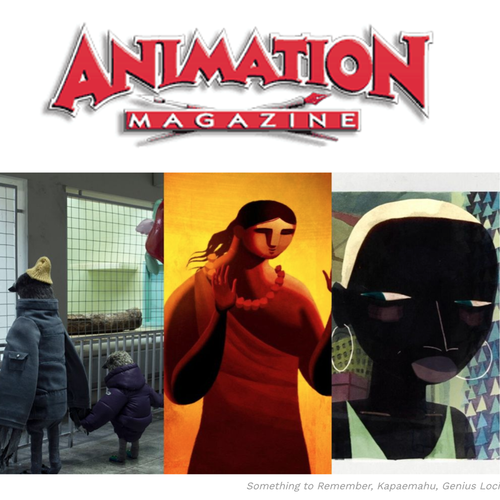
    January 8, 2021 – Animation Magazine:

    In a year of global tragedy, stress and uncertainty, advanced technology and dedicated cinephiles around the world joined forces to help animation lovers enjoy 2020’s crop of artistic, thought-provoking (or just plain entertaining) films. While most festivals were held online, their Academy Award-qualifying prizewinners have an IRL chance at one of film’s most prestigious animated short honors, including:

    Kapaemahu
    United States
    Director: Hinaleimoana Wong-Kalu, Dean Hamer, Joe Wilson
    Produced by: Dean Hamer, Joe Wilson, Hinaleimoana Wong-Kalu
    Qualifying Wins: Atlanta Film Festival – Best Animated Short Film, Animayo – Grand Jury Prize, Bengaluru Int’l Short Film Festival – Best Animated Short, Nashville Film Festival – Best Animated Short, Foyle Film Festival – Best Animated Short Film
    Synopsis: Kapaemahu reveals the healing power of four mysterious stones on Waikiki Beach — and the legendary transgender spirits within them.

    Full List HERE.

  • Oscar 2021 Animated Short Film Contenders

    Oscar 2021 Animated Short Film Contenders

    Oscar 2021 Animated Short Film Contenders

    By AMID AMIDI | 01/01/2021 6:53 pm | 11

    In November, before this year’s torrent of animated shorts had settled into a proper Oscar race, we surveyed some of the films that were likely to be competing for a golden statuette. With the qualifying period now over, we can reveal that 96 short films are on the longlist.

    We are publishing the list below, in alphabetical order. It has been compiled using public information and confirmed by sources within the Academy. Having compared the list to our research from previous years, we believe that 96 qualified animated shorts is an Academy record, but haven’t confirmed this.

    To recap: a short can become eligible for an Oscar in one of three ways. It has to be publicly exhibited in a theater in L.A. or New York City under certain conditions, or take home an award at a designated “qualifying” festival (see the list here), or win at the Student Academy Awards. The filmmakers must then submit it to the Academy. The pandemic played havoc with the festival circuit, postponing some events and cancelling others, but this doesn’t seem to have had a significant impact on the qualifications — record or not, 96 is a high number.

    Shorts are where some of the most beautiful, innovative, and distinctive animation can be found. Yet many remain inaccessible to the general public while on their festival run (even if the rise of virtual festivals last year changed that somewhat).

    This Oscar category doesn’t enjoy much visibility — year after year, few outside (or even in) the industry have a clear idea of what’s in the running. As the Academy has looked at shortening its telecast, the animation short category has often been rumored to be one of the categories that it would eliminate from its live broadcast. We’re publishing the list in order to draw attention to the sheer diversity of animated short filmmaking, and to spark debate among the animation community, and hopefully beyond, about the films that should be considered for an Oscar.

    Note that the information regarding how each film qualified comes from our own research; it is neither complete nor confirmed, but we will continue to update this post to ensure that the data is as complete and accurate as possible.

    Here are the films that qualified in 2020.

  • The Imagery of Kapaemahu with Animator Daniel Sousa

    The Imagery of Kapaemahu with Animator Daniel Sousa

    The Imagery of Kapaemahu with Animator Daniel Sousa

    Literary Joe chats with animation director Daniel Sousa, who helped bring to life Kapaemahu, a new short animation that focuses on inclusion and Hawaiian culture. Sousa is also known for having worked on the Oscar-nominated short Feral in the past, and he brings a great perspective when it comes to animating. Listen to the podcast HERE.

  • Gender Identity & Hawaiian Culture with Educator & Community Leader Hinaleimoana Wong-Kalu

    Gender Identity & Hawaiian Culture with Educator & Community Leader Hinaleimoana Wong-Kalu

    Gender Identity & Hawaiian Culture with Educator & Community Leader Hinaleimoana Wong-Kalu

    Literary Joe – the pen name of Joseph Gharagheer, a writer who publishes articles daily for Best Little Sites on ComicBookMovie, AnimeMojo, GameFragger, Toonado, and TheRingReport – said that this might be one of the most touching chats he’s ever had on this show to date. Hina is an amazing woman and her journey of discovering herself as mahu is something she has explored through documentary filmmaking.

    Joe chats with her about her new film Kapaemahu , as well as what the meaning of Mahu is, and dives deep into how Hawaiian culture has been Americanized by the Western World.

  • Human Rights & Animation with Filmmaker Joe Wilson

    Human Rights & Animation with Filmmaker Joe Wilson

    Human Rights & Animation with Filmmaker Joe Wilson

    A conversation with Kapaemahu producer Joe Wilson, a human rights activist and documentary maker credited with films like Kumu Hina and A Place in the Middle. It’s a touching and informative conversation. Literary Joe is the pen name of Joseph Gharagheer, a writer who publishes articles daily for Best Little Sites on ComicBookMovie, AnimeMojo, GameFragger, Toonado, and TheRingReport. Listen to the podcast HERE.

  • HIFF Filmmaker Q&A, Documentary Sneak Peek, and Kumu Patrick Makuakane’s Oli Honoring Kapaemahu

    HIFF Filmmaker Q&A, Documentary Sneak Peek, and Kumu Patrick Makuakane’s Oli Honoring Kapaemahu

    HIFF Filmmaker Q&A, Documentary Sneak Peek, and Kumu Patrick Makuakane’s Oli Honoring Kapaemahu

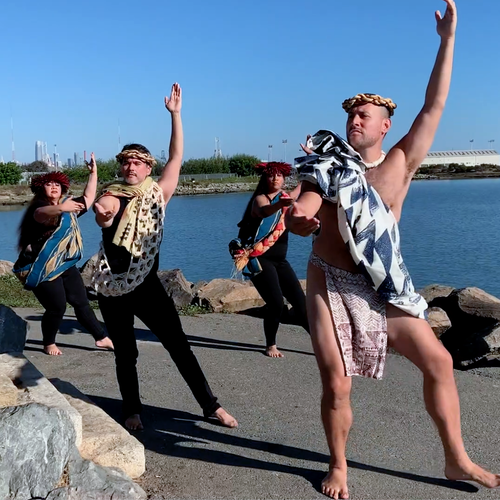
    The Hawai’i International Film Festival offered a post-screening Q&A with Kapaemahu filmmakers Hinaleimoana Wong-Kalu, Dean Hamer, and Joe Wilson, hosted by Pacific Islanders in Communications’ Leanne Ferrer. The conversation offered a sneak peek of the upcoming documentary now in-the-works, and kicks-off with a hula and oli by Kumu Patrick Makuakane and Na Lei Hulu I Ka Wekiu in Oakland, CA.

  • Light in Motion Competition Winners Announced – Kapaemahu Named Best Animated Short

    Light in Motion Competition Winners Announced – Kapaemahu Named Best Animated Short

    Foyle Film Festival – Derry, Northern Ireland – November 30, 2020: The winners of Best International Short, Best Animated Short and Best Irish Short were announced online on Sunday, 29 November as part of the 33rd Foyle Film Festival.

    Belfast Director Michael Lennox won the award for Best Irish Short Film with his work Here’s Looking at You Kid. The film was commended by the jury as ‘funny and heartfelt, with an uplifting coda. Natural performances and surrealism made for an effective exploration as to why people would rather hide behind fictional personas than be themselves’.

    Michael Lennox is the director behind the phenomenon Derry Girls written by Derry native Lisa McGee. Lennox was the recipient of a BAFTA award and Oscar® nomination for his short film Boogaloo and Graham in 2015.

    Special mention in the Irish Short Film category also went to Director Claire Byrne for her short film Sister This and Adam O’Keefe Director of Where Still Waters Lie.

    The winner of the Best International Short, Hizia directed by Zariab Chabman, will also qualify for further consideration at the 2022 Academy Awards. Born in Afghanistan, Director Chabname Zariab arrived in France at the age of 7 and has forged a successful career as a short film director. She has been nominated for the French Cesar awards and is currently developing her first feature film. Hizia was praised by the jury as ‘a haunting and engaging, an emotional rollercoaster with no heroes or villains just complex characters explored with humanity and nuance’. 

    Special mention in the International Short Film category went to Crashing from first-time director Alex Salam and Face to Face directed by Javier Marco.

    The award for Best Animated Short Film went to Kapaemahu directed by Hinaleimoana Wong-Kalu, Dean Hamer and Joe Wilson. Kapaemahu reveals the healing power of four mysterious stones on Waikiki Beach and the legendary transgender spirits within them. Director Hinaleimoana Wong-Kalu is a Native Hawaiian teacher, cultural practitioner and filmmaker who uses digital media to protect and perpetuate indigenous languages and traditions. Co-directors/producers Dean Hamer and Joe Wilson are Emmy and GLAAD award-winning filmmakers. This is their fifth film with Hina.

    The awards, sponsored by City of Derry Crystal, were presented online in the Closing Night screening of Rose Plays Julie. In its virtual format, festival films are available to view up to 7 days after release until 6 December 2020. 

    Foyle Film Festival is funded by the Department for Communities through Northern Ireland Screen and by Derry City and Strabane District Council. Foyle Film Festival Light in Motion Awards is sponsored by City of Derry Crystal.