Author: Nicholas Griffith

  • Theatrical & Virtual Release Dates For 2021’s Oscar-Nominated & Honorable Mention Short Films

    Theatrical & Virtual Release Dates For 2021’s Oscar-Nominated & Honorable Mention Short Films

    Theatrical & Virtual Release Dates For 2021’s Oscar-Nominated & Honorable Mention Short Films

    by Matt Grobar – Deadline – March 23, 2021:

    Every year, ShortsTV brings the best in short film to the big screen, with a presentation of Oscar nominated shorts in the Animated, Live-Action and Documentary arenas. While movie theaters only recently reopened in Los Angeles and Orange County—with Covid cases, hospitalizations and fatalities on the descent—the distributor has already set theatrical and virtual premiere dates in both counties, for the Oscar Nominated Shorts of 2021.

    ShortsTV’s live-action and animated short film programs will be released theatrically and virtually on Friday, April 2. Its documentary program, meanwhile, will become available virtually on April 2, with a theatrical opening scheduled for April 9.

    Nominees in the category of Best Live-Action Short Film that will screen for LA audiences include Feeling Through (directed by Doug Roland), Oscar Isaac-starrer The Letter Room (Elvira Lind), The Present (Farah Nabulsi), Two Distant Strangers (Travon Free and Martin Desmond Roe) and White Eye (Tomer Sushan).

    Doc nominees to be presented by ShortsTV include Anthony Giacchino’s Colette, Kris Bowers and Ben Proudfoot’s A Concerto Is A Conversation, Anders Hammer’s Do Not Split, Skye Fitzgerald’s Hunger Ward and Sophia Nahli Allison’s A Love Long For Latasha.

    In comparison to Live-Action and Doc, the Animated Program presented by ShortsTV stands out, in that it features all five nominated films, as well as a few that didn’t make the Oscars cut, but stood out nonetheless. Nominated shorts here include Pixar’s Burrow (directed by Madeline Sharafian), the French-language Genius Loci (Adrien Merigeau), Opera (Erick Oh), Iceland’s Yes-People (Gísli Darri Halldórsson) and Netflix phenomenon If Anything Happens I Love You, from directors Michael Govier and Will McCormack.

    Animated shorts screening soon as Honorable Mentions include Kapaemahu (Hinaleimoana Wong-Kalu), The Snail and the Whale, from Max Lang and Daniel Snaddon, and Taylor Meacham’s To Gerard. 

    Theaters playing the Live-Action and Animated Shorts program include Block 30 @ Orange, Burbank 16, Citywalk Stadium 19, Covina 17, Santa Clara’s Mercado 20, the Ontario Mills 30, Woodland Hills’ Promenade 16 and Palm Springs’ Camelot Theatre 3, along with Los Angeles’ Laemmle, Landmark and Nuart theaters. In-person screenings for Documentary are also taking place at Laemmle.

    On the virtual side, Landmark will host all three programs, while L.A.’s Laemmle Theaters will only be showing docs. Other theaters participating in ShortsTV’s Virtual Engagement include The Frida Cinema in Santa Ana, and the Art Theater of Long Beach, both of which will show three programs.

  • ‘Moana’ Director John Musker Talks Story with the ‘Kapaemahu’ Team

    ‘Moana’ Director John Musker Talks Story with the ‘Kapaemahu’ Team

    ‘Moana’ Director John Musker Talks Story with the ‘Kapaemahu’ Team

    Watch Disney’s legendary Oscar-nominated director as he and the Oscar-shortlisted film’s producers discuss bringing Pacific stories alive through animation. 

    By Dan Sarto – Animation World Network – March 8, 2021:

    Hinaleimona Wong-Kalu, Daniel Sousa, and Joe Wilson, who directed, animated, and produced the beautifully animated short, Kapaemahu, that tells the story of the long-hidden history of four healing stones on Waikiki Beach, have shared with AWN their conversation with legendary Moana director John Musker about the power of animation to elevate the oral traditions of Oceania.

    Musker’s interest in the Pacific began many years ago, when he and his long-time animation partner Ron Clements decided to make a feature based on the Polynesian demi-god Maui. The response from then Disney Animation chief John Lasseter was: “Go research.” 

    The directors and their team did just that, making several trips to the islands and forming an Oceanic Trust of anthropologists, cultural practitioners, historians, linguists, and elders who helped shape every detail of Moana, from character design to the type of pit used to cook food.

    “John really did his homework,” said Wong-Kalu, who is Native Hawaiian and fluent in multiple Polynesian languages.  “That came through in his blockbuster film, and I think it’s why he responded so positively to Kapaemahu. He gets what sharing these stories is all about on a deeper level. It was such a pleasure to engage with him.”

    Kapaemahu also required substantial research, including the unearthing of a century-old handwritten manuscript and a trip to Raiatea, the original home of the four healers of dual male and spirit, known as mahu, who are the focus of the story.  Although the four giant stones in which the visitors imbued their powers still stand on Waikiki Beach, the full story behind them has been hidden in plain view.

    The talk focuses on the challenge of bringing this ancient story alive through 2D animation.  Musker relates a conversation with a Samoan artist who told him that Polynesia has a stronger tradition of sculpting than of drawing, which is reflected in animation director Daniel Sousa’s visual approach.  “Capturing light means ignoring linework” Sousa says, “and carving out space through mid-tones and color.”

    Spend a few minutes and enjoy the the discussion as well as some behind-the-scenes info about the story of Kapaemahu, and then check out AWN’s intimate look at the film, Kapaemahu’ Helps Revive Hidden Hawaiian History of Healing and Aloha, where you can watch the short in its entirety.

    The Polynesian approach to storytelling is beutifully captured in the film’s palette, a rich mixture of oranges and yellows that reflect the colors of tapa cloth and lauhala weaving.

    Unusual in today’s world of large studio projects, often involving teams of 20 or more, Sousa was the sole artist on Kapaemahu, responsible for the storyboard, animatic, character design, and digital painting of every frame in the 8-minute short. His tools were Photoshop for painting, Flash for motion, and After Effects for compositing, along with Blender for the 3D elements.  For Musker, who is retired from Disney but working on his own short, TVPaint is the preferred tool.

    At an opening ceremony for Moana in Tahiti, an elder posed a challenge to Musker: “For years we have been swallowed by your culture. This one time can you be swallowed by ours?”

    “This is the same challenge I posed to my team at the beginning of this journey,” says Wong-Kalu.  “I hope we have succeeded.

  • ‘Kapaemahu’: This Animated Short Oscar Contender Is a Transgender, Hawaiian Breakthrough

    ‘Kapaemahu’: This Animated Short Oscar Contender Is a Transgender, Hawaiian Breakthrough

    ‘Kapaemahu’: This Animated Short Oscar Contender Is a Transgender, Hawaiian Breakthrough

    The film could make history as the first Native Hawaiian animated short to be nominated in the category.

    by Bill Desowitz – IndieWire – March 8, 2021

    Kapaemahu” would make history as the first Native Hawaiian animated short to be nominated for the Oscar. But it’s an important transgender breakthrough as well. The eight-minute 2D short tells the long-forgotten story about the four stones on Waikiki Beach placed as tribute to four legendary mahu (third gender individuals), who brought the healing arts from Tahiti to Hawaii in the 15th century.

    “Kapaemahu,” directed by Hinaleimoana Wong-Kalu, a Native Hawaiian teacher and mahu, along with Dean Hamer and Joe Wilson (“Kumu Hina,” the award-winning 2014 documentary about Wong-Kalu), couldn’t be timelier with this indigenous transgender tribute, bolstered by an exquisite hand-drawn aesthetic from animation director Daniel Sousa (the Oscar-nominated short “Feral”). The story demonstrates the healing powers of the Kapaemahu, the suppression and burial of their monuments, their recovery at the end of the 20th century, and the renewed interest in their legacy today. The short is available on The Criterion Channel and also for free on Vimeo.

    “It took a decade of research, but our animation brings to light those points in history about people who occupy a space that encompasses two spirits or more,” said Wong-Kalu. “On so many levels, my experience was rewarding and eye-opening. In the case of bringing Kapaemahu forward, it’s not just a legend — it’s part of our history.”

    The moment Wong-Kalu told Hamer and Wilson about the legendary mahu, they invited her to join them on a follow-up project, making her lead director and driving the story from her unique perspective. “The fact that it’s coming out now, with a story of healing during this pandemic, through the [animation] of Daniel, is important,” Wilson said.

    But after a decade of research, it took a couple of catalysts to finally make the short. The first was the recent discovery of an original manuscript from 1908. “There were a lot of alternations to the story,” Wilson added, “especially in the last 50 years. At first, we weren’t sure what was really right. But this is as far back as we can go in history [with clarification].”

    The other catalyst was that they realized after making “Kumu Hina” the popularity of a brief animated sequence. That provided the story and the format. “I personally have enjoyed the animation,” added Wong-Kalu. “It has opened my eyes to harnessing the power of this format. And, as someone who grew up on animated cartoons, I clearly knew about it, but in actually utilizing animation as a tool to teach was just great.”

    Design and animation, meanwhile, occupied Sousa for more than a year, but he benefited from indigenous research supplied by his colleagues. “We gave Daniel a lot of tapa cloth for the palette and the textures, lauhala weaving, but there is not a lot of 2D drawn art in Polynesian history,” Hemer said. ” It just wasn’t that much of a form. But there is a history of sculpture, and the Tikis are very famous examples, so that was informative and quite detailed. It gave the characters a style that really reflects that monumental presence of Tikis.”

    But there were two other essential pieces of reference: the actual stones, which determined the weight, physicality, and texture of the rock, and the physical presence of Wong-Kalu, who served as a model for the characters in look and performance. “I locked down the shape language for the characters and world building before animation,” Sousa said, “but I wanted the animation to appear alive.” It’s predicated on tableaux he soaked with lighting and atmosphere, particularly a boiling texture, in combination with a constantly moving camera, which provided the breath of life.

    Sousa animated in Flash (renamed Animate), then painted over it and added landscapes in Photoshop, and then layered in textures, and composited in After Effects.  A very warm palette of rich earth tones taken from the tapa cloth inform most of the short, with the present-day coda being informed by cooler blues, and greens. “One of the design challenges was devising a visual language with parallels in different parts,” he said.

    “For instance, the depiction of the dual spirits of the mahu as intertwining bands of light and dark color,” added Sousa. “They still retained their identity even though they were braided together. This kind of motif originally was just going to be used when we introduce the idea of the mahu, but then we found we could use the motif for other parts of the film. We realized that these intertwining, wavy lines could actually morph into the waves of the ocean at the beginning, or as rising smoke inside the huts, or in the background in the very last scene when we’re reintroducing the characters again.”

    For Wong-Kalu, the short represents a testament to the legacy of the four mahu heroes and its significance to the transgender community. “I think what’s important about that is Americans suddenly decided that transgender people existed four years ago and started talking about it. And then there was the question of: Should they be tolerated? No, they should be accepted. But I think this monument says people of dual birth should not only be respected but admired because they bring qualities and abilities that are extraordinary, and have always been there and will remain there for a long time.”

  • Hawaii 2 Hollywood: Kapaemahu makes history in the race for an Academy Award

    Hawaii 2 Hollywood: Kapaemahu makes history in the race for an Academy Award

    Hawaii 2 Hollywood: Kapaemahu makes history in the race for an Academy Award

    by Kristy Tamashiro – KHON2 News – March 3, 2021:

    HONOLULU (KHON2) – The composing, animation, and powerful storyline of Kapaemahu has earned the film a spot in the race for an Academy Award.

    Get Hawaii’s latest news sent to your inbox, click here to subscribe to News 2 You, a daily newsletter.

    “To know that it would make it as far as the Oscar Awards is just absolutely fantastic and phenomenal for us,” said Hinaleimoana Wong-Kalu, the director, producer, and narrator of Kapaemahu.

    The movie is breaking into the Oscars scene, making history as the first Hawaiian film to clear the shortlist for best animated short film.

    “It speaks about four legendary healers. They were real people that became legendary, because of the healing knowledge and skill they brought with them. They just so happened to be four individuals who are known to be mahu. They were embraced and loved by the people. So what it tells us is the kanaka culture has room and a place of understanding.”

    Kapaemahu is narrated by Kumu Hina, a Na Hoku Hanohano Award winning cultural leader.

    “It was critical to me to ensure that the voice was going to reflect a voice, not the voice, but a voice of kanaka and who best to help narrate the story of four legendary mahu then someone who is also mahu?”

    Next up, another round of voting by the Academy for an official Oscar nomination. But there’s something more meaningful to the Kapaemahu filmmakers than any award.

    “The honor and the dignity and the name of my people, the kanaka, my fellow Hawaiians, and the respect of our islands is uplifted. Perhaps maybe just one person at a time would be helped or supported or would enrich somebody else’s life. That to me means more than any award that we could ever receive.”

    Film critics are already calling Kapaemahu a front runner for the Oscars. The 93rd Academy Awards is slated for April 25.

    For a link to watch Kapaemahu, click here.

  • Animated Short ‘Kapaemahu’ Could Make History at the Oscars

    Animated Short ‘Kapaemahu’ Could Make History at the Oscars

    Animated Short ‘Kapaemahu’ Could Make History at the Oscars

    by Monica Whitepigeon – Native News Online – March 3, 2021:

    HALEIWA, Hawaii — Societies have been shaped through their legends and myths, which reflect worldviews, define human relations and teach life-long lessons. As a result of colonization, many Indigenous stories from all over the world were suppressed and consequently lost to history. But some traditional storytellers are utilizing contemporary techniques, such as filmmaking, to help secure these oral histories and ensure the survival of their messages. 

    For Native Hawaiian teacher and cultural practitioner, Hinaleimoana Wong-Kalu, this is a task she does not take on lightly. Her recent animated short film, “Kapaemahu,” reveals the hidden history of four monumental stones on Waikiki Beach, and the legendary transgender healing spirits within them.

    “The work I do is largely based on being able to (convey) Hawaiian history, language and culture. As a filmmaker, it is an added facet that enables me to further uplift my people and the causes part of who we are,” Wong-Kalu said. 

    Last year, the short premiered at the Tribeca Film Festival and has screened at various festivals around the world. Currently, “Kapaemahu” is under review for the Academy Awards Shortlist and if selected, would be the first Native Hawaiian animated short to be nominated.

    The film recounts that centuries ago Kapaemahu and three mahu (both male and female spirit) travelers journeyed from Tahiti to the shores of present-day Waikiki Beach. Greeted by the locals, the healers went to work caring for the sick and invalid. The grateful villagers commemorated their compassion with four large boulders, which they imbued with their powers. The stones are still on the beach today but are overlooked and misrepresented in the public eye.

    The origin story became obscured during the 19th and 20th Centuries largely due to political, religious and other cultural influences that suppressed the traditional Polynesian perspective towards non-gendered people. As the years progressed, the stones were moved and neglected, but resurfaced in the 1960s. When the stones were restored in 1997, the non-binary identity behind the healers was omitted.

    “Growing up here in Hawaii, most youth that go through a mainstream education don’t learn enough about Hawaiians,” Wong-Kalu said of how white-American curriculums never resonated with her but learned the correlations between Hawaiian and Native experiences. 

    “It was important to know what the white settlers did to our Native brothers and sisters. To be a Native in a western-dominated world, you have to be wise, judicious and conscious of what you do.” 

    In 2014, Wong-Kalu teamed up with GLAAD Media and Emmy award-winning filmmakers, Dean Hamer and Joe Wilson, to produce “Kumu Hina” (2014), a documentary of her life. Since then, the crew has worked collaboratively to teach and share diverse and inclusive stories of Polynesian culture. Through intense research and procurement of an early manuscript, they were able to bring new life to the Kapaemahu story and uplift mahu identity. 

    “I am also mahu, which like many Indigenous third-gender identities was once respected but is now more often a target for hatred and discrimination. I want our young people to understand that the ability to embrace both the male and female aspects of their spirit is not a weakness but a strength, a reason to rejoice not to fear,” said Wong-Kalu. 

    The stunning, stylized imagery throughout the film was created by art director and Oscar-nominated animator Dan Sousa, who recently worked on PBS’s five-episode series “Native America: Sacred Stories” (2018). Sousa single-handedly combined hand drawn and 2D animation at 24 frames per second, which took approximately nine months to complete both before and during the pandemic. Wong-Kalu narrates the eight-minute film in Olelo Niihau with English subtitles and features chant composer Kaumakaiwa Kanakaole. All these elements enhanced the overall aesthetic of the film to create a warmth and depth that can speak to all audiences.

    While an Oscar nomination would be a tremendous achievement and honor, it is not a priority for Wong-Kalu and her team.

    “I’m involved in filmmaking to reflect my home,” she said. “That has been my only goal. We will catapult (the film) rightfully in the place it needs to go.”
    Click here to view “Kapaemahu” and learn more about the filmmakers.

  • A Forgotten Hawaiian Legend Rises Like a Phoenix in Vibrant Oscar Shortlisted Animation Kapaemahu

    A Forgotten Hawaiian Legend Rises Like a Phoenix in Vibrant Oscar Shortlisted Animation Kapaemahu

    A Forgotten Hawaiian Legend Rises Like a Phoenix in Vibrant Oscar Shortlisted Animation Kapaemahu

    by Sarah Smith – Directors Notes – March 3, 2021:

    Throughout history cultures have told tales of magnificent beings whose power and influence have become legend. These stories are able to move across generations long after they were first told and can create the fabric of societies and their history. After six long years of research and two years of concept and script development, co-directors/writers Hinaleimoana Wong-Kalu, Dean Hamer and Joe Wilson have produced the visually arresting Kapaemahu, a film which reveals the healing powers of four mysterious stones on Waikiki beach. A story which has long lain hidden from outsiders, the trio’s portrayal of the legendary male and female spirits who imbued the giant boulders with their powers features vividly stunning animation from Directors Notes alum Daniel Sousa. DN jumped at the opportunity to speak to Wong-Kalu about her personal ties to the tale, honouring the legacy of the stones and why she feels it is of utmost importance to show this Oscar shortlisted story to the world.

    Firstly, how does it feel to be the first Hawaiian animated short to be on the official Oscars shortlist?

    My aim in every project is to lift up our people, culture and language, so to have Kapaemahu recognized on a world stage such as the Academy Awards is exciting not just for me but for Kanaka everywhere. I’m beyond grateful to be part of a team that has helped bring this dream to life.

    Apart from the original handwritten manuscript you discovered in the University of Hawaii archive and your personal relations to the story, how did you develop the script?

    Initially, we thought we might elaborate on the manuscript with additional characters or plot twists, perhaps even make it into a feature. However as our research uncovered all the ways in which the story had been censored and suppressed over the years, we realized that it was even more important to write a script that reflected the original intent of the tellers. I wanted to echo the voices of my ancestors, not drown them out with my own opinions. One complication is that Hawaiian tends to be an effusive language, which doesn’t easily match the more condensed style of animation. While it was a struggle, I feel we found the right balance.

    I wanted to echo the voices of my ancestors, not drown them out with my own opinions.

    How did you go about defining the scope of the characters and their abilities in the animation?

    Because the original moolelo gives only scant information about the four main characters, I had to infer their healing skills and practices from an interpretation of their names. For example, the name Kahaloa can be broken down as Ka – the; ha – breath, which is the source of life; and loa – at a distance. From this we infer that Kahaloa was capable of healing from afar. We did the same for each of the characters based on the meaning of their names and imagined visuals that conveyed their healing powers. Once the healers transfer their mana to the boulders, it is the stones themselves that become the main characters. Some western viewers, and curators, have difficulty understanding this, but it’s deeply tied to our belief system.

    Why did you choose to tell the tale from a child’s point of view?

    Although we did not change the substance of the story, we did alter the point of view by introducing a young person who first appears as an onlooker when the healers arrive, and then a century later as a modern-day Hawaiian child who is drawn to the stones by the force of their spiritual power. We did this to humanize the story – to make it more than a dry piece of history – and to emphasize that it is only by teaching our youth that we can preserve our past. Hawaiians don’t really distinguish ‘children’s’ versus ‘adult’ stories, but we’re delighted that Kapaemahu has resonated with young audiences.

    Please can you give us more detail about the advantages to using animation over other filmmaking forms for Kapaemahu?

    Although I’m relatively new to animation, I really can’t imagine telling this story any other way because of its unique suitability for combining the realistic with the fantastic. For example, consider how to show the concept of mahu as “a mixture of both male and female in mind, heart and spirit.” Simply spoken, those words are difficult to conceptualize, especially for those who occupy one side or another of the gender binary. But combine that text with the moving image of a male and a female dissolving into strands which then intertwine in a new being and “voila” – you have a picture that anyone can understand.

    You’ve spoken about the importance of the story being told from your perspective, how did you build your team to keep true to that intention?

    I wouldn’t entrust this story to just any filmmaker, no matter how acclaimed or credentialed they might be. But I’ve known my co-directors and producers Joe Wilson and Dean Hamer for over ten years now. In fact, I entrusted them with my own life story, which became the PBS Independent Lens documentary Kumu Hina. So, over these many years and other projects, we’ve built a high level of faith and confidence in one another by working as a hui – a group with overlapping kuleana or responsibilities, and the expectation that we always work together to produce and to advocate for our work.

    Simply spoken, those words are difficult to conceptualize, especially for those who occupy one side or another of the gender binary.

    I met our animation director Daniel Sousa more recently. His earlier films, such as the Oscar-nominated short Feral, captured my attention. And as soon as I saw his first sketches for the Kapaemahu characters, I knew he’d be a good match. When he told me he was drawing the mahu as such large figures to represent the power of their mana, rather than their physical size, I knew I could trust him.

    Kapaemahu’s colour palette brings the film’s vivid tone to life. Please tell us about the process involved to capture the right notes?

    Because Hawaii has such a vibrant landscape, it’s often depicted in films (including our own), in super-saturated, technicolor palettes emphasizing blues and greens. But for Kapaemahu, we started with Polynesia’s most important art forms, tapa cloth and lauhala weaving, which led to a more earthy palette with rough textures and geometric forms. The breakthrough came when Daniel painted the style frames for the sunset scene on the beach where the healers send the people to the mountains to gather the memorial stones. When we saw those rich orange and yellow colors, we realized that sunset was the perfect metaphor for the entire film and its theme of bridging the divide between day and night, light and darkness.

    Sunset was the perfect metaphor for the entire film.

    The soundtrack works as a beautiful compliment to the Ōlelo Niʻihau dialect, what guided its design?

    We knew that we wanted lots of natural sounds, so Dean and Joe, who live on the north shore of Oahu far from busy Honolulu, spent a lot of time recording foley of wind and waves and palm trees on the beach there. This was expertly incorporated into the sound design and music background provided by Dan Golden, who has worked with Daniel Sousa on many previous films. We also wanted a chant as the central element of the ceremony scene and were very fortunate that Kauamakaiwa Kanakaole, my dear mahu sister from Hawaii Island, was willing to collaborate. This is a new chant, but it has a timeless reverberation that reflects her descent from a prominent genealogy of hula masters.

    What’s next in line for you and the team after the success of Kapaemahu?

    We believe that Kapaemahu will be a powerful tool for educating and raising awareness about the stones, their meaning, and more broadly about the wealth of knowledge and stories from across the Pacific. The Bishop Museum – Hawaii’s largest and a premiere repository of Pacific culture – will open an exhibit featuring the animation in 2022, which will coincide with the PBS broadcast of a feature documentary about the project that we are co-producing with Pacific Islanders in Communications. There will also be a digital version of the project available for exhibition worldwide, and we’re in conversation with our local tourist authority and several airlines about in-room and in-flight screenings. Everyone who travels to Hawaii should know and respect this story and the historical stone monument.

    There are so many of our stories that deserve – no, need – to be told, and animation is such a powerful medium to do so. Our dream is to produce an entire series, the first being Kapo Ma’I Lele, which we are currently producing with three talented women animators. It’s a tale of female empowerment that’s likely to cause a bit of a stir.

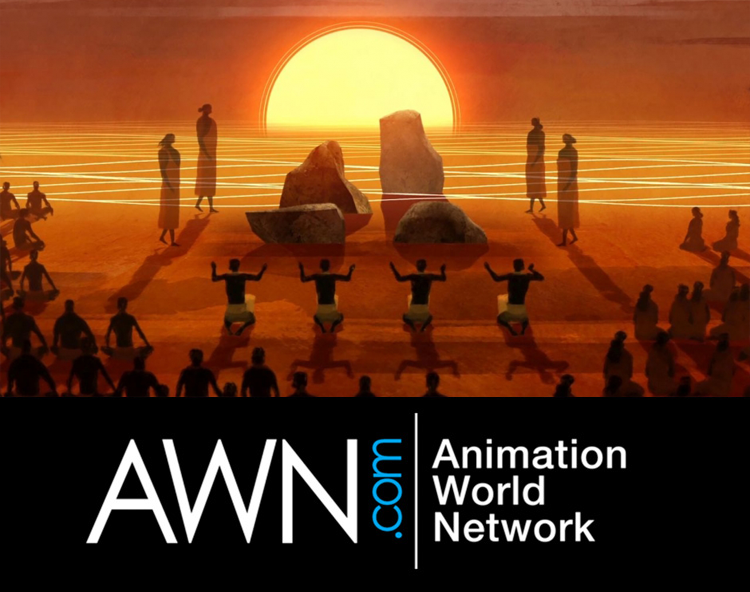
  • ‘Kapaemahu’ Directors and Animator Share Their Story of Hawaiian Culture and Acceptance

    ‘Kapaemahu’ Directors and Animator Share Their Story of Hawaiian Culture and Acceptance

    ‘Kapaemahu’ Directors and Animator Share Their Story of Hawaiian Culture and Acceptance

    by Ben Morris – Awards Daily – March 2, 2021:

    Directors Hinaleimoana Wong-Kalu, Dean Hamer, and Joe Wilson have previously worked together on documentaries dealing with gender and sexuality. Now, they’re taking on animation with Oscar-nominated animator Daniel Sousa to tell a tale of Hawaiian culture and acceptance. Here in a conversation with Awards Daily, they talk about the experience with animation and their close collaboration. Plus, they expound on what the story means to them from Hinaleimoana Wong-Kalu hearing about it since she was little to the rest of the team learning about it years ago. They also talk about how long it took the film to get to screen and how they are still promoting it. Finally, they reveal what went into creating the distinct style of animation and what they will say if they win the Oscar.


    Awards Daily: This is all your first time working in animation. What made you want to work in that medium and what was the experience like for you?

    Hinaleimoana Wong-Kalu, Dean Hamer, Joe Wilson: Although this is our first completely animated film, we’ve actually included animated segments in several of our previous films, including a popular children’s piece, so we knew it was an effective way to illuminate complex ideas in an accessible way. Kapaemahu is a moolelo – a Hawaiian word for stories that encompass both history and legend, fact and fiction – a form that is especially suitable for the imaginative latitude afforded by animation.

    The tricky part was figuring out the aesthetic that matched our vision for the content. As soon as we saw Daniel Sousa’s Feral, a gorgeously textured story about a boy who does not fit in, and some of his recent work telling indigenous stories from Native Americans, we knew we had found our animator. Fortunately, he returned our call and was interested in the project from the get-go.


    AD: So some background for our readers: Dean and Joe you worked with Hinaleimoana Wong-Kalu as the subject of your documentary Kumu Hina and in A Place in the Middle which she also was the writer. Now she has been involved with your last two movies as a director as well. How did you all come together to become co-directors?

    HWK, DH, JW: The collaboration began shortly after Dean and Joe first met Hina back in 2011. Dean and Joe, a married couple, were in Honolulu for a community engagement screening with their documentary Out in the Silence – a story about the quest for dignity and respect for LGBT people in conservative small town America – and were introduced to Hina by a filmmaking friend.

    Hina shared stories of Hawaiian culture’s traditional embrace of gender diversity, and captured Dean and Joe’s imagination by inviting them to document a year-in-her life as she, a Native Hawaiian teacher and cultural leader who also happens to be mahu – one who embodies the duality of masculine and feminine spirit – was embarking on a new adventure, getting married to a Tongan man.

    That film, Kumu Hina, was broadcast on PBS Independent Lens and became an important vehicle for community engagement and educational work that opened up extraordinary opportunities to travel together to share Pacific-centered perspectives on gender diversity across the U.S. and around the world. Through the film and impact campaign, it also became clear that Hina was a great storyteller, and she joined Dean and Joe behind the lens to work on additional stories on similar themes in Hawaii, Tonga, Samoa, and Tahiti.

    All the while, the story of Kapaemahu, which Hina had shared with Dean and Joe early in the making of Kumu Hina, was percolating in their imaginations. But it took years of research to uncover the most authentic version of the story and to put all the pieces together to make it in a way that treated the sacred moolelo with the respect and reverence it deserves.

    AD: This story has been something you have known since you were a child. Can you say when you first heard it and what it meant to you at the time?

    HWK: I’ve known about the stones of Kapaemahu since I was a young boy named Colin playing on the beach in Waikiki. But this was at a time when the term mahu, and anyone who lived outside the Western gender binary, was treated with ridicule and disdain. The litany of ugly comments and mistreatment I suffered through the years made me tremble in fear and feel less-than. It wasn’t until college that I felt comfortable enough to transition into Hinaleimoana, and began to immerse myself in Hawaiian culture and language. Then I realized how the stones of Kapaemahu relate to me personally, and at the same time embody a beautiful part of our Hawaiian culture that most people know nothing about.

    Such stories are rarely told, and when they are, it’s usually by outsiders who impose their view of the world, their language and culture, to synthesize and process the narrative through their own experience. I wanted to tell the story from my perspective as a native mahu wahine (transgender woman) and to tell it in the language that my ancestors might have used to pass it down to the next generation.

    AD: I read that the animation was based on Polynesian art style. What was the experience working in that style? And was that your own decision or did you all decide on that?

    Daniel Sousa: It was an amazing opportunity to create this very lush and beautiful world based on traditional Hawaiian and Polynesian art patterns, and to try to step inside the skin of people from a different time period. I found inspiration for the animation’s rough textures in Hawaiian tapa cloth and even the stones themselves. Hina, Joe, Dean and I had lots of back-and-forth, and they also provided a wealth of photographic references, including video of Hina’s movements and gestures. We tried to create these characters that were very statuesque and infuse every part of the film’s landscape with that stone texture and richness as well.

    The biggest challenge was the joint effort of trying to create a story that connects with the audience on a human level. The original story, in a way, is pretty straightforward. And we’re trying to flesh out these characters so that we can relate to them and sympathize with them.

    The epiphany came when we decided that a young Hawaiian child would appear early in the film, greeting the four visitors when they first arrive on the shores of Waikiki. That child then reappears in different scenes across the ages, giving viewers a character to relate to as the stones are lost, found, and finally resurrected as a monument to Kapaemahu on the beach. The film ends with the four mahu in the child’s gaze, and the question of their legacy, and a more inclusive future, resting on his generations’ shoulders.

    AD: You have been through the Oscar race before, is there any difference this time around and are you giving advice to your potential co-nominees?

    DS: Last time around, the process wasn’t nearly as intense and involved as it is now and I was really just fortunate to be nominated. With this film, we have a really strong creative team and everyone is very committed to doing everything we can to take advantage of this opportunity to shine light on the meaning of the story and to ensure that we lift up the voices and histories of those who have been misrepresented and excluded for far too long.

    AD: I read that Kapaemahu is also going to be a documentary for PBS? How involved with that are you all and what can we expect about that?

    HWK, DH, JW: Hina, Dean, and Joe are collaborating on a series of projects to bring Kapaemahu to the widest possible audience, including a museum exhibition, digital experience and a children’s book, as well as the documentary (supported by Pacific Islanders in Communications). We want everyone who visits Hawaii to know the story told in our animated film, and to understand how and why this cultural legacy of healing and gender fluidity was suppressed and what its reclamation can teach us about inclusion, health and well-being.

    AD: Do you know what you will say if you win the Oscar?

    HWK, DH, JW: Mahalo nui loa! After that we would simply be grateful for Hawai’i, its culture and traditions to finally be seen, heard, and recognized through a Hawaiian perspective, and for indigenous peoples, and those across the gender spectrum, to finally be able to see themselves as heroes embraced and celebrated in history.

    AD: This film touches on both lost culture and the acceptance of gender diversity. Do you feel there is a major connection to those two issues?

    HWK, DH, JW: These issues are inseparable. Acceptance of gender diversity was simply one element of the broader tapestry of Hawaiian culture that was so deeply undermined by the arrival of foreigners, and ultimately, the overthrow of the Hawaiian Kingdom in the late 1880s. Gradually, sometimes forcefully, American culture and ways became dominant, and so much was lost: language, traditions, philosophies, histories, connections to land and Hawaiian ways of being in the world.

    While significant gains have been made over the past fifty years in the recovery of Hawaiian language and cultural practices, the embrace of traditional understandings of gender and sexual diversity has been slow in the islands because it is so deeply enmeshed in the ongoing fraught American debate over acceptance, inclusion, and equality for LGBTQ people.

    Lifting up this aspect of the moolelo of Kapaemahu is part of helping to move progress in that process forward.

    AD: Is there anything you want to leave our readers with?

    HWK, DH, JW: Many of us who grew up in marginalized communities rarely or never get to see ourselves reflected in society. We’re erased from history and are told, day after day, that we don’t belong. The symbolism of this animated story is larger-than-life. That’s because our histories have been invisible for so long; it needs to be seen large so that it has an impact, and so young people or families with young people who fit somewhere in this invisibilized gender spectrum can see themselves out there and see their future possibilities, because there is a culture that has a place for them.

    Our belief is that stories, told truthfully and well, have the power to capture people’s imaginations and open hearts and minds in magical ways. Our hope is that Kapaemahu has that kind of positive effect, on people younger and older alike, no matter who they are or the place they call home.

  • Hawaiian animated short film ‘Kapaemahu’ hits Oscar’s shortlist

    Hawaiian animated short film ‘Kapaemahu’ hits Oscar’s shortlist

    Hawaiian animated short film ‘Kapaemahu’ hits Oscar’s shortlist

    Vincent Schilling – Indian Country Today – February 27, 2021:

    Native Hawaiian teacher, cultural practitioner, and filmmaker Hinaleimoana Wong-Kalu has been gaining international acclaim for her latest short animated film “Kapaemahu.”

    The film has just garnered a coveted spot on the 93rd Academy Awards Oscars shortlist in the Animated Short Film category. Additionally, and after playing at more than 100 film festivals internationally, “Kapaemahu” received the top award at three Oscar-qualifying festivals.

    The story of the film as described in their media release is as follows:

    “Kapaemahu” goes to the heart of the issue of erasure and reclamation of Indigenous histories. The 8-minute film tells the long-forgotten story of four mahu, extraordinary beings of dual male and female spirit who brought the healing arts from Tahiti to Hawaii. Beloved by the people for their gentle ways and miraculous cures, they imbued four giant boulders with their powers. Although the stones still stand on Waikiki Beach, the true story behind them has been hidden for generations. Narrated in an ancient Hawaiian dialect, and seen through the eyes of a curious child, Kapaemahu brings this powerful legend to life through vivid animation.

    Wong-Kalu herself identifies as Māhū, a person that embodies both masculine and feminine qualities. Māhū have long been regarded as sacred, and healers in Hawaiian culture.

    As Māhū, Wong-Kalu said the story of her film is especially meaningful to her.

    “Had I known the story of these stones when I was young, it might have made a real difference in my life,” said Wong-Kalu in a news release. “It’s difficult being your full authentic self when your history and language have been kept from you.”

    Wong-Kalu told Indian Country Today that her message is one of hope and healing.

    “The message that I would like to share with all people, is that in this time of the world needing healing, I hope that this story is perhaps a glimmer of hope for those who may need it. Healing requires us really consider the balance in our lives. Balance is about a duality of spirit in each and every one of us, for some of us … it doesn’t pull one way or the other. It’s very strong on both sides.”

    “We as Native people must assert our place on our own terms. We must assert our presence and we must reaffirm our connections to our land. We must even reaffirm our connections to one another. There are many Hawaiians who possess cultural knowledge, knowledge of history and language. There are many Hawaiians who do not, which has occurred through colonization. That process of colonization has alienated us not only from our own people, history language, and culture but from our own self,” said Wong-Kalu.

    Named as one of ten outstanding Indigenous artists honored by NDN Collective who was awarded one of the inaugural Radical Imagination Artists Grant’s, Wong-Kalu also shared words for inspiring Indigenous filmmakers.

    “Follow your gut, not your heart. The Hawaiian heart is your gut. The heart is the western placeholder for emotion. Our gut, as Native people, is what we really look to. It is where our emotions are located when we are angry, and we are happy. When people are angry, you don’t necessarily think of it as the heart not able to function, it’s really lower down that can’t function.”

    Wong-Kalu’s Kanaka Maoli identity is a key factor in her desire to tell stories in her own way.

    “Our survival as Indigenous people depends on our ability to know and practice our cultural traditions, to speak and understand our language, and to feel an authentic connection to our own history,” she said in the release.

    “That is why I wanted to make a film about Kapaemahu and to write and narrate it in the only form of Hawaiian that has been continuously spoken since prior to the arrival of foreigners. We need to be active participants in telling our own stories in our own way.”

    “Kapaemahu” is currently available to view on Vimeo HERE for a limited time.

    Social channels for the film:

    https://www.instagram.com/kapaemahu

    https://www.facebook.com/Kapaemahu

    Social channels for filmmaker Hinaleimoana Wong-Kalu:

    https://twitter.com/KumuHina

    Vincent Schilling, Akwesasne Mohawk, is associate editor of Indian Country Today who enjoys creating media, technology, computers, comics, and movies. He is a film critic and writes the #NativeNerd column. Twitter @VinceSchilling. Email: vschilling@indiancountrytoday.com he is also the opinions’ editor, opinion@indincountrytoday.com.

  • Oscars Predictions: Best Animated Short

    Oscars Predictions: Best Animated Short

    Oscars Predictions: Best Animated Short

    by Clayton Davis – Variety – February 25, 2021:

    The Academy Awards, better known as the Oscars, is Hollywood’s most prestigious artistic award in the film industry. The Academy announced the shortlist for the animated short contenders, and they produced an interesting crop of selections. Netflix is placing all their power and influence behind the emotional “If Anything Happens I Love You.” At the same time, Magic Light Pictures’ “The Snail and the Whale” is audacious and beautiful with its colorful and slick animation, featuring familiar talents such as Oscar-nominee Sally Hawkins and Rob Brydon as our adorable characters. It also helps that one of its co-directors, Max Lang is a previous two-time nominee for “The Gruffalo” (2009) and “Room on the Broom” (2012) but has yet to win. “Kapaemahu” also has the visual razzle-dazzle to make the lineup, but as we can expect from AMPAS voters, surprises can always occur. It’s still uncertain which of the Disney efforts will rally support if any. “Out” has the timely factor going for it, while “Burrow” could be one of the most seen by the branch members. Let’s see where it all lands.

    AND THE PREDICTED NOMINEES ARE:

    1. "If Anything Happens I Love You" (Netflix)

      PRODUCERS: Gerald Chamales, Maryann Garger, Gary Gilbert, Michael Govier
      DIRECTOR: Michael Govier, Will McCormack
      SYNOPSIS: "If Anything Happens I Love You" is a beautifully illustrated animated short film that takes us on an extraordinary emotional journey of two parents struggling to overcome the hurt left by a tragic event that leaves their family changed forever.
      STARRING: None

    2. "The Snail and the Whale" (Magic Light Pictures)

      PRODUCERS: Michael Rose, Martin Pope
      DIRECTOR: Max Lang, Daniel Snaddon
      SYNOPSIS: A tiny snail goes on an amazing journey by hitching a ride on the tail of a huge humpback whale. Based on the picture book written by Julia Donaldson and illustrated by Axel Scheffler.
      STARRING:Diana Rigg, Sally Hawkins, Rob Brydon

    3. "Kapaemahu" (The Animation Showcase)

      PRODUCERS: Dean Hamer, Joe Wilson, Hinaleimoana Wong-Kalu
      DIRECTOR: Dean Hamer, Joe Wilson, Hinaleimoana Wong-Kalu
      SYNOPSIS: Kapaemahu reveals the healing power of four mysterious stones on Waikiki Beach - and the legendary dual male and female spirits within them.
      STARRING: None

    4. "Out" (Disney Plus)

      PRODUCERS: Max Sachar
      DIRECTOR: Steven Clay Hunter
      SYNOPSIS: On an average day, Greg's life is filled with family, love and a rambunctious little dog - but despite all of this, Greg has a secret. Today is different, because he might learn that he has nothing to hide.
      STARRING: Bernadette Sullivan, Kyle McDaniel, Caleb Cabrera

    5. "Opera" (Beasts and Natives Alike)

      PRODUCERS: Philippe Carcassonne, Jean-Louis Livi, David Parfitt
      DIRECTOR: Erick Oh
      SYNOPSIS: Driven by the spirits of Bosch, Michelangelo, Botticelli and more, Erick portrays, in his own signature whimsical and surreal way, the human society and history, filled with beauty and absurdity.
      STARRING: None

    NEXT IN LINE:

    1. "Burrow" (Disney Plus/Pixar)

      PRODUCERS: Mike Capbarat
      DIRECTOR: Madeline Sharafian
      SYNOPSIS: A young rabbit tries to build the burrow of her dreams, becoming embarrassed each time she accidentally digs into a neighbor's home.
      STARRING: None

    2. "Genius Loci" (Kazak Productions)

      PRODUCERS: Amaury Ovise
      DIRECTOR: Adrien Mérigeau
      SYNOPSIS: One night, Reine, a young loner, sees the urban chaos as a mystical oneness that seems alive, like some sort of guide.
      STARRING: Nadia Moussa, Georgia Cusack, Jina Djemba

    3. "To Gerard" (DreamWorks Animation)

      PRODUCERS: Amaury Ovise
      DIRECTOR: Taylor Meacham
      SYNOPSIS: A sprightly elderly man brightens the day of a little girl through magic.
      STARRING: Piotr Michael

    4. "Traces" (Les Films du Nord)

      PRODUCERS: Arnaud Demuynck
      DIRECTOR: Hugo Frassetto, Sophie Tavert Macian
      SYNOPSIS: 36,000 years ago in the Ardèche river gorge, when an animal was painted, it was hunted. When it is time to go painting and hunting, Karou the Painter and his apprentice Lani set off to paint the walls of the great cavern. But they hadn't counted on meeting a cave lion.
      STARRING: None

    5. "Yes-People" (CAOZ hf. Hólamói)

      PRODUCERS: Arnar Gunnarsson, Gísli Darri Halldórsson
      DIRECTOR: Gísli Darri Halldórsson
      SYNOPSIS: Driven by the spirits of Bosch, Michelangelo, Botticelli and more, Erick portrays, in his own signature whimsical and surreal way, the human society and history, filled with beauty and absurdity.
      STARRING: None

  • A Guide to Oscars’ Shortlisted Animated Shorts

    A Guide to Oscars’ Shortlisted Animated Shorts

    A Guide to Oscars’ Shortlisted Animated Shorts

    by Steve Pond – The Wrap – February 25, 2021:

    The 10 shortlisted films in the Oscars Best Animated Short category include four from major U.S. studios (two Pixar, one DreamWorks Animation and one Netflix) and a number of international entries.

    The category also contains a couple of straightforward commercial shorts designed to amuse and charm, and a few experimental ones that at times border on the surreal.

    These 10 will be narrowed down to five with the nomination voting from March 5-10. This is the second in TheWrap’s guide to the shortlisted films in all three shorts categories.

    “Kapaemahu”
    Directors: Hinaleimoana Wong-Kalu, Dean Hamer and Joe Wilson

    “Kapaemahu” takes an ancient Hawaiian folk tale that had been passed down orally for centuries and uses it to explore gender identity as well as history. The eight-minute film tells the story of four mahu, third-gender individuals who are both male and female, who came to Hawaii from Tahiti 700 years ago with great healing powers. (Kapaemahu was the leader’s name.)

    The film, one of the shortest of the semi-finalists, is a vividly rendered folk tale, but one whose exploration of gender identity also feels timely rather than simply mythic. Among this year’s shortlisted films. Pixar’s “Out” has gotten more attention for its handling of LGBTQ issues, probably because it’s from Disney, but “Kapaemahu” puts those issues in an intriguing context. Plus it’ll send you to the internet to see if those four boulders left by the mahu really are sitting on Waikiki Beach.