Category: News

  • New Exhibition to Explore a Suppressed Piece of Hawaiian History about Four Legendary Māhū

    New Exhibition to Explore a Suppressed Piece of Hawaiian History about Four Legendary Māhū

    New Exhibition to Explore a Suppressed Piece of Hawaiian History about Four Legendary Māhū

    by: Chelsee Yee – January 27, 2022 – KHON2:

    HONOLULU (KHON2) — Long ago, four extraordinary individuals of dual male and female spirit, known as māhū, brought their wisdom from Tahiti to Oahu, saving many lives with their healing abilities. Their indigenous leader Kapaemahu recounts the story that many have forgotten.

    In June, visitors to Bishop Museum will be reminded of that tale in a new exhibition called The Healer Stones of Kapaemahu, which will explore the history of the loss and rediscovery of four mysterious stones on Waikiki Beach. The exhibition is based on the Oscar-contending animated film.

    Kapaemahu tells the story of four legendary māhū who sail from Tahiti to Hawaii, sharing their gifts of science and healing with the people of Oahu. The islanders show their appreciation with a monument of four boulders in their honor, which the māhū heroes imbue with their healing powers before disappearing. The stones still stand on the beach, but the story behind them was hidden — until now.

    The film is directed, produced and narrated in ʻŌlelo Niihau by Hinaleimoana Wong-Kalu, who made history with Kapaemahu being the first Native Hawaiian film to become an official Oscars shortlist of 10 films in the ‘Animated Short Film’ category.

    Wong-Kalu, Dean Hamer, and Joe Wilson (co-curators) released this statement:

    “At a time when there is great need of healing in Hawai’i, and the world, we’re thrilled that the Bishop Museum is lifting up the story of The Healer Stones of Kapaemahu and celebrating the extraordinary skills, talents and accomplishments of these four legendary mahu.”

    HINALEIMOANA WONG-KALU, DEAN HAMER, AND JOE WILSON

    The exhibition will not only explore the suppression and resurrection of Kapaemahu — it will also help to restore the monument on Waikiki Beach as a reminder of Hawaii’s long tradition of acceptance.

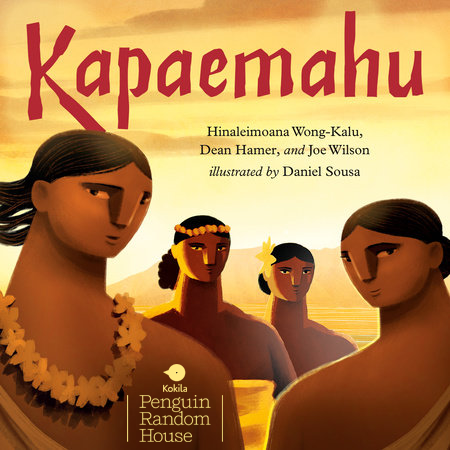
    In addition to the Bishop Museum exhibition, Kapaemahu is being made into a children’s picture book by Penguin Random House, which is timed to hit the shelves when the exhibition opens.

    It’s the first-ever bilingual book in Olelo Niihau, just like the animated short film.

  • ‘Kapaemahu’ Expands with Book, Exhibition and Documentary Film

    ‘Kapaemahu’ Expands with Book, Exhibition and Documentary Film

    ‘Kapaemahu’ Expands with Book, Exhibition and Documentary Film

    by Samuel Patrick Bannon – Animation World Network – October 28, 2021:

    The acclaimed, award-winning 2D animated short, Kapaemahu, is expanding into multiple mediums to tell the beautiful and traditional Hawaiian story of the four healing stones and the hero’s they are dedicated to. The planned expansion includes a children’s picture book, an interactive museum exhibit at Bishop Museum, and a documentary, all designed to shed light on this suppressed and hidden piece of Hawaiian history.

    The indigenous legend recounts how four extraordinary individuals of dual male and female spirit, known as mahu, came to Oahu bringing wisdom and saving many lives with their healing abilities. The people of Oahu then placed four large stones on Waikiki Beach in memorial, and the mahu heroes imbued them with their healing spirits before disappearing. But these stones remained sacred to the people of Oahu for hundreds of years until outside settlers sought to hide the legend, and for a long time this tale of wisdom was forgotten.

    Now, Oahu’s Waikiki Beach is one of the most famous spots on the planet, its vibrant white sand, and beautiful turquoise waters make it a destination for millions every year. But this beach holds more than just beauty; it holds an inspiring and ancient history, and hopefully, because of the coming artistic exploration of its ancient legend, people will pay homage to that history, and the uncovered sacred stones that gave hope to the native people of Oahu. 

    Penguin Random House is publishing a large format picture book telling the ancient story. Richly illustrated by Kapaemahu animation Director, Daniel Sousa, it is the first-ever bilingual book in the ancient Niihau form of the Hawaiian language. “Kapaemahu is a monument to an indigenous Hawaiian legend and a classic in the making,” said Namrata Tripathi, editor of the Kokila Penguin Young Readers imprint. It’s expected to be on bookshelves by early 2022.

    Watch the Bishop Museum exhibition teaser here.

    The animated legend will also be the centerpiece of an immersive multimedia exhibition at the Bishop Museum in Hawaii, the largest collection of Hawaiian and Pacific culture in the world. Occupying the entire 8,500 square feet of Castle Memorial Hall, the exhibition will feature 30-foot replicas of the four mahu healers standing in front of glowing facsimiles of the stones dedicated to them on Waikiki beach. An animated timeline will document the suppression and resurrection of their story, and the work now being done to restore the stones as a permanent monument. The exhibition is scheduled for June 2022. 

    PBS will premiere the feature documentary The Healer Stones of Kapaemahu on Pacific Heartbeat, bringing this hidden Hawaiian history to life for millions of viewers across the U.S. “When I decided to tell the story of Kapaemahu in animated form, it was the best way I could imagine to express my understanding of this legend from a cultural point of view,” said director and producer Hinaleimoana Wong-Kalu, a Native Hawaiian who is herself mahu. “It’s exciting now to see that vision expanding, delving deep into history, and bringing it into view on multiple platforms that have the capacity to reach so many new and different audiences. It will be transformative”.

  • Kapaemahu LGBT Animation Short Now A Book and a Doc

    Kapaemahu LGBT Animation Short Now A Book and a Doc

    Kapaemahu LGBT Animation Short Now A Book and a Doc

    Zippy Frames – October 27, 2021:

    The animation short Kapaemahu will have its book and documentary premiere.

    ‘Kapaemahu’ animation short reveals the healing power of four mysterious stones on Waikiki Beach in Hawaii – and the legendary dual male and female spirits within them. An Oscar-shortlisted 2D animation film, it is co-directed by Hinaleimoana Wong-Kalu, Dean Hamer and Joe Wilson  with  Daniel Sousa (Oscar-nominated for Feral) as an animation director.

    The film went on to compete at the Annecy Festival and Tribeca Film Festival, among other festival selections.

    As Hinaleimoana Wong-Kalu, a native Hawaiian and herself mahu, said to Zippy Frames in a interview piece about the film, “we spent over five years researching the tradition of Kapaemahu before even starting the script. The breakthrough was the discovery of the original handwritten manuscript of the story, which had been recorded a century ago by a Hawaiian member of the noble class who may have heard it from the last queen of the Hawaiian Kingdom. Our script followed the manuscript closely”.

    Now the film will become a book (to be published by Penguin Random House), in a large format aimed at children and parents, and illustrated by Daniel Sousa. It is the first-ever bilingual book in the ancient Niihau form of the Hawaiian language. “Kapaemahu is a monument to an indigenous Hawaiian legend and a classic in the making,” said Namrata Tripathi, editor of the Kokila Penguin Young Readers imprint.  

    The animated legend will also be the centerpiece of an immersive multimedia exhibition at the Bishop Museum, the largest collection of Hawaiian and Pacific culture in the world.  Occupying the entire 8,500 sq.ft. Castle Memorial Hall, the exhibition will feature 30 foot tall replicas of the four transgender healers standing in front of glowing facsimiles of the stones dedicated to them on Waikiki  beach.  An animated timeline will document the suppression and resurrection of their story, and the work now being done to restore the stones as a permanent monument. The exhibition is scheduled for June 2022. 

    At the same time, PBS will premiere the feature documentary ‘The Healer Stones of Kapaemahu” on Pacific Heartbeat, bringing this hidden Hawaiian history to life for millions of viewers across the U.S.

    When I decided to tell the story of Kapaemahu in animated form, it was the best way I could imagine to express my understanding of this legend from a cultural point of view. It’s exciting now to see that vision expanding, delving deep into history and bringing it into view on multiple platforms that have the capacity to reach so many new and different audiences. It will be transformative  – Hinaleimoana Wong-Kalu.

    The ‘Kapaemahu’ book is expected to be on bookshelves by early 2022.

  • Book, Multimedia Exhibition and Documentary on Oscar-nominated Hawaiian Animated Short ‘Kapaemahu’ Announced

    Book, Multimedia Exhibition and Documentary on Oscar-nominated Hawaiian Animated Short ‘Kapaemahu’ Announced

    Book, Multimedia Exhibition and Documentary on Oscar-nominated Hawaiian Animated Short ‘Kapaemahu’ Announced

    Animation Xpress – October 25, 2021:

    Hawaiian animated short, Kapaemahu, created quite a stir at the 93rd Academy Awards this year, as it became the first ever Native Hawaiian film to clear the first round of voting and become an official Oscars shortlist of 10 films in the ‘Animated Short Film’ category. This amazing work is now evolving into other formats including a children’s picture book, immersive multimedia exhibition, and documentary film, all exploring the rich history brought to life by the animation.  

    “When I decided to tell the story of Kapaemahu in animated form, it was the best way I could imagine to express my understanding of this legend from a cultural point of view. It’s exciting now to see that vision expanding, delving deep into history and bringing it into view on multiple platforms that have the capacity to reach so many new and different audiences. It will be transformative,” said director-producer Hinaleimoana Wong-Kalu, a Native Hawaiian who is herself a mahu (transgender). 

    The picture book on Kapaemahu will be published by Penguin Random House in a large format aimed at children and parents. Richly illustrated by animator Daniel Sousa, it is the first-ever bilingual book in the ancient Niihau form of the Hawaiian language. It is expected to be on bookshelves by early 2022.

    The book tells the indigenous legend of how four extraordinary individuals of dual male and female spirit, known as mahu,  brought healing arts from Tahiti to Hawaii. 

    Kapaemahu is a monument to an indigenous Hawaiian legend and a classic in the making,” said Kokila Penguin Young Readers imprint editor Namrata Tripathi.

    The animated legend will also be the centerpiece of an immersive multimedia exhibition at the Bishop Museum, the largest collection of Hawaiian and Pacific culture in the world. Occupying the entire 8,500 square feet Castle Memorial Hall, the exhibition will feature 30 foot tall replicas of the four transgender healers standing in front of glowing facsimiles of the stones dedicated to them on Waikiki beach. 

    An animated timeline will document the suppression and resurrection of their story, and the work now being done to restore the stones as a permanent monument. The exhibition is scheduled for June 2022.

    Also, PBS will premiere the feature documentary The Healer Stones of Kapaemahu on Pacific Heartbeat, bringing this hidden Hawaiian history to life for millions of viewers across the U.S. 

    “Given the limited distribution opportunities for animated shorts, we think Kapaemahu is an interesting model for different ways to increase reach and marketing,” film’s co-producer Dean Hamer said in an official statement.

  • Celebrating Pride with Kapaemahu – A Talk Story with LGBTQ+ Communities in Hawai’i

    Celebrating Pride with Kapaemahu – A Talk Story with LGBTQ+ Communities in Hawai’i

    Celebrating Pride with Kapaemahu – A Talk Story with LGBTQ+ Communities in Hawai’i

    PBS Hawai’i – October 19, 2021:

    In partnership with POV and Open Society Foundations, PBS Hawai’i hosted an intimate virtual talk story on the challenges and opportunities faced by members of LGBTQ+ communities beyond urban Honolulu. Watch and Listen HERE.

    Panelists include:

    • Joe Wilson, Filmmaker, Kapaemahu

    • Thaddeus Pham, Co-Chair, Hawaiʻi Department of Health Sexual and Gender Minority Workgroup

    • Hao Le, President of Affirmation Hawai’i, Oʻahu

    • Keivalei Cadena, Harm Reduction Programs Manager at Kumukahi Health & Wellness, Hawai’i Island

    • Ian Tapu, Hawai’i LGBT Legacy Foundation and the Hawai’i Health & Harm Reduction Center

    This program is made possible by a grant from American Documentary | POV, with funding provided by the Open Society Foundations. This event is a collaboration with POV, the award-winning independent non-fiction film series on PBS www.pbs.org/pov.

  • Kumu Hina on Western and Hawaiian Understandings of Gender and Sexuality

    Kumu Hina on Western and Hawaiian Understandings of Gender and Sexuality

    Kumu Hina on Western and Hawaiian Understandings of Gender and Sexuality

    Hawaii Public Radio interview by Noe Tanigawa:

    Oct. 11 was National Coming Out Day, referring to “coming out of the closet.” Today, Hinaleimoana Wong’s coming-out story. A respected educator and cultural leader, Kumu Hina met HPR in Waikiki. We visited Kapaemahu, the majestic healing stones at the edge of Kūhiō Beach that are linked to healers who were not specifically male or female. Kumu Hina co-produced an Oscar-nominated animation about Kapaemahu, Waikiki’s healing stones — and composed a Hoku award-winning anthem, “Ku Haʻaheo.”

    Interview Highlights

    On the differences between Western and Hawaiian understandings of gender, sexuality and more

    From a Western and American perspective, the understanding of transgender can take on a whole different kind of nuance, a whole different meaning and a whole different perspective. But from Hawaiian and other Pacific Islander views, those of us who occupy a space and place in the middle, those of us who have both elements of male and female, kane and wahine, each individual is to his or her own varying degree. We don’t necessarily fall into distinct categories.

    In Western culture, especially in American culture, there’s great emphasis placed on a label. Are you gay? Are you bi? Are you lesbian? Are you trans? What are you? And we as Hawaiians and other Pacific Islanders, we identify by our name, by our family. We identify by either the town or the village that we come from. We identify by the island that we call home. We know the streams and rivers and the mountains of our places — and we come from these places. We are attached to these places. We come from generations of a people who populated the Pacific. As Pacific Islanders, when we say who we are, my name is not just Hinaleimoana and from the American perspective — oh and by the way, I’m transgender. That’s not how we look at the world. I am Hinaleimoana, I am the keiki, I am the kama, I am the hanau — the offspring of Georgette and Henry.

    I do not have to identify by the articulation of my gender identity or by my sex. I do not have to tell you that I have a vagina or a penis between my legs. I do not have to tell you that I was born my family’s son, but I have fully transitioned to become their daughter. I don’t have to identify by those things because those things are rather irrelevant to what my family and the society that I come from say about me, and my worth, and my value. Western and American culture place great emphasis — it’s almost like they put a penis or a vagina on your forehead. So you have to identify by that. When you walk up and say, “Hi, I’m so and so and I’m gay.” Well, what’s the purpose of saying that? Why does somebody have to identify as that? Why can’t you and I look at each other — Hi, your name is Noe, my name is Hina. “Hi, what do you do?” “This is what I do.” You know — “where are you from?” “This is where I’m from.”

    On coming out to family and fulfilling familial expectations

    My personal preference, I am someone who is attracted to men, biological men, but my preference is irrelevant. In the culture that I come from, it shouldn’t matter. I will bring home whom I feel is worthy of not only my love, time and attention, but I will bring home somebody whom I feel that my family might take favor upon. And then again, even if they didn’t take favor, I might just bring them home with me anyway. But that’s my independent choice. And, you know, there are some families who would deal very well with that, and some families who won’t.

    Well, everybody, you know, initially focused on “are you changing?” In my Chinese family, I did exactly what was the expectation of me — and my father was very staunchly Chinese, even though he grew up here in Hawaiʻi. It was humility, and filial piety, and loyalty to the family. I was loyal to my father and my grandmother. I was loyal to the values and the ideals that were espoused in our household. And I did as my father said, and when my father said, “I only have two things that I want of you. I want you to finish school and take care of your grandmother; and after that, I don’t care what you go do, you can be a rubbish picker for all I care.” His exact words. And I fulfilled that. I fulfilled it, above and beyond the call of duty. So I earned my father’s love and respect. And no matter how much he may like, dislike, agree or disagree with my life’s direction and choices, it’s irrelevant because I fulfilled my father’s charge for me to do. I transitioned in front of my father. And no matter how many years pass, I will always have my father’s support. Even when I screw up, and when I mess up, I will always have my father’s support and unconditional acceptance. And I say, with confidence, will I be a disappointment? I might be to a certain degree, but it doesn’t mean that he’s going to stop loving me.

    I know I’m very fortunate. But Hawaiian society, in my Hawaiian household, same thing. I was raised by my grandparents on both sides. And my mom’s mom raised me and infused me with the understanding to be strong — in as much as I could do for Hawaiian language and people and culture. And to do things Hawaiian, and to honor it, to cherish it, to promote it, perpetuate it, promulgate it. And my grandfather, he was a man of prayer above all else. My grandfather was a staunch member of The Church of Latter-Day Saints. And so his being Hawaiian was secondary to that. But his prayer life is what I carry with me today. So too was it in my Chinese side, so too was it in my Hawaiian side, that I had to fulfill duties and responsibilities made of me. For that, I have earned the respect on both sides of my family. So now in my adult life, I really wanted to say that it doesn’t matter how you identify in Western terms. In Hawaiian and Pacific Islander understanding, again, I am the child of so-and-so, I’m the grandchild of so-and-so.

    Listen to full interview HERE.

  • Kapaemahu Children’s Picture Book Pre-Orders Available Now

    Kapaemahu Children’s Picture Book Pre-Orders Available Now

    Kapaemahu Children’s Picture Book Pre-Orders Available Now

    Published by Penguin Random House, pre-orders of the children’s picture book are available here.

    An Indigenous legend about how four extraordinary individuals of dual male and female spirit, or Mahu, brought healing arts from Tahiti to Hawaii, based on the Academy Award–contending short film.
     

    In the 15th century, four Mahu sail from Tahiti to Hawaii and share their gifts of science and healing with the people of Waikiki. The islanders return this gift with a monument of four boulders in their honor, which the Mahu imbue with healing powers before disappearing.
     
    As time passes, foreigners inhabit the island and the once-sacred stones are forgotten until the 1960s. Though the true story of these stones was not fully recovered, the power of the Mahu still calls out to those who pass by them at Waikiki Beach today.

    With illuminating words and stunning illustrations by Hinaleimoana Wong-Kalu, Dean Hamer, Joe Wilson, and Daniel Sousa, KAPAEMAHU is a monument to an Indigenous Hawaiian legend and a classic in the making.

  • A Hawaiian Perspective on Monuments

    A Hawaiian Perspective on Monuments

    A Hawaiian Perspective on Monuments

    As part of the Mellon Foundation’s unprecedented new Monuments Project, Philadelphia-based nonprofit art and history studio Monument Lab undertook a comprehensive audit of our country’s commemorative landscape, scouring almost half a million records of historic properties to better understand the dynamics and trends that have shaped our nation’s monuments.

    The National Monument Audit includes this essay on Kapaemahu by Dean Hamer, Joe Wilson, and Hinaleimoana Wong-Kalu:

    “Aia ka piko I Mauliola ma Hawai‘i, ka one hānau, ka ʻāina makuahine o Kanaka.”

    The umbilical cord remains grounded in Hawaiʻi at Mauliola, the birth sands of the Hawaiian.

    The guiding principle in the work of Qwaves & Kanaka Pakipika is that Hawaii is the piko, or source: the navel where life begins, and the connection to the ancestral realm, family, and future descendants.  Exploring monuments and memorialization through this worldview lends to a holistic and inclusive view of the body, mind, and spirit, wellness, and the identities of ourselves and others.

    Our approach is grounded, first, in our place in Hawaii, and then in the Pacific, rather than vis-a-vis or in comparison to dominant Western frameworks of culture and history.

    Seen this way, monuments in Hawaii have a different meaning and context than those in the continental United States.  Each has its own unique story and name, often layered with multiple kaona, or hidden meanings.  When foreigners arrived in the islands, they often misinterpreted or suppressed these stories, a process that was not only a byproduct of colonization but was intrinsic to delegitimizing Indigenous thought and societal patterns.

    The monument landscape in Hawaii over the past decade has been dominated, and continues to be inspired, by the struggle to protect Mauna Kea, a deeply sacred mountain on which scientific research institutions have a mission to build an enormous telescope, despite Native Hawaiian and allied local opposition.

    But there are other sites that also demand attention. 

    As a small collective of independent media makers, we seek to discover the Indigenous stories and meanings of such sites, and to (re)invigorate them through creative and novel means of storytelling.  This provides the foundation for developing collaborative, community-rooted commemorative practices that are rooted in the sacred meanings of Hawaii’s storied places.

    Here we describe two sites with which we are directly involved.

    The Healer Stones of Kapaemahu

    The healer stones of Kapaemahu are a sacred site in the middle of Waikiki Beach, one of the most popular tourist destinations in Hawaii. According to tradition, the stones commemorate four extraordinary mahu – individuals of dual male and female spirit — who brought the healing arts from Tahiti to Hawaii.  After a long period of cultural neglect, which included being buried underneath a bowling alley, the stones were unearthed and are again accessible to the public. However, their significance as a memorial has been much diminished by the altering of their story and name to conform to foreign values and ideas.  The fact that the healers were mahu, beloved by the people, was erased from view.

    Our efforts to revitalize the significance of this monument began with ten years of research to understand both the origins of the story and the ways it had been suppressed and altered as the result of colonization, militarization, the rise of anti-transgender discrimination in the continental United States, and the fierce political debate over same-sex marriage that roiled Hawaii.  The identities of the healers as four mahu was first ignored, then changed to two males and females, and even misinterpreted to mean “not homosexual.”  Lost along the way was the very meaning of the name of the stones, Kapaemahu, which translates in English as “the row of mahu.”

    We were fortunate to discover the first written documentation of the narrative, in the form of a handwritten manuscript in the University of Hawaii archives, which became the foundation for the next step, which was to tell the original story in as close as possible to the original form.

    We chose animation, which combines the immediacy and imagination of great storytellers with modern accessibility, and narrated the film in the ancient Niihau dialect, the only uninterrupted form of the Hawaiian language. The resulting short film, Kapaemahu, which premiered at the 2020 Tribeca Film Festival and was shortlisted for an Oscar at the 93rd Academy Awards, has been widely viewed in Hawaii and around the world and, as a result, has created an opportunity for a historical reckoning at the site.

    We are currently working with a variety of stakeholders to increase the reach, depth, and impact of this story through a bilingual children’s book, a PBS / Pacific Islanders in Communications feature documentary, and an exhibition at the Bernice Pauahi Bishop Museum, all scheduled to launch in Spring 2022.

    The Healer Stones of Kapaemahu are a unique memorial to Hawaiian concepts of healing, gender diversity, and inclusion.  Every resident and visitor to Hawaii should know the meaning of this monument.  Its name and story deserve to be treated with the same respect and dignity as the stones themselves and understood as Hawaiians themselves once did.

    Kohelepelepe

    Kohelepelepe, which translates in English as “the fringed vulva,” is the traditional name for the crater of a large volcanic cinder cone located in the southeast corner of the island of Oahu.  Oral tradition holds that the crater is the imprint of the flying vagina of Kapo, who detached it to use as a decoy to help her sister Pele, goddess of fire and volcanoes, avoid being raped by the overzealous pig god Kamapuaa.  Missionaries renamed this prominent feature Koko Head, perhaps because they did not know the story of its name, or perhaps because they did.

    Hawaiians have long regarded genitals (mai) with honor and respect, and there are many chants and hulas written in praise of the procreative organs of Hawaiian royalty.

    Kohelepelepe, which is now part of a heavily hiked Honolulu District Park, should have its name and story restored.

    Similar to our work to bring the Hawaiian understanding of the legend of Kapaemahu back to life, we are first creating a short animated film that will help to restore the story of Kapo’s Flying Vagina to its rightful place in Hawaii’s historical memory. From that will follow efforts to educate and engage communities in questioning and reimagining the English name for this sacred site.

    Back to the Future

    The global debate on the meaning of monuments and the lessons of history has focused on the long overdue removal of figures that honor racist and imperialist figures from our ignoble past.  While this is also an issue in Hawaii – as exemplified by the statue and high school named after William McKinely, the United States President who illegally annexed the Kingdom of Hawaii against the will of her queen and people – our work asks a different question: What of monuments that are dedicated to historyʻs heroes, yet dishonor them and distort history by concealing certain aspects of the heroes’ true identity or the nature of their power?

    In order to commemorate the past, we need to know and understand it, and to convey it stripped of foreign hegemony.  

    I ka wā ma mua, i ka wā ma hope.”

    In the time in front is the time in back.

    Qwaves & Kanaka Pakipika are community-based multimedia, engagement and empowerment collectives focused on gender, cultural, racial, economic, and political justice in Hawaii led by Hinaleimoana Wong-Kalu, Dean Hamer, and Joe Wilson.


  • The Nearly Forgotten Origin Myth of Hawaii’s Third-Gender Healers, As Told by One

    The Nearly Forgotten Origin Myth of Hawaii’s Third-Gender Healers, As Told by One

    The Nearly Forgotten Origin Myth of Hawaii’s Third-Gender Healers, As Told by One

    Aeon Magazine – September 14, 2021:

    In Hawaiian culture, moʻolelo means story, tale or myth, but it also refers to history. Traditionally passed down through oral storytelling, moʻolelo serve as a connection to the past, carrying wisdom and entertainment across generations. Over the centuries, however, many moʻolelo have been censored or lost altogether due to Western colonisation. The short animation Kapaemahu is an adaptation of a nearly forgotten mo’olelo about four māhū – people possessing both male and female qualities in mind, body and spirit – who brought healing arts from Tahiti to Hawaii. As the story goes, the māhū imbued with their powers four boulders, which stood at a sacred site for hundreds of years until they were forgotten. Told through a modern lens by the Native Hawaiian teacher, filmmaker and māhū Hinaleimoana Wong-Kalu and the Emmy Award-winning US filmmakers Joe Wilson and Dean Hamer, Kapaemahu brings renewed life to this moʻolelo via animations inspired by Polynesian tapa designs and a touch of Hawaii’s recent history.

    Directors: Hinaleimoana Wong-Kalu, Joe Wilson, Dean Hamer

    Animation director: Daniel Sousa

  • Kapaemahu, the Native Hawaiian Story of Four Legendary Mahu Healers

    Kapaemahu, the Native Hawaiian Story of Four Legendary Mahu Healers

    Kapaemahu, the Native Hawaiian Story of Four Legendary Mahu Healers

    The Kid Should See This – September 14, 2021:

    Long ago, four Pacific Island spirits arrived on the shores of Hawaii. Kapaemāhu, Kapuni, Kīnohi and Kahaloa were māhū, gentle yet powerful healers with balanced qualities of both male and female in mind, heart, and spirit.

    Their peaceful and generous ways and made them beloved, and when they prepared to travel onward, the Hawaiians honored them with a gift: a sacred site of gratitude made with four giant boulders.

    The esteemed visitors imbued these rocks with their mana, and the monument was revered for centuries by Hawaii’s indigenous people.

    Both history and legend, this essential moʻolelo or cultural narrative of Hawaii was passed from generation to generation through oral storytelling. Western colonization of the late 1800s suppressed and concealed this story along with many other cultural treasures. On the shore of what is now Waikiki Beachthe four sacred boulders suffered that fate, too.

    Their hidden story is revealed with the film Kapaemāhu.

    The award-winning animated short was written, directed, and produced by Native Hawaiian teacher and filmmaker Hinaleimoana Wong-Kalu, along with Emmy and GLAAD Media award-winning filmmakers Dean Hamer and Joe Wilson, and Oscar-nominated animator Daniel Sousa.

    The film premiered at the Tribeca Film Festival, has won awards at children’s film festivals around the globe, and is now presented online by the PBS Short Film Festival.

    In a director’s statement, Hinaleimoana Wong-Kalu writes:

    “I am Kanaka — a native person descended from the original inhabitants of the islands of Hawaii. Our survival as indigenous people depends on our ability to know and practice our cultural traditions, to speak and understand our language, and to feel an authentic connection to our own history.

    “That is why I wanted to make a film about Kapaemahu, and to write and narrate it in Olelo Niihau – the only form of Hawaiian that has been continuously spoken since prior to the arrival of foreigners. It is not enough to study our language in an American classroom, nor to read about our history in an English language textbook. We need to be active participants in telling our own stories in our own way. I am also mahu, which like many indigenous third-gender identities was once respected but is now more often a target for hatred and discrimination. I want our young people to understand that the ability to embrace both the male and female aspects of their spirit is not a weakness but a strength, a reason to rejoice not to fear.

    “Whether it is protecting Mauna Kea or Kapaemahu, I shall always believe in what historian S. M. Kamakau articulated in 1865 : He makemake ko’u e pololei ka moolelo o ko’u one hanau, aole na ka malihimi e ao ia’u I ka moolelo o ko’u lahui, na’u e ao aku I ka moolelo I ka malihini.

    “‘I want the history of my homeland to be correct. The foreigner shall not teach me the history of my people, I will teach the foreigner.’”