Exhibition
Kapaemahu reveals the healing power of four mysterious stones on Waikiki Beach – and the legendary dual male and female spirits within them.

Explore the exhibit online…
The Healer Stones of Kapaemahu exhibition explores the past and contemporary meanings of four large stones that were long ago placed on Waikīkī Beach to honor four māhū, extraordinary individuals of dual male and female spirit, who brought healing arts from Tahiti to Hawaiʻi. Although the stones have survived for centuries, the story behind them has been suppressed and the respected role of māhū erased.
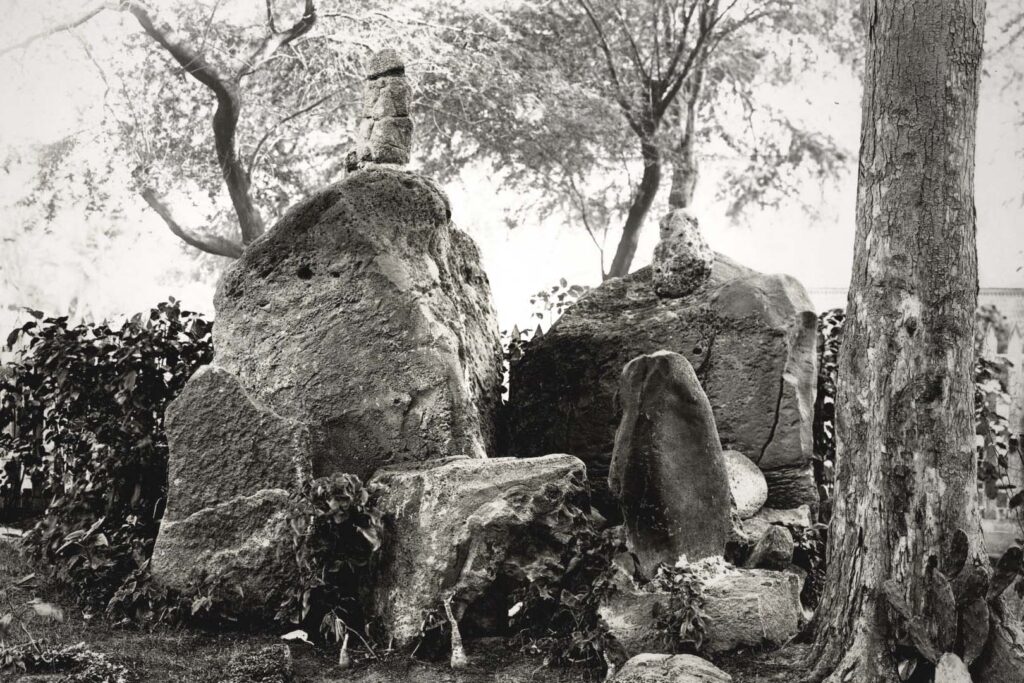
Image: The stones of Kapaemahu in 1910, shortly after they were resurfaced and grouped together in the yard of the Waikīkī beach house of Governor Archibald Cleghorn, husband of Princess Likelike and father of Princess Kaʻiulani. (Bishop Museum Archives)
The Site
The Healer Stones of Kapaemahu exhibition explores the past and contemporary meanings of four large stones that were long ago placed on Waikīkī Beach to honor four māhū, extraordinary individuals of dual male and female spirit, who brought healing arts from Tahiti to Hawaiʻi. Although the stones have survived for centuries, the story behind them has been suppressed and the respected role of māhū erased.
The Experience
The Film
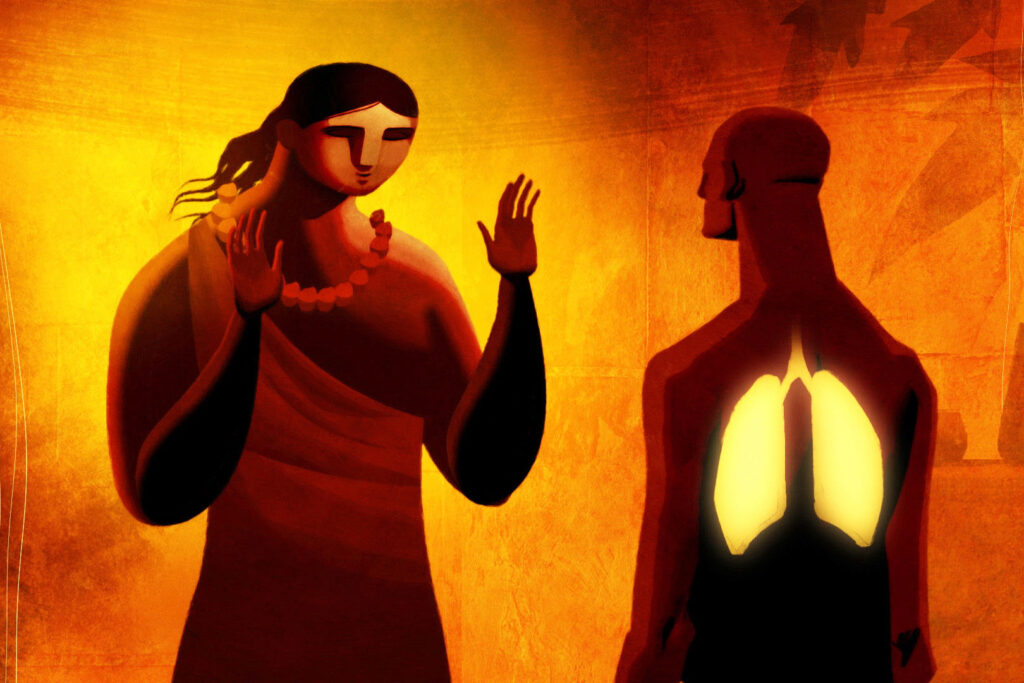
The Healer Stones of Kapaemahu is presented in both English and ʻōlelo Niʻihau, the only form of Hawaiian unbroken by foreign contact. This is Bishop Museum’s first fully bilingual exhibition, signalling its commitment to centering the exhibition in a Hawaiian worldview.
Few of the millions of people who pass by the stones of Kapaemahu know their full story and meaning. Our hope is for this exhibition to start a conversation that will help restore this wahi pana, or storied site, as a permanent reminder of Hawaiʻi’s long history of healing and inclusion.